
The Supreme Court just handed the USPS a shield against lawsuits for intentionally sabotaging your mail, leaving everyday Americans powerless against federal misconduct.
Story Snapshot
- 5-4 ruling in USPS v. Konan grants immunity for intentional mail nondelivery under FTCA postal exception.
- Justice Thomas’s majority interprets “loss” and “miscarriage” broadly, ignoring intent.
- Dissent led by Justice Sotomayor warns of unaccountable government power.
- Impacts millions relying on mail for bills, meds, and business, pushing shift to private carriers.
Incident Sparks Supreme Court Battle
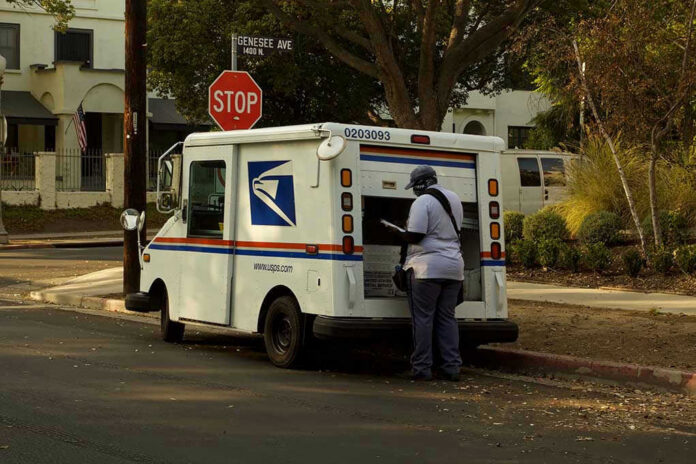
Lebene Konan, a resident of Euless, Texas, sued the USPS after a postal worker allegedly intentionally withheld her mail, harming her and her tenants. Lower courts permitted the claim, rejecting broad immunity. USPS appealed, arguing the Federal Tort Claims Act’s postal exception bars all suits involving mail mishandling. Oral arguments in October 2025 highlighted fears of litigation floods driving up stamp prices to $3. The closely watched case tested sovereign immunity limits.
FTCA Roots and Postal Exception Evolution
Congress passed the FTCA in 1946 to waive sovereign immunity for federal employees’ negligent acts within employment scope. Section 2680(b) carves out claims from “loss, miscarriage, or negligent transmission of letters or postal matter” to safeguard USPS operations. The agency processes 112 billion pieces yearly to 165 million addresses using 600,000 workers. No prior ruling extended this to deliberate torts, making Konan a landmark.
Majority Opinion Expands Immunity Shield
On February 24, 2026, Justice Clarence Thomas authored the 5-4 majority opinion for Chief Justice Roberts, Justices Alito, Kavanaugh, and Barrett. They held the postal exception covers intentional nondelivery, as terms like “miscarriage” encompass any failure regardless of intent. This textualist reading prioritizes statutory language over policy concerns. The Court remanded the case, dismissing Konan’s claim outright. Government lawyers celebrated avoiding operational chaos.
Justice Sonia Sotomayor dissented, joined by Justices Kagan, Gorsuch, and Jackson. She argued the exception targets negligence, not sabotage like “intentionally throwing it away.” This overreach, she contended, erodes accountability for deliberate malfeasance. The split underscores originalism versus practical justice tensions. From an American conservative viewpoint grounded in limited government, the dissent aligns better with common sense: shielding intentional wrongs invites abuse without deterrents.
The Postal Service's recent Supreme Court win is bad news for government accountability https://t.co/LpLX0qnwmG
— Christine Tate (@christineatate) February 27, 2026
Stakeholders React to Accountability Erosion
USPS secured operational protection amid massive scale, but critics pounce. The National Newspaper Association voiced disappointment on February 24, warning of delivery risks to print media. Cato Institute labeled it a “double lock” on accountability. Freight analysts call it a wake-up for supply chains, urging diversification to FedEx or UPS. Konan and affected tenants lose redress paths. Businesses handling mail-order drugs or critical freight face heightened vulnerabilities.
Lasting Ripples Across Society and Economy
Short-term, USPS dodges lawsuits, curbing costs. Long-term, broader immunity may embolden misconduct, eroding trust in mail for bills, legal notices, and medications. Vulnerable groups like tenants and controlled substance users suffer most. Economically, private carriers gain; logistics and pharma pivot to certified tracking. Politically, the ruling fuels reform debates, with dissent signaling congressional pressure for FTCA tweaks. This decision reinforces federal insulation, challenging conservative ideals of personal responsibility and accountable governance.
Sources:
Tucson Sentinel: Postal SCOTUS report
Faegre Drinker: Supreme Court Decides United States Postal Service v. Konan
Reason: The Postal Service’s Recent Supreme Court Win Is Bad News for Government Accountability
Freight Flow Advisor: Feb 26: The Supreme Court Just Gave USPS a Free Pass
SCOTUSblog: Court holds that U.S. Postal Service can’t be sued over intentionally misdelivered mail
NNA: NNA is disappointed with Supreme Court decision in USPS v. Konan
Cato: Cato expert: Supreme Court ruling tightens double lock on government accountability
Supreme Court: Official Opinion in 24-351