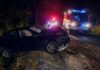


Nine people died when a Learjet 60 plunged into a Palm Beach County neighborhood just after noon, igniting homes and turning a quiet Sunday into a scene of flame and steel.
Story Snapshot
- A Learjet 60 crashed near Greenacres at about 12:50 p.m. on November 1, 2026.
- Federal officials said all nine aboard were killed, with no survivors.
- Fire tore through a mobile-home area; debris covered streets and yards.
- The National Transportation Safety Board (NTSB) leads the investigation, with the Federal Aviation Administration (FAA) support.
What happened and where the jet was headed
Federal authorities said the business jet went down near Military Trail and 10th Avenue North in Palm Beach County. The time was about 12:50 p.m. The aircraft was a Learjet 60, tail number N722BD. Records showed it departed Austin-Bergstrom International Airport and was bound for North Eleuthera Airport in the Bahamas. Reporters on the scene described wreckage and flame within a residential area, just miles from Mar-a-Lago, which sharpened national attention on the crash.
Transportation Secretary Sean Duffy said in a public statement that all nine people on board died. That toll matched what responders found on site. News crews captured a wide debris field and burned structures, but officials did not give a full count of ground injuries that day. The size of the fire and scattered parts suggested a high-energy impact. Crews from multiple departments worked for hours to control hotspots and secure the scene before federal investigators arrived.
What investigators are doing now
The National Transportation Safety Board took charge of the investigation, with help from the Federal Aviation Administration. The National Transportation Safety Board will map the wreckage, document the engines, and collect any flight data or cockpit voice devices if installed and recoverable. Investigators will request maintenance logs, pilot records, and operator details. A preliminary report, which offers early facts without analysis, typically posts within weeks. A full investigation often takes a year or longer to reach cause.
Reporters described weather and descent details in early coverage, but those points require confirmation from official records. The essential facts are firm: aircraft type, route, time, location, and fatalities. The agencies have not stated a cause. That restraint aligns with standard practice. The National Transportation Safety Board warns against jumping to conclusions based on early fragments. The focus in the first 48 hours is securing perishable evidence and interviewing witnesses while memories are fresh.
Why the Learjet 60 draws scrutiny after high-profile crashes
The Learjet 60 is a fast midsize business jet that cruises high and covers long legs. Crews prize its performance, but like any aircraft, safety depends on maintenance, training, and weather judgment. Investigators will compare the wreckage with the maintenance record and operating limits. They will review crew qualifications and rest periods. They will also study radar tracks and air-traffic audio to establish the sequence from cruise to impact. That timeline will anchor every later finding.
New video reportedly shows pieces of aircraft wreckage scattered throughout a mobile home community near the scene of today’s deadly plane crash in Greenacres, Florida.
The Learjet 60 crashed near Military Trail and 10th Avenue North in Palm Beach County, killing all nine people… pic.twitter.com/LU5Epy7po9
— Lindsay 🇺🇸 (@TheLinzerShow) November 2, 2026
Some outlets mentioned a rapid descent and strong weather near the time of the crash, citing aviation sources. These details, if confirmed by the National Transportation Safety Board docket, could point analysts to icing, turbulence, or instrument workload. They could also find no role for weather at all. Discipline matters here. Facts must lead. American common sense says respect the process and demand answers built on records, not on loud guesses. Grief deserves accuracy more than drama.
What comes next and what to watch
Families and neighbors will want clear steps. Expect a preliminary report in weeks with location, time, aircraft details, and basic sequence. Expect the accident docket later, with photos, interviews, maintenance files, and technical lab reports. Watch for whether investigators recover recorders, which can speed clarity. Watch for findings on crew experience, airworthiness directives, and any open maintenance items. The final report, with probable cause and safety recommendations, will follow after deep analysis.
This crash also renews a straightforward safety message. Private flight is safest when everyone sticks to checklists, respects weather, and keeps machines within limits. The United States leads the world in accident investigation. The National Transportation Safety Board does not prosecute; it learns and teaches. When the board speaks, it does so to prevent the next tragedy. That is the sober path from fire and noise back to order, and it is how we honor nine lives lost.
Sources:
facebook.com, floridatoday.com, bloomberg.com, usatoday.com, nbcdfw.com, abc7.com, ntsb.gov, asip.faa.gov, data.ntsb.gov
© horizonpost.com 2026. All rights reserved.