

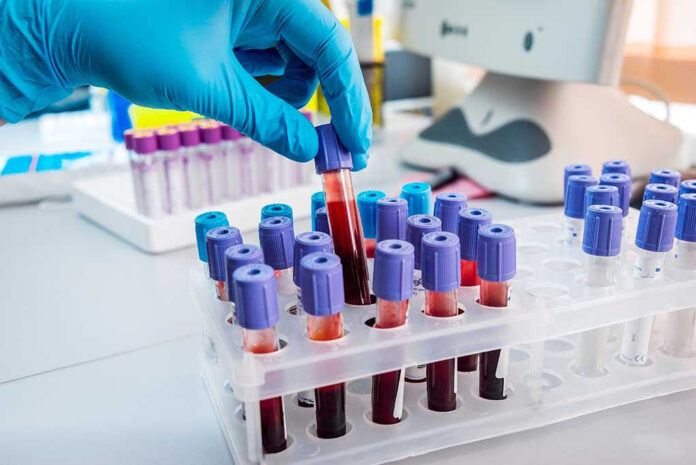
Imagine knowing you could dodge a devastating disease years before it strikes—thanks to a simple blood test that reads your future like a crystal ball.
Story Snapshot
- A new blood test, the CORE model, predicts liver disease risk years before symptoms appear.
- This test works for everyone, not just those with known risk factors.
- Developed by researchers in Sweden and Finland, it’s designed for easy use in everyday clinics.
- The CORE model could reshape how doctors screen and protect patients from one of the world’s deadliest silent killers.
Blood Tests That See the Future: The Promise of the CORE Model
Liver disease often hides in plain sight, quietly causing damage until it’s too late for most patients to escape serious consequences. The medical world has long struggled to detect liver problems early enough for intervention, especially for people who don’t fit the typical high-risk profile. The CORE model, a newly developed blood test by Swedish and Finnish researchers, promises to upend this grim pattern. Unlike traditional diagnostics that focus on advanced disease or preselected at-risk groups, the CORE model casts a much wider net—identifying risk in the general population before symptoms ever emerge. This leap could turn liver disease from a silent executioner into a predictable foe, changing the odds for millions worldwide.
The CORE model is not just another biomarker; it’s a composite score built from routine blood test components. Doctors can order it as easily as they do cholesterol checks. The test calculates an individual’s risk profile, allowing for tailored monitoring and early intervention. For patients, this means the difference between catching liver disease when lifestyle changes or medication can still make a real impact, versus facing a diagnosis when options are limited and outcomes are poor. For doctors, it’s a tool that brings population-wide screening into the realm of everyday reality, not just academic theory.
From Risk Factors to Reality: How the CORE Model Changes the Game
Traditional liver disease screening relies on identifying people with known risk factors—heavy drinkers, those with hepatitis, or individuals with obesity or diabetes. This approach misses a huge swath of the population: people who look healthy and have no obvious warning signs, yet are silently developing liver problems. The CORE model addresses this blind spot by applying machine learning to decades of health data, extracting patterns invisible to the human eye. By analyzing standard blood test results, it produces a risk score that flags patients who might otherwise slip through the cracks. This democratization of diagnostic insight means that clinicians in primary care settings—often the first and only line of defense—can spot trouble early for any patient, not just the “usual suspects.”
Beyond its accuracy, the CORE model offers a pragmatic path for healthcare systems stretched thin. Its reliance on routine blood tests means there’s no need for expensive, specialized equipment or rare reagents. This keeps costs down and scalability high, making large-scale adoption feasible for clinics and hospitals worldwide. As healthcare budgets tighten and the burden of chronic diseases grows, tools that deliver precision without added complexity are poised to become indispensable. The ripple effects could be profound, sparing patients from painful complications and societies from the crushing economic toll of late-stage liver disease.
The Road Ahead: A New Era of Proactive Medicine
If the CORE model lives up to its early promise, the shift from reactive to proactive liver care may become the new standard. Early adopters in Sweden and Finland are already integrating the test into routine checkups, studying how it influences patient outcomes over time. Some experts suggest that this approach could serve as a blueprint for similar predictive models targeting other “silent” diseases—conditions like kidney failure or heart disease that also benefit from early warning and intervention. The stakes are high: liver disease is among the top causes of premature death globally, and most patients receive their diagnosis far too late. By making early prediction accessible, the CORE model doesn’t just save lives; it redefines what’s possible in preventive medicine.
The future of liver disease screening is no longer a distant hope—it’s taking shape in clinics today. As more data accumulates and healthcare systems adapt, the true impact of this innovation will come into sharp focus. For now, the prospect of outsmarting a silent killer with nothing but a simple blood draw is as provocative as it is promising, inviting a new era where medicine predicts—and prevents—the tragedies it once could only treat.