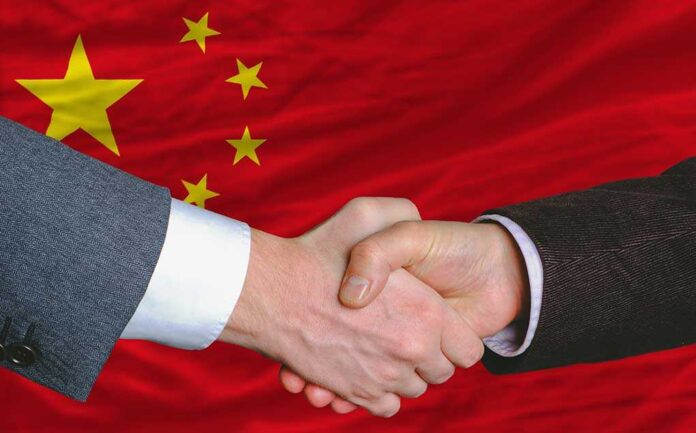
Prime Minister Mark Carney’s Beijing visit unlocked billions in trade deals with China, but whispers of a “New World Order” reveal deeper geopolitical shifts shaking North American alliances.
Story Snapshot
- Carney signed strategic partnership with China on energy, EVs, and agri-food exports worth $3 billion annually.
- Canada reversed 100% EV tariffs for a controlled quota of 49,000 Chinese vehicles, prioritizing economic diversification.
- No evidence supports claims of Carney praising Xi effusively or hailing a “New World Order”—official focus stays on pragmatic trade.
- Amid U.S. tensions under Trump, Canada aims to double non-U.S. exports by 2030, reducing reliance on its southern neighbor.
- Ontario Premier Doug Ford warns of job losses, highlighting domestic pushback against the deals.
Carney’s Rise to Power and Beijing Summit
Mark Carney became Prime Minister in March 2025 after leading Liberals to victory in April elections. His campaign countered U.S. President Trump’s annexation threats, emphasizing Canadian sovereignty. Carney, former Bank of Canada and England governor, visited Beijing January 2026. He met President Xi Jinping, Premier Li Qiang, and NPC Chairman Zhao Leji. They announced a strategic partnership centered on energy, clean tech, electric vehicles, and agri-food exports.
Joint statements outlined mutual benefits. Canada targets 50% export growth to China by 2030. Agreements include memorandums on crime, culture, and trade barriers. Carney described the partnership as building on past strengths for both nations’ gains. This marked the first prime ministerial visit since 2017, after years of strained ties from Huawei arrests and tariffs.
Trade Deals: EVs, Agri-Food, and Energy Shifts
Canada imposed 100% tariffs on Chinese EVs in October 2025, aligning with U.S. policy. Carney’s visit reversed this partially. China gains a quota of 49,000 EVs at 6.1% tariff, rising to 70,000 by year five—under 3% of Canada’s 1.8 million annual sales. Agri-food barriers lift by March 2026, unlocking $3 billion in beef, canola, and pet food exports. Energy MOUs target batteries, solar, and wind joint ventures.
These steps diversify Canada’s economy amid global uncertainty. Carney dismissed auto sector risks as low single-digit impacts. Businesses in clean tech and farming stand to gain investments and jobs. Consumers access more affordable EVs under $35,000 within five years. Long-term goals include doubled non-U.S. trade in a decade, with China as the number two export market.
Domestic Backlash and U.S. Tensions
Ontario Premier Doug Ford opposed tariff reductions, vowing to protect auto workers from cheap imports. Unions echo concerns over North American manufacturing threats. Carney’s government views diversification as essential sovereignty defense, especially against Trump’s trade pressures. Official releases stress G7 strength and multilateralism via APEC and climate pacts, not anti-U.S. rhetoric.
Sensational social media claims of Carney “bowing to Beijing” or invoking a “New World Order” lack substantiation in verified reports. These appear as partisan spins diverging from PMO facts. From an American conservative lens, such deals risk undercutting allied industries without ironclad protections—common sense demands vigilance on IP theft and market flooding, though Carney’s quotas show calculated restraint over Trudeau’s hawkishness.
Sources:
Prime Minister Carney forges new strategic partnership with the People’s Republic of China
China EV tariffs Canada – Politico
Canadian Prime Minister Mark Carney’s Record in Latin America
Canada – Appointment of Mr. Mark Carney as Prime Minister of Canada