

An ICE bullet on a Minneapolis street just cracked open the most explosive fight over federal power, immigration, and who really rules your neighborhood.
Story Snapshot
- A 37-year-old woman, Renee Nicole Good, is shot and killed by an ICE officer in Minneapolis during a traffic stop-style encounter.
- Thousands pour into the streets nationwide in anti-ICE protests, while the White House doubles down on “law and order.”
- Federal investigators lock down key evidence as Minnesota officials insist the ICE officer is not above state law.
- Claims of “absolute immunity” for federal agents collide with Americans’ expectations of accountability and equal justice.
The Shooting That Turned Minneapolis Into A National Fault Line
The chain reaction begins on January 7, 2026, when an ICE officer fatally shoots 37-year-old Renee Nicole (Macklin) Good during an immigration enforcement operation in south Minneapolis. Federal officials say she tried to run over officers with her car; witnesses and newly surfaced cellphone video raise doubts about that account, and the public instantly recognizes the script: a split-second lethal decision, followed by an official story that arrives faster than the facts.
Minneapolis is the worst possible place for a federal shooting to look murky. The city still lives in the shadow of George Floyd’s killing and years of debate over police power, body cameras, and accountability. This time, the trigger is pulled not by a local cop but by a federal immigration officer operating amid a visible federal “surge” that had already been “swarming” immigrant neighborhoods since early December. For residents, that surge now feels less like policing and more like an occupation.
From Local Tragedy To A Coast-To-Coast Anti-ICE Uprising
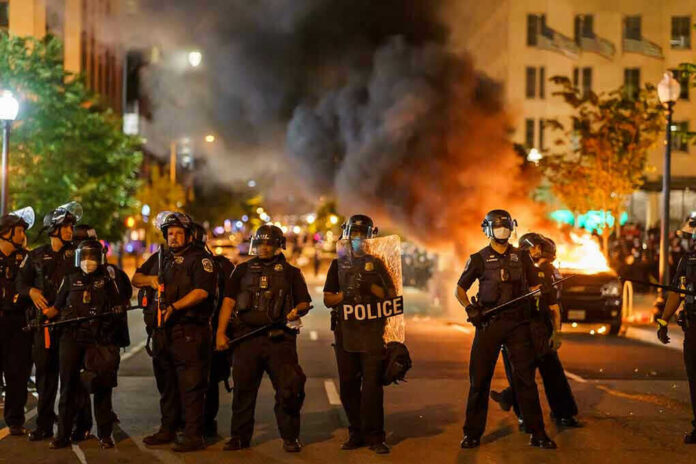
Within a day, a vigil grows at the shooting site. Within three days, thousands march through Minneapolis streets, chanting against ICE and Trump’s immigration crackdown while carrying signs that say “Not In Our City” and “No One Is Above The Law.” The protests stay largely peaceful, but officers make some arrests, and the sense of combustible tension is unmistakable. Solidarity marches pop up in New York, Washington, D.C., and other cities that know federal overreach up close.
The crowds are not just angry about one bullet; they are furious about a pattern. For years, ICE has symbolized family separations, dawn raids, and opaque detention centers. Under Trump, the agency receives more money, more authority, and more rhetorical backing than ever. When federal agents kill a woman on a city street and quickly retreat behind controlled press statements, protesters do not see a tragic exception. They see the logical endpoint of a system that treats enforcement power as the ultimate argument.
Evidence, Immunity, And The Question Of Who Investigates The Enforcers
As the marches swell, the investigation fight turns into the real constitutional drama. The FBI and DHS hold Good’s car and other key evidence, while Minnesota’s Hennepin County Attorney Mary Moriarty and Attorney General Keith Ellison say state investigators have “really none” access to federal officers or critical material. Their offices set up a public portal begging citizens to upload any video they captured, a remarkable admission that they are investigating their own government from the outside in.
This standoff becomes a litmus test for basic rule-of-law instincts. Vice President JD Vance publicly claims the ICE officer enjoys “absolute immunity” for actions taken on duty, suggesting federal power functions like royal privilege. Moriarty counters that the officer “does not have complete immunity” under Minnesota law, asserting that a badge issued in Washington does not nullify a state’s criminal code. For conservatives who still believe in limited federal government and strong state sovereignty, this immunity talk sounds less like law and order and more like law for thee, not for me.
Trump’s Enforcement Doctrine Meets Middle-America Skepticism
Trump responds by defending the officer as acting in self-defense and framing critics as undermining public safety. Republicans such as Lindsey Graham and Markwayne Mullin echo that anyone who attempts to run over officers does so at their own peril, and that lethal force is justified when law enforcement feels threatened. That argument lands with many Americans who value strong policing and expect officers to come home alive. But it assumes the disputed facts are settled long before investigators have finished their work.
On the other side, Democrats like Jim Clyburn call the shooting an “unjustifiable act of violence” and argue that ICE has been “wreaking havoc” under Trump. Ilhan Omar, representing the district where the shooting occurred, brands ICE’s actions “reprehensible” and demands accountability. Senators Mark Warner and Chris Murphy warn that tossing around labels like “domestic terrorism” and promising “absolute immunity” is not how serious governments investigate their own use of force. Their position aligns with a core conservative instinct: do not let the same officials who might have erred be the sole judges of their own conduct.
A Test Of Federal Power, Local Control, And Citizens’ Patience
Governor Tim Walz issues a warning order to prepare the Minnesota National Guard, clearly aware of how quickly peaceful marches can spiral if a single confrontation turns bad. He urges protesters to stay loud but peaceful, while Illinois Governor J.B. Pritzker publicly warns demonstrators not to hand the administration an excuse to send in more agents or troops. At the same time, senior Trump ally Kristi Noem announces “hundreds more” federal agents are headed to Minnesota, signaling that Washington intends to answer political criticism with even greater show-of-force.
That posture raises a blunt question for older Americans watching from their living rooms: When a citizen dies at government hands, should the default response be more armor or more answers? Common sense says you do not promise immunity before you see the evidence; you do not shut out state investigators and then ask the public to trust you. Thousands of protesters in Minneapolis and beyond are not rejecting the idea of borders or laws. They are rejecting the idea that the people who enforce those laws can shoot, seal the files, and walk away beyond the reach of the very justice system they claim to defend.
Sources:
Minneapolis ICE shooting live updates: Tensions flare in Minneapolis (ABC News)
Rep. Clyburn responds to fatal ICE shooting in Minneapolis (ABC News 4)
As Minneapolis ICE shooting draws national attention, Republicans and Democrats dig in (Politico)