A closed-door deposition about Jeffrey Epstein managed to turn into a public fight over who’s hiding the truth—and who’s turning Congress into theater.
Quick Take
- Hillary Clinton sat for roughly six hours on Feb. 26, 2026, under subpoena in Chappaqua, New York, for a House Oversight probe tied to Epstein.
- She denied ever meeting Epstein, downplayed her familiarity with Ghislaine Maxwell, and blasted Republicans for repetitive questions and conspiracy detours.
- Chairman James Comer called the session “productive” but signaled frustration with the substance he got back.
- A pause reportedly followed an allegation that Rep. Lauren Boebert shared a photo from inside the closed session.
- Bill Clinton’s deposition was scheduled for the next day, keeping the story alive and raising the stakes for the committee.
The Deposition That Was Supposed to Be Quiet, and Wasn’t
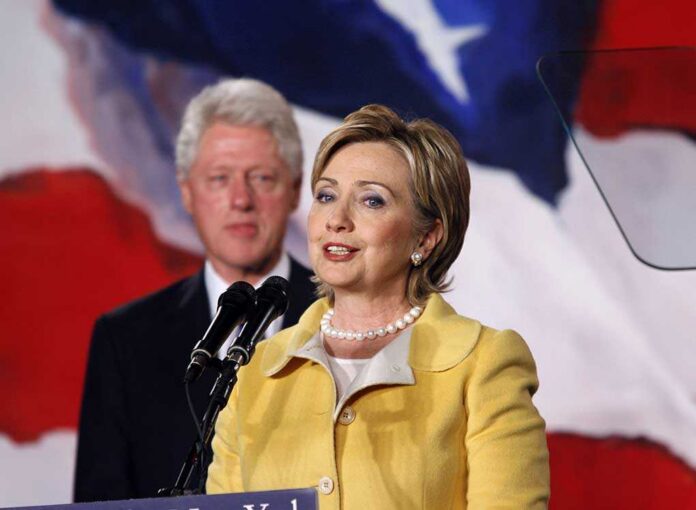
Hillary Clinton arrived at a transcribed, closed-door House Oversight deposition on Feb. 26 and left it determined to win the postgame show. The committee questioned her at her Chappaqua residence for about six hours, with Republicans pressing on what she knew about Epstein’s network and any links to the Clinton orbit. Clinton’s central point stayed simple: she never met Epstein and had no meaningful relationship with him.
Clinton also framed the day as a process problem, not a truth problem. She criticized the private setting, portrayed the questioning as repetitive, and suggested Republicans used the room to chase distractions. She still offered a narrow compliment, saying Chairman James Comer asked substantive questions near the end. That mix—deny, counterpunch, then concede a sliver—felt designed for an audience beyond the committee table.
Why the House Oversight Committee Is Digging Here
Congress didn’t wander into Epstein by accident. The investigation lives in the space between public disgust and public doubt: Americans know Epstein trafficked influence along with victims, yet many believe powerful names never face full exposure. Republicans say they want unredacted files and witness testimony that clarifies money flows, foreign ties, and who helped protect whom. Democrats argue Republicans are using the scandal as a partisan cudgel and a deflection.
The Clintons’ appearance only happened after real pressure. The committee issued subpoenas in August 2025. Depositions slipped from fall into winter, then escalated in January 2026 when the Clintons didn’t appear and the committee moved toward contempt. That threat—possible jail time and a steep fine—creates a hard, conservative-friendly reality: subpoenas aren’t suggestions. The Clintons agreed to testify before the full House could vote, averting a collision.
The Political Chessboard: Clinton vs. Republicans, and Democrats vs. Trump
Republicans left the room signaling dissatisfaction, with some describing Clinton as unhelpful or evasive. Clinton left the room accusing Republicans of breaking rules and chasing topics she said didn’t belong in a serious inquiry, including UFOs and “Pizzagate.” Those details matter because they shape public trust. If lawmakers sound unserious, they weaken the legitimate parts of oversight. If a witness sounds slippery, voters assume smoke means fire—even when proof stays thin.
Democrats, for their part, treated the day as proof the committee wants a Clinton story more than an Epstein story. They also pushed a symmetry argument: if Congress can drag the Clintons into depositions, it can subpoena Donald Trump too. Conservatives should recognize the precedent risk. Oversight power expands the same way government often does—one “special” case at a time—until it becomes a routine weapon. The bar should stay high: credible purpose, narrow scope, real outcomes.
Leaky Rules and the Boebert Photo Flare-Up
The deposition reportedly paused after an allegation that Rep. Lauren Boebert shared a photo from inside the closed-door session. That kind of episode turns procedure into the story and gives every side an excuse to grandstand. Closed-door interviews exist for a reason: witnesses talk more freely, investigators test timelines, and transcripts can later support targeted public hearings. When members treat confidentiality like a prop, they erode the seriousness of Congress and hand witnesses a ready-made complaint.
Leaks and counter-leaks also create a credibility trap for the committee. A conservative, common-sense view says transparency is good, but selective transparency is propaganda. If the public only gets snippets that help one side, Americans assume the rest is worse—or irrelevant. Clinton’s frustration with privacy may be strategic, but Congress also owns the mess: if lawmakers can’t keep rules, they can’t claim the moral high ground while demanding the public trust their conclusions.
The Bill Clinton Deposition: Where the Hard Questions Actually Live
Hillary Clinton’s testimony drew attention, but Bill Clinton’s scheduled deposition is where the committee can ask more direct questions tied to the public record. His name has appeared prominently in Epstein-related reporting and document discussions, including known flights on Epstein’s plane in the early 2000s and photos together. That doesn’t prove crimes, and the committee chair has said no one is accusing wrongdoing. It does justify pointed questions about judgment, access, and who arranged introductions.
https://twitter.com/JAFOinDC/status/2027198896926048581
The country now waits for something Washington rarely delivers: a clean, fact-driven conclusion that respects victims, avoids conspiracies, and doesn’t turn subpoena power into a partisan carnival. If the committee wants to serve the public, it should narrow its questions to verifiable timelines, financial channels, and documented travel and contacts, then publish what it can without harming witnesses or survivors. If it can’t, Americans will file this away as another loud episode with no accountable ending.
Sources:
Axios: Hillary Clinton deposition on Epstein investigation
Politico: House Republicans say Hillary Clinton punted questions on Epstein
CPR: Lauren Boebert photo pausing Hillary Clinton Epstein deposition