

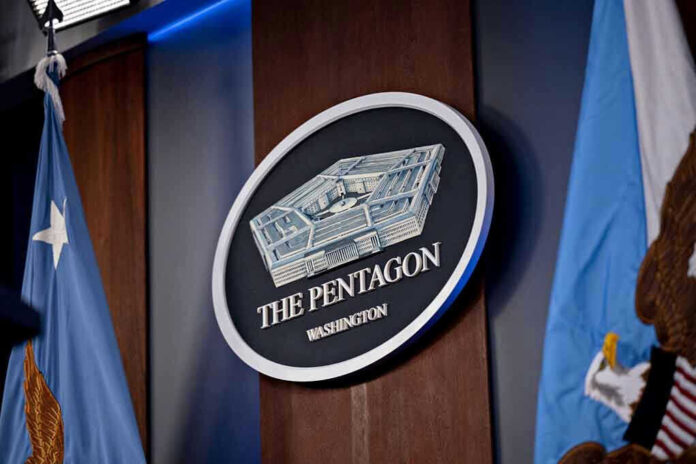
When the Marines start calling in ICE to protect America’s own front lines, you know something’s gone wildly off the rails—and it’s not just about border security anymore.
At a Glance
- ICE agents are now stationed at major Marine Corps bases in a pilot program targeting foreign national threats.
- The move follows a spike in attempted breaches—some by individuals illegally in the U.S.—and drone incursions over sensitive military sites.
- Critics blast the lack of transparency and question whether the military is losing confidence in its own security.
- The program raises concerns about federal overreach and the erosion of military autonomy.
Marines Tap ICE as Security Fears Mount at U.S. Bases
The U.S. Marine Corps, once the very symbol of American self-reliance, has now brought in Immigration and Customs Enforcement (ICE) to beef up security at three of its most critical installations: Camp Pendleton, Marine Corps Base Quantico, and Marine Corps Base Hawaii. This unprecedented partnership is the direct result of a disturbing pattern—foreign nationals, including some in the country illegally, have been caught trying to infiltrate American military bases. Just last year, two Jordanian nationals, one in the U.S. illegally and the other with a terminated visa, attempted to breach security at Quantico in a box truck. That’s not the kind of “international cooperation” anyone was clamoring for.
While Americans are told to wait in line at the DMV or airport, it seems the country’s enemies have a fast pass straight to our most sensitive military sites. And let’s not forget the swarm of unauthorized drones buzzing overhead—because apparently, the Pentagon needed a few more headaches. Reports indicate nearly 100 Chinese nationals have tried to waltz onto U.S. bases. If that doesn’t make you question who’s actually in charge of protecting American soil, nothing will.
Pilot Program Quietly Launches, Transparency Nowhere to Be Found
This ICE-Marine Corps joint operation kicked off in July 2025, but don’t expect a big press briefing. The Pentagon’s official line is that this is a “collaborative effort” to boost “threat awareness” at “critical access points.” In plain English: they’re worried about who’s slipping through the cracks. What’s missing? Any clear explanation of how this program works, how success will be measured, or whether this is the new normal for base security. ICE, usually not shy about taking a victory lap, hasn’t issued a detailed statement. The result is a program shrouded in secrecy, leaving service members, their families, and taxpayers in the dark.
For many, this “solution” is as much about optics as security. If the Marines—the world’s most feared fighting force—now need backup from ICE just to guard the gate, what message does that send? Critics, including defense experts, are already warning about the chilling effect on morale. Some are asking outright: is this an admission that the military can’t handle its own security? Or is it just another example of the federal government’s endless appetite for new layers of bureaucracy and control?
Broader Implications: Federal Overreach or Common Sense?
The consequences of embedding ICE within the Marine Corps go far beyond the base perimeter. If this pilot program expands, it could fundamentally alter how America protects its most sensitive installations. On one hand, the move could enhance security—assuming ICE agents are actually empowered to do their jobs and not hamstrung by red tape. On the other, this is yet another step down the slippery slope of federal agencies muscling into military affairs, blurring the lines between law enforcement and national defense.
The price tag isn’t small, either. With Congress funneling billions into border security and state-level enforcement, this new arrangement is just one more drain on taxpayer dollars—dollars that, by the way, could be spent on supporting military families or shoring up readiness. Instead, politicians are scrambling to fund programs that should never have been necessary if border security was taken seriously in the first place. Meanwhile, the local communities around these bases face the prospect of ramped-up law enforcement activity and even more federal oversight.
Expert Voices: Skepticism and the Fight for Accountability
Abby Hall Blanco, a defense expert at the University of Tampa, has voiced deep skepticism about the program’s lack of transparency and possible impact on military morale. She’s not alone. Across the defense community, there’s growing concern about the wisdom of letting another federal agency set up shop inside the armed forces. The Pentagon claims this is all about evolving threats and collaboration. But for anyone paying attention, it sure looks like another attempt by Washington to centralize power and micromanage what used to be core military responsibilities.
Ultimately, the effectiveness of this ICE-Marine Corps partnership will hinge on results—not rhetoric. If security improves and incidents drop, expect calls to replicate the model nationwide. If not, get ready for yet another costly, confusing, and ultimately ineffective experiment in government overreach. Either way, Americans have every right to demand answers on who’s protecting their country—and why America’s own warriors are being told to stand aside for the bureaucrats.