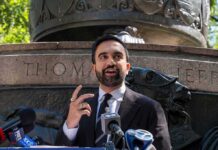

Chicago just became the first major American city to direct its police force to investigate federal immigration agents for potential prosecution, a move that transforms local cops into watchdogs over ICE operations.
Story Snapshot
- Mayor Brandon Johnson signed the “ICE On Notice” executive order on January 31, 2026, directing Chicago Police to investigate and document alleged violations by federal immigration agents
- Chicago Police Department has 30 days to develop implementation policies, including preserving body-camera footage and sharing evidence with prosecutors
- The Department of Homeland Security immediately refuted the claims, citing Illinois released 1,768 criminal noncitizens despite ICE detainers, linked to 5 homicides and 141 assaults
- The Fraternal Order of Police opposes the order as political theater that creates legal jeopardy for officers caught between local and federal authority
- Chicago claims first-in-nation status for using local authority to hold federal agents accountable for state crimes not tied to their federal duties
When Local Policing Targets Federal Agents
Mayor Brandon Johnson signed the executive order at City Hall on Saturday morning, directing Chicago Police Department personnel to treat federal immigration agents as potential criminal suspects. The order requires CPD officers to investigate any alleged violations of state or local law by ICE agents, preserve body-camera footage, and forward evidence to the Cook County State’s Attorney’s Office for potential felony prosecutions. Chicago Police cannot arrest federal agents under the directive, but they must document every interaction where agents allegedly step outside their federal authority.
The order specifically references recent fatal shootings involving Marimar Martinez in Chicago, Silverio Villegas-Gonzalez in Franklin Park, Illinois, and Renee Good and Alex Pretti in Minneapolis, Minnesota. Johnson framed these incidents as evidence that federal agents operate without accountability. His counsel, Sheila Bedi, argues the legal theory holds water because federal agents remain subject to state criminal law when their actions fall outside legitimate federal duties. The order positions itself as protection against what Johnson calls lawlessness and militarized tactics by federal enforcement personnel.
The Federal Government Fires Back
The Department of Homeland Security responded within hours, with Assistant Secretary Tricia McLaughlin flatly rejecting the mayor’s characterization of ICE operations. McLaughlin released data showing Illinois authorities released 1,768 criminal noncitizens despite ICE detainers, individuals connected to serious crimes including five homicides, 141 assaults, and numerous other violent offenses. DHS highlighted that 4,015 detained aliens in Illinois face serious charges, arguing that sanctuary policies create the danger Johnson claims to combat. The federal response frames Chicago’s executive order as political deflection that undermines professional law enforcement while protecting criminals from deportation.
This clash reflects deeper tensions since President Trump’s January 20, 2026 inauguration intensified immigration enforcement nationwide. DHS accuses Chicago’s sanctuary policies of endangering communities by shielding violent offenders from federal custody. Johnson counters that federal agents themselves pose threats through aggressive tactics he characterizes as illegal. The disagreement centers on competing claims about who truly threatens public safety in Chicago, with both sides marshaling statistics and incident reports to support their positions. Neither perspective acknowledges merit in the other’s concerns.
Chicago Police Caught in the Crossfire
The Fraternal Order of Police, representing Chicago Police Department officers, condemned the executive order as political bluster that places officers in legal jeopardy. The union argues the directive forces cops to choose between federal and local authority, creating impossible situations during joint operations or ICE raids. CPD has 30 days to develop implementation policies, but the order provides no clarity on how officers should handle conflicts between investigating federal agents and maintaining cooperative relationships necessary for public safety operations involving multiple jurisdictions.
Immigrant advocacy organizations applauded the move. Karina Ayala-Beremejo, CEO of Instituto del Progreso Latino, called the order an opportunity to collect evidence about past incidents advocacy groups describe as abominable. Katarina Ramos of the National Immigrant Justice Center questioned whether federal agents would respect local authority or continue operations unchanged. These groups view the executive order as essential protection for immigrant communities experiencing what they characterize as terror from federal enforcement actions.
Constitutional Collision Course Ahead
The order sets up a constitutional showdown over federal supremacy doctrine, which generally shields federal agents performing official duties from state prosecution. Johnson and his supporters claim federal agents lose that immunity when committing state crimes unrelated to legitimate federal functions. That legal theory remains untested at this scale, and no court has yet ruled on whether a city can direct its police to investigate federal immigration agents as potential criminals. The 30-day implementation period may produce clarity, or it may simply delay inevitable litigation.
Chicago has maintained sanctuary city policies since 1985, limiting cooperation with federal immigration enforcement to protect immigrant communities. Johnson issued prior executive orders denouncing militarized federal deployments, establishing a pattern of resistance to federal authority under the Trump administration. His latest move escalates that resistance by actively directing local police to monitor and document federal agent activity for potential prosecution. Whether other sanctuary cities follow Chicago’s lead depends partly on how federal courts respond to what Johnson calls Trump-proofing Chicago from illegal tactics.
https://twitter.com/Constitustion/status/2018060073290080758
The practical impact remains uncertain. Federal agents may ignore local police documentation, continuing operations while challenging any prosecutorial efforts in federal court. Chicago Police may struggle to implement policies that simultaneously investigate federal agents and maintain necessary interagency cooperation on legitimate public safety threats. The Cook County State’s Attorney’s Office faces decisions about whether pursuing state charges against federal agents serves justice or creates legal quagmires that drain resources from prosecuting actual criminals. Johnson frames his order as accountability where federal oversight fails, but critics see political theater that makes Chicago less safe by protecting deportable criminals and antagonizing federal law enforcement partners who help investigate serious crimes.
Sources:
Executive Orders – Chicago City Clerk