
horizonpost.com — Three children walked into a quiet Swiss train station on an ordinary morning and walked out with scars that will shape the rest of their lives.
Story Snapshot
- A 31‑year‑old dual Swiss‑Turkish man allegedly attacked commuters with a blade at Winterthur station, injuring three people, including children.[1][2]
- Witnesses reported him shouting “Allahu akbar,” and he had reportedly been flagged years earlier for spreading Islamic State propaganda.[1][2]
- A Zurich security chief publicly labeled it a terrorist attack tied to radicalisation and extremism, while police simultaneously said the motive was still under investigation.[2][4]
- The children who saw the blood, screams, and chaos now carry invisible wounds that no headline will ever fully capture.
How An Ordinary Commute Turned Into A Scene Of Terror
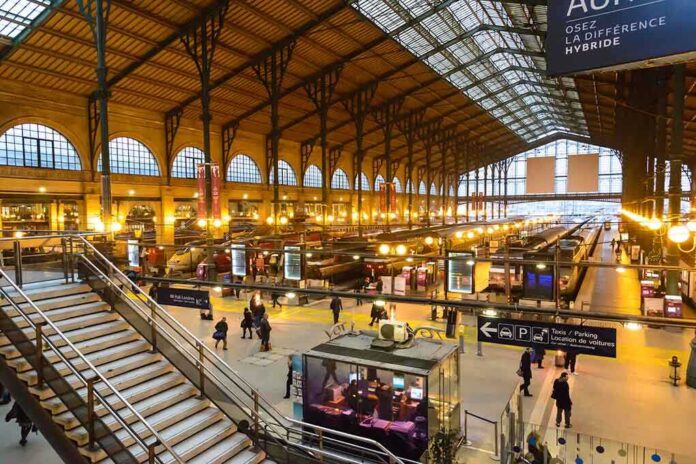
Winterthur station, just outside Zurich, opened on a normal weekday morning as parents shepherded children through the familiar rush of platforms and announcements. Within minutes, that routine shattered. Police say a man armed with a bladed weapon moved through the station area and injured three people shortly after 8:30 a.m., turning a neutral public space into a crime scene of blood, panic, and sirens.[2][4] Children nearby watched adults suddenly become victims.
This is the man who was arrested in Winterthur, just outside Zurich, Switzerland this morning.
He raced around outside the train station stabbing people indiscriminately. He screams “Allahu akbar” and fled.
Children are running around in panic. Three men were stabbed, one is… pic.twitter.com/jnLw9T4iQb
— Miss Jo (@therealmissjo) May 28, 2026
Zurich canton authorities arrested a 31‑year‑old dual Swiss‑Turkish national from Winterthur as the suspected attacker.[1][2] Reporting states he had previously been reported for spreading propaganda in favor of the Islamic State organization, an alarm bell that apparently never translated into effective prevention.[1] For parents who assume European order and Swiss efficiency keep chaos at bay, this detail bites hard: the system may have seen the smoke long before anyone felt the fire.
Why Officials Called It Terrorism Before The Investigation Was Finished
Zurich canton security chief Mario Fehr stepped before cameras and did something European officials often avoid in the first hours after violence: he called it terrorism. He told reporters, “I am exceptionally calling this a terrorist attack,” and said the motive “must be sought in the realm of radicalisation and extremism.”[2][4] That language matched early media framing, as outlets described a terrorist attack at a Swiss train station, even while investigators sifted through early evidence.[2][4]
At the same time, Zurich canton police issued a more cautious line, stating that the suspect’s motive remained under investigation.[2][4] Reports of the attacker shouting “Allahu akbar” came from witnesses and video described in coverage, not from a verified confession or publicly released audio.[1][2] This split—one senior official using the word “terrorist” while police emphasize uncertainty—creates a tension Americans recognize: public reassurance and political clarity on one side, investigative discipline on the other.
Children As Secondary Victims Of Ideological Violence
Children in that station did not know the difference between a terrorism statute and an aggravated assault charge. They knew someone with a weapon, adults screaming, bodies on the ground, and the sound of emergency responders racing in. Whether prosecutors eventually classify the case as terrorism, hate crime, or something narrower, those children experienced what every jihadist propagandist hopes to create: fear in everyday life, a sense that nowhere is really safe anymore.[1][2][5]
Research on similar attacks in Europe shows a familiar pattern. A lone offender or small cell, sometimes previously flagged for extremist sympathies, strikes a soft target with a simple weapon, looks for symbolic or random victims, and lets the news cycle do the rest.[1][5] For families, this is not an abstract debate about labels. It is about whether you can send your kids to school or across town on a train without wondering who else is on the platform and what is in his backpack or coat pocket.
Media Frames, Political Incentives, And Common-Sense Questions
Coverage of Winterthur fits a recurring pattern: once officials or headlines use the word “terrorist,” public perception hardens even if the legal record remains open.[1][2][3][4] Commentators then cherry‑pick which official line to believe—Fehr’s clear terrorism language or the police statement that motive is still being examined.[2][4] A common‑sense conservative instinct kicks in here: do not ignore what a suspect has already shown you, especially when there are prior extremist referrals and shouted Islamist slogans in the mix.[1][2]
At the same time, prudence demands evidence. The available reporting does not yet include a detailed digital forensic record, a manifesto, or confirmed operational ties to a foreign terror network.[2][3] That gap does not make the act less evil or the children less traumatized, but it does matter for building policies that work. Over‑claiming in the first 24 hours can undermine trust later if prosecutors file narrower charges or if mental illness, drugs, or a personal grievance also played roles.
What This Says About Swiss Security And Western Vulnerability
Switzerland, often imagined as neutral, orderly, and insulated, has now racked up multiple high‑profile stabbings with suspected extremist motives, including an earlier attack on an Orthodox Jewish man that authorities later called both terrorist and antisemitic.[1][2][3][4][5][6] The Winterthur station case slots into that broader trend line, where low‑tech violence and online radicalisation pierce the myth of a safe, apolitical bubble in the heart of Europe.[1][5]
Conservative common sense points to two uncomfortable but necessary questions. First, if someone was reportedly flagged years earlier for spreading Islamic State propaganda, why did he remain free to stroll into a station with a blade?[1] Second, how many similar individuals move through Western cities today, watched but not stopped, while officials worry more about speech codes than about children who now must learn what real fear feels like before they finish grade school?
Sources:
[1] Web – Evil: Children Traumatized After Terrorist Stabbing Attack in …
[2] Web – Attacker wounds three with knife in Switzerland reportedly shouts …
[3] Web – Three injured in Swiss train station ‘terrorist attack’ – RTE
[4] Web – Video. Switzerland: Footage from the scene emerge after Winterthur …
[5] Web – Swiss train station knife attack ‘a terrorist act,’ official says
[6] Web – Terrorism in Switzerland – Wikipedia
© horizonpost.com 2026. All rights reserved.