

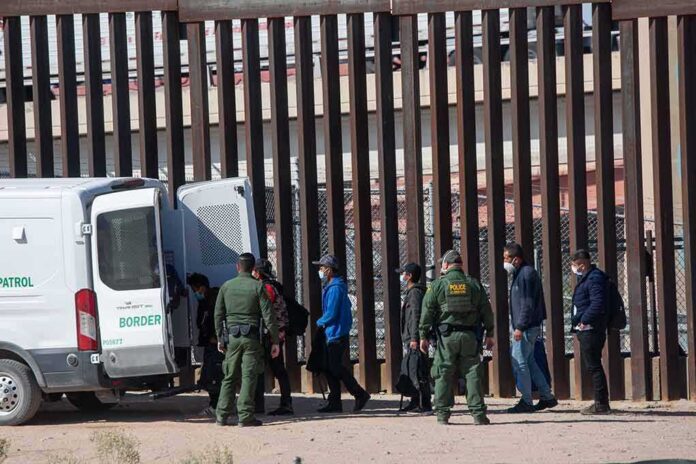
Trump vowed to make it “legally impossible” for any future president to reopen the border, and the crowd in Dallas roared.
Story Snapshot
- Trump introduced the “No Invasion of Our Country Act” at the GOP midterm convention in Dallas.
- The plan aims to lock in current border restrictions so future presidents cannot undo them by fiat.
- The White House has already invoked existing law to restrict illegal entry as an “invasion” threat.
- Critics argue Congress holds the primary immigration power and warn against executive overreach.
Trump’s Dallas Pledge And What It Seeks To Do
President Trump told Republicans in Dallas that he will back a bill to stop any future president from “opening the border again.” He named it the “No Invasion of Our Country Act” and cast it as a legal lock on border policy. His case was simple: secure gains now, then bolt the door so the next administration cannot reverse them with a pen stroke. The pitch landed in a room built for it, but the legal road ahead is tougher than a campaign line.
The proposal fits a broader approach the administration already uses. The White House issued directives under immigration law to bar and prosecute unlawful entry and to treat the southern crisis as an “invasion” harming national interests. This framed migration as a national security threat, not only a humanitarian or economic issue. Supporters see this as common sense: sovereign nations control borders. They also see a Congress that talks, stalls, and rarely fixes broken law.
"He pushed a 'No Invasion of Our Country Act' so no future president can reopen the border with a pen. Texas heard
it first." https://t.co/delOUbKWjD— Gene Van Shaar (@GeneVanShaar) September 10, 2026
Can Congress “Future-Proof” Border Policy?
Immigration law starts with Congress. Courts describe Congress’s immigration power as “plenary,” which means very broad. Congress writes the rules for who may enter or stay, and the executive enforces those rules. Any bill that tries to bind future presidents must live inside that order. Congress can set clear mandates that narrow discretion. But it cannot erase a later Congress’s power to amend the law. Statutes can entrench norms for a time, not for all time.
That limits the promise baked into the Dallas pledge. A statute can make it harder to “reopen the border” by defining standards, triggers, and penalties. It can tighten parole, asylum screening timelines, and release rules. It can require detention or quick returns when crossings surge. It can curb the use of executive waivers. All that shifts power from the Oval Office back to the legislative branch, where the Constitution put it in the first place.
Pushback On Executive Power, Then And Now
Opponents point to a long fight over presidential power at the border. They argue presidents stretch emergency tools to do what Congress won’t do. They cite earlier disputes over funding shifts for barrier projects and claims of sidestepping Article I spending powers. They also challenge the idea that a president can “close the border” under existing law in a blanket way, saying the law allows bans on classes of aliens, not total shutdowns.
That critique lands with some force because it matches the Constitution’s design. Congress writes the checks and the rules. Presidents execute them. A durable border fix should run through statute, not executive improvisation. On that score, Trump’s push for a law, rather than only an order, aligns better with conservative governance: legislate, do not rule by memo. The test will be whether the bill’s text is tight, targeted, and court-ready, not just a rally line.
What A Serious Bill Would Need To Include
Serious border law must do four things. First, define measurable triggers for tougher controls when encounters spike, so response is automatic and not political. Second, narrow parole and catch-and-release loopholes that invite chaos. Third, set fast, fair asylum screening with clear standards and firm timelines. Fourth, mandate resources and detention capacity to match the rules. The White House’s “invasion” framing may justify urgency, but text beats rhetoric in a courtroom.
Conservatives should demand clear limits on executive waiver powers and transparent reporting to Congress. That reins in future presidents of either party. If a later Congress wants a looser border, it should vote for it, on the record, and face the voters. That is how the system should work. Trump’s Dallas promise opens that door. A disciplined bill can walk through it. A sloppy one will trip in court and hand victory to open-border activists.
Sources:
insiderpaper.com, nypost.com, townhall.com, congress.gov, federalregister.gov, abcnews.com, dallasnews.com
© horizonpost.com 2026. All rights reserved.