

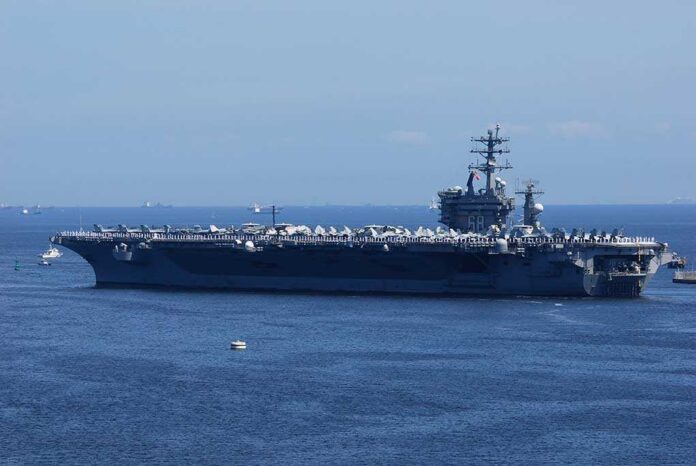
The Navy’s cruiser purge is not really about abandoning firepower. It is about deciding that age, repair bills, and combat limits finally outran nostalgia.
Quick Take
- The Navy says the Ticonderoga-class cruisers are too old, too worn, and too costly to keep in service.
- Lawmakers have repeatedly pushed back, arguing that retiring them too fast creates a dangerous gap.
- The ships still matter because they carry heavy missile loads and command functions that newer ships do not fully replace.
- The real fight is not just about ships. It is about what the Navy should buy, fix, and leave behind.
The Navy’s Case Against Saving the Cruisers
The Ticonderoga-class cruisers were once the backbone of the Navy’s surface fleet. Today, the Navy says they are becoming a drag on readiness. It has called the ships old, deteriorating, and increasingly hard to support. The service also says cracks, legacy systems, and other material problems make further investment hard to justify. In plain English, the Navy believes it is throwing good money after bad [1].
That argument has a blunt logic that many taxpayers will recognize. A ship can be powerful on paper and still become a bad buy in the real world. The Navy’s budget case says cruiser modernization costs rose far beyond early estimates, and the remaining service life is too short to recover the expense. That is why the Navy wants the money shifted toward newer destroyers and other priorities [1][10].
Why These Ships Became So Hard to Keep
The Ticonderoga class entered service in an era when the Navy still expected long lives from big warships. Time has not been kind. The ships are now decades old, and the Navy says their hull, mechanical, electrical, and sensor problems keep piling up. Some cruisers have already been modernized only to be retired before they could fully return to service. That is the kind of waste that makes Congress furious and shipbuilders nervous [8][12].
The deeper problem is not just age. It is the ugly arithmetic of overhauls. Once a ship is opened up for a major refit, hidden damage often appears. Costs climb. Schedules slip. Crew time gets tied up. And the Navy ends up with fewer deployable ships for years while it chases the hope of a longer service life. That is how a supposed upgrade turns into a long, expensive argument over sunk costs [12][17].
The Political Fight Congress Keeps Reopening
Congress has not accepted the Navy’s exit plan. Lawmakers have moved to block retirements, arguing that the fleet cannot afford to lose heavily armed cruisers while the rest of the force is stretched thin. They are especially wary of losing ships that still help with air defense and strike group command. That is not a trivial concern. When a ship can still do useful work, scrapping it feels less like prudence and more like self-inflicted shrinkage [11][12].
The Navy, meanwhile, keeps returning to the same answer: not every useful ship is worth saving. Admiral Michael Gilday said the cruisers were already old, unreliable, and slipping into obsolescence, with modernization costs rising sharply. That is a strong case if your goal is to squeeze the most combat value from each dollar. It is a weaker case if you think the Navy is already too small and cannot afford to give up hulls that still matter [10][17].
Why This Story Matters Beyond One Ship Class
The cruiser fight says more about American naval strategy than about one class of ship. The Navy wants a leaner fleet with newer technology and lower operating costs. Congress keeps asking a harsher question: what happens in the gap between the fleet we have and the fleet we wish we had? That tension has become a regular feature of naval planning, and it rarely ends cleanly. The Navy wants efficiency. Lawmakers want visible strength [1][11][20].
That is why this debate has such staying power. The cruisers are not just old ships. They are symbols of a larger problem: America keeps spending billions to modernize systems that may already be near the end of their useful lives, while also struggling to field enough new ships fast enough. So the real headline is not that the Navy is scrapping warships. It is that the service is admitting some of its most feared platforms no longer justify the bill [1][12][20].
Sources:
[1] Web – The U.S. Navy Is Scrapping the Most Heavily Armed Warships It Ever …
[8] Web – US Navy Ticonderoga Class Cruisers – Facebook
[10] YouTube – The Ticonderoga Class Dilemma: Too Costly to Save …
[11] Web – U.S. Navy’s CNO Explains the Reasons for Retiring Older …
[12] Web – House panel aims to save five ships from retirement, rejecting …
[17] YouTube – How Navy Spent $1.84 Billions to Retire Four Ships
[20] Web – Why are ships retired so early? – Reddit
© horizonpost.com 2026. All rights reserved.