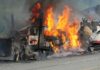

A van smashed through a White House security barricade this morning, raising chilling questions about vulnerabilities at America’s most fortified address.
Story Snapshot
- Van breached barricade at 6:37 a.m. on March 11, 2026, at Connecticut Avenue and H Street, Northwest.
- Metropolitan Police Department assisted U.S. Secret Service; driver detained with no injuries.
- Streets closed temporarily; investigation ongoing without released motive or driver identity.
- Rapid response prevented escalation, echoing isolated prior incidents.
Incident Timeline and Response
At 6:37 a.m., a van drove through the security barricade at Connecticut Avenue and H Street, Northwest, near the White House. Metropolitan Police Department officers joined United States Secret Service agents immediately. They detained the driver and secured the vehicle. No injuries occurred. Authorities closed nearby streets including New Jersey Avenue SE between D and E Streets, Ivy Street SE, E Street SE, and Canal Street SE. Officials urged the public to avoid the area and use alternate routes.
MPD handled road closures and public alerts, providing tip lines at (202) 727-9099 or text 50411. USSS confirmed the vehicle’s safety. No White House lockdown activated, signaling contained threat. This joint operation showcased seamless federal-local coordination during morning rush hour in high-traffic Northwest D.C.
Security Context and Precedents
White House barricades feature crash-rated barriers installed post-9/11 to counter vehicle incursions in dense D.C. traffic. USSS manages perimeter gates amid routine checks near the executive residence. Heightened federal security started August 2025, boosting MPD-USSS teamwork. This daytime breach in the Northwest quadrant differs from precedents.
On October 22, 2025, a motorist rammed a gate at 17th and E Streets Southwest around 10:37 p.m. Police arrested the driver; officials deemed the vehicle safe with no lockdown despite President Trump inside. Such events remain isolated, often without broader threats. Reports vary on vehicle type—van here versus car there—but core facts align on quick detentions and no harm.
Stakeholders and Motivations
USSS leads White House perimeter security with federal authority. MPD provides local support, prioritizing containment and threat assessment. The unnamed driver’s intent remains unknown—possible accident, impairment, or deliberate act. Public safety guides all actions. No identity or background released as investigation proceeds.
Decision-makers include USSS spokespersons for statements and MPD for alerts. Power dynamics favor USSS primacy, yet coordination proved effective. Common sense affirms this rapid response aligns with conservative values of strong law enforcement protecting key sites without overreaction.
Breaking: Car Crashes Into Barricade at White House, Driver Detainedhttps://t.co/yo0g19azRY
— RedState (@RedState) March 11, 2026
Impacts and Expert Views
Short-term effects include D.C. core traffic disruptions and brief public anxiety. No evacuations or injuries affected residents or motorists. Economic hit stays minimal from temporary closures. Socially, it reinforces vigilance; politically, no lockdown indicates low threat amid past scrutiny on USSS.
Long-term, a deliberate breach could prompt barricade reviews, though precedents suggest isolation. Limited expert input calls prior events security lapses urging protocol checks, yet consensus praises response efficacy here. Accidental or intentional interpretations persist, but no immediate danger emerged. Facts support effective protocols over alarmism.
Sources:
WJLA: White House van crashes through crash barricade, police investigation
ABC News: Person arrested after driving barricade White House Secret