

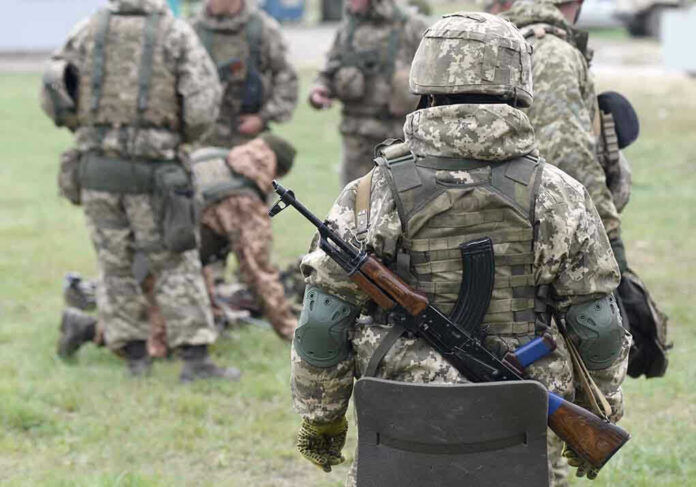
The U.S. Army is abandoning heavy armor in favor of speed and drones, converting all Infantry Brigade Combat Teams into smaller, lighter Mobile Brigade Combat Teams that critics warn could leave American soldiers dangerously exposed on future battlefields.
Story Snapshot
- Army converting all Infantry BCTs to Mobile BCTs, cutting unit size from 4,200 to 2,700 soldiers
- Washington’s 81st Stryker Brigade ditching armored vehicles for lightweight Infantry Squad Vehicles
- New formations rely heavily on drones and digital networks instead of traditional armor protection
- Transformation driven by Ukraine war lessons but raises concerns about soldier survivability
Army Abandons Armor for Speed in Radical Transformation
The Army’s sweeping transformation officially launched in May 2025 when Army Secretary and Chief of Staff Gen. Randy George announced all Infantry Brigade Combat Teams would convert to Mobile Brigade Combat Teams. The initiative explicitly trades “weight for speed, and mass for decisive force,” eliminating thousands of soldiers and heavy equipment from combat formations. This represents the most dramatic restructuring of ground forces since the Stryker program’s introduction in the early 2000s, fundamentally altering how America fights wars.
The Washington Army National Guard’s 81st Stryker Brigade at Joint Base Lewis-McChord serves as the flagship pilot for this controversial experiment. The unit has begun phasing out its 42,000-pound Stryker armored vehicles in favor of lightweight Infantry Squad Vehicles based on modified Chevrolet Colorado pickup trucks. This dramatic shift abandons the medium-weight concept that balanced protection with mobility, instead betting everything on speed and stealth to keep soldiers alive.
Dangerous Gamble Reduces Combat Power by 36 Percent
Mobile Brigade Combat Teams will field only 2,500-2,700 soldiers compared to traditional Infantry BCTs with approximately 4,200 personnel, representing a 36 percent reduction in combat power. The Army plans to convert 25 Infantry BCTs over the next two years, with the National Guard ultimately restructuring to just two armored brigades and 25 mobile brigades. This massive personnel cut occurs as America faces growing threats from China and Russia, both fielding increasingly sophisticated armies with heavy armor and advanced weaponry.
Army leadership claims drone integration compensates for reduced manpower and armor. Training exercises showed units achieving 300 percent greater lethality using 50 percent fewer artillery rounds, with 90 percent of fire missions guided by drones. However, these impressive statistics came from controlled training environments against predictable opponents, not real combat against adaptive enemies equipped with electronic warfare capabilities that could disable drone networks and leave undermanned units exposed.
Ukraine Lessons Drive Risky Strategic Shift
The transformation stems from Ukraine war observations showing heavy losses among large, detectable formations targeted by precision fires and loitering munitions. Army doctrine now prioritizes dispersed, rapidly moving units optimized for contested battlefields where enemy sensors constantly hunt for targets. The new Mobile BCTs will deploy quickly to Eastern Europe, the Arctic, and Indo-Pacific theaters where strategic airlift capacity limits heavy equipment transport and sparse infrastructure favors lightweight forces.
Critics worry this dramatic shift abandons proven armor protection for unproven technological solutions vulnerable to disruption. Infantry Squad Vehicles offer minimal protection compared to Strykers, relying entirely on avoiding detection rather than surviving enemy fire. Congressional watchdogs have already expressed concerns that making forces leaner could undercut combat readiness when American soldiers need maximum protection and firepower against determined adversaries who show no signs of abandoning heavy armor themselves.
Sources:
U.S. Army Transforms Washington-Based 81st Stryker Brigade Into New Mobile Combat Team
Infantry brigades shift to mobile brigades in Army transformation