
DHS just launched a dedicated office to seize American air superiority from criminal drones threatening borders and mega-events. What threats demand this urgent escalation?
Story Snapshot
- DHS creates Program Executive Office for UAS and Counter-UAS on January 12, 2026, to counter rising drone threats.
- Office finalizes $115 million investment securing FIFA World Cup 2026 and U.S. 250th anniversary.
- Builds on Trump administration’s $500 million grants and NDAA extension to 2031.
- Addresses cartel smuggling, airport disruptions, and stadium incursions after 1,500+ DHS missions since 2018.
DHS Establishes Dedicated Drone Defense Office
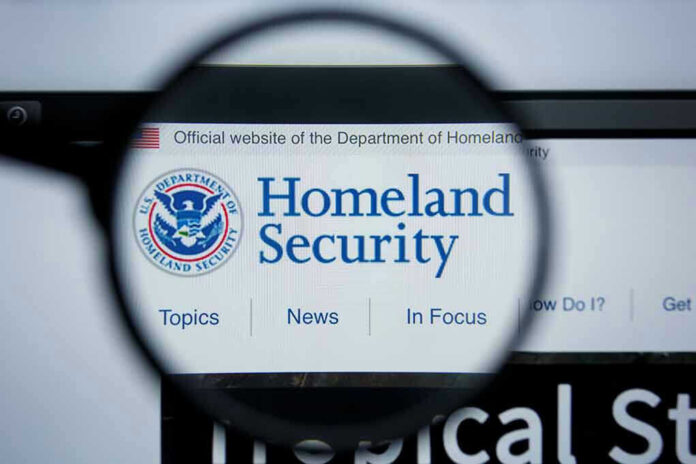
DHS Secretary Kristi Noem announced the Program Executive Office for Unmanned Aircraft Systems and Counter-Unmanned Aircraft Systems on January 12, 2026. This office oversees drone deployments and countermeasures against illicit uses. It already operates, finalizing $115 million for 2026 event security. Noem stressed drones as the new frontier of air superiority, targeting cartels, borders, and infrastructure.
Government efforts evolved from 2018 congressional authorities, which lapsed in 2025 but extended to 2031 via the FY26 NDAA signed by President Trump. DHS conducted over 1,500 missions against threats like prison contraband and airport incursions. FAA logs 100+ monthly drone sightings near airports; NFL detected 2,300 unauthorized drones at stadiums.
Trump Administration Fuels Counter-Drone Surge
The Trump administration allocated $500 million in grants, $250 million each for FY26 and FY27, to states and localities. FEMA awarded $250 million to 11 FIFA World Cup host states and D.C. in December 2025. DHS expanded law enforcement authorizations. CBP and ICE eye $1.5 billion industry contracts for procurement.
These moves align with 2026 risks: FIFA World Cup spans over 100 matches across the U.S., Canada, and Mexico. America’s 250th anniversary July 4 celebrations draw massive crowds. Criminal drones facilitate cartel drug smuggling across the U.S.-Mexico border and disrupt public safety.
Stakeholders Clash on Security vs. Privacy
DHS leads under Noem, prioritizing event safety and border control. Trump policies enable funding and powers. Advocacy groups like ACLU, EFF, and EPIC demand civil liberties safeguards. Georgetown Law’s Laura Donohue cites Constitutional concerns over data collection and mitigation tactics.
Facts support DHS actions: thousands of incidents justify defenses against real threats like smuggling. Conservative values favor strong borders and public safety over vague privacy fears when evidence shows minimal overreach. Common sense dictates protecting citizens first.
Impacts Secure Events and Boost Industry
Short-term, $115 million bolsters World Cup and anniversary security. Long-term, authorities last to 2031, spurring UAS innovation. Economic boosts include grants and contracts. Communities near borders, airports, and stadiums gain protection; hobbyists face restrictions.
Socially, disruptions drop, though privacy debates persist. Politically, it fortifies national security posture. Industry accelerates with conferences like Counter-UAS Homeland Security USA on February 4-5, 2026.
Sources:
DHS launches office for drone and counter-drone technologies