Vice President JD Vance’s tie-breaking vote shielded President Trump’s aggressive Venezuela strategy from congressional handcuffs, exposing raw party power plays in a divided Senate.
Story Snapshot
- JD Vance casts decisive 50-50 tiebreaker on January 14, 2026, to kill war powers resolution targeting Trump’s Venezuela moves.
- Sens. Josh Hawley and Todd Young flip votes under Trump pressure after Marco Rubio’s no-ground-troops assurances.
- Resolution sought to bar U.S. forces from hostilities in Venezuela without Congress approval, rooted in 1973 War Powers law.
- Trump’s direct calls and social media blasts force GOP unity, affirming executive flexibility against Maduro regime.
- Democrats decry “endless war” enablement; GOP hails avoidance of unnecessary limits on counter-drug operations.
Senate Deadlock and Vance’s Decisive Vote
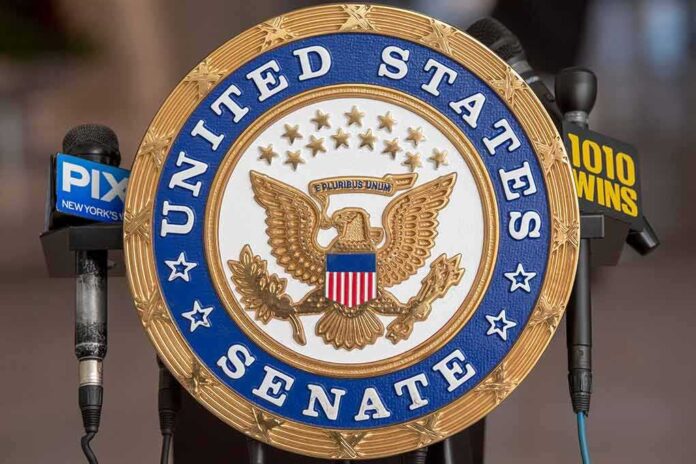
JD Vance delivered the tie-breaking vote in a 50-50 Senate split on January 14, 2026. This action dismissed Sen. Tim Kaine’s war powers resolution. The measure blocked U.S. armed forces from hostilities in or against Venezuela without congressional approval. Five Republicans initially joined Democrats to advance it the prior week. Sens. Susan Collins, Lisa Murkowski, and Rand Paul held firm against dismissal.
Trump targeted dissenting Republicans via social media and phone calls. He pressured Sens. Josh Hawley and Todd Young specifically. They reversed support after Secretary of State Marco Rubio’s letter promised no ground troops and War Powers Resolution notifications. Senate Foreign Relations Chair Jim Risch and Majority Leader John Thune backed dismissal.
Vance’s role as vice president positioned him perfectly for this moment. His vote ended Senate consideration outright. This preserved Trump’s naval buildup in the Caribbean against Maduro’s regime and drug cartels designated as terrorists.
Trump’s Pressure Tactics Reshape GOP Loyalty
President Trump escalated personal involvement starting January 12. He publicly named senators on social media and made direct calls. Hawley cited Rubio’s assurances as key to his flip. Young followed suit, balancing party loyalty with war powers concerns. This demonstrated Trump’s unmatched sway over Senate Republicans.
The administration released a redacted 22-page Justice Department memo on January 14. It detailed a “snatch-and-grab” operation against Maduro but claimed no ongoing hostilities. Rubio’s letter committed to constitutional processes and no occupation. These moves addressed GOP skeptics without binding congressional limits.
Common sense aligns with Trump’s dominance here. American conservative values prioritize strong executive action against threats like Maduro’s narco-state. Kaine’s resolution risked micromanaging valid counter-drug efforts, a distraction from real security needs.
War Powers Roots and Broader Stakes
The 1973 War Powers Resolution mandates presidential notification within 48 hours of hostilities and withdrawal after 60 days absent authorization. Kaine invoked it amid Trump’s Venezuela campaign. No U.S. forces engaged hostilities, per administration statements, but naval deployments and vessel destructions fueled debate.
Democrats like Minority Leader Chuck Schumer accused Republicans of enabling “endless war.” Sen. Murkowski stressed Congress as coequal branch, citing unclear end states. Republicans like Risch dismissed it as targeting “something that isn’t happening.” Thune labeled it Democratic “anti-Trump hysteria”.
This clash tests GOP control of the Senate. Trump’s Greenland threats loom similarly. House Democrats eye parallel votes. Rubio’s upcoming testimony may clarify commitments. Long-term, it weakens war powers enforcement, favoring executive agility.
Sources:
Vance casts tiebreaking vote to kill Venezuela war powers resolution