

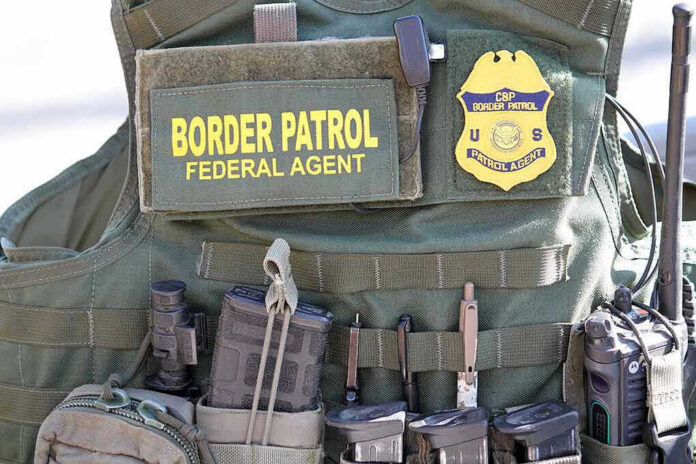
A border supervisor’s badge can open doors for the law—or quietly close them behind the law.
Quick Take
- Federal prosecutors charged a Texas-based CBP supervisor, Andres Wilkinson, with harboring an undocumented immigrant in his home.
- Investigators allege he provided housing, money, vehicles, and transportation through Border Patrol checkpoints to Elva Edith Garcia-Vallejo.
- Garcia-Vallejo entered legally on a non-immigrant visa in August 2023, then overstayed after her authorized travel expired on February 4, 2024.
- A database check tied her to Wilkinson as his niece, adding a family dimension to what was also described as a romantic relationship.
A Supervisor’s Alleged Double Life Inside Border Enforcement
Andres Wilkinson, 52, built a long career at U.S. Customs and Border Protection, starting in 2001 and rising to a supervisory role in 2021. Prosecutors now say that authority became part of the problem, not the solution. The criminal complaint alleges he harbored Elva Edith Garcia-Vallejo—an immigrant without lawful status after overstaying—while working in an agency designed to prevent exactly that kind of conduct.
The allegations read less like a single lapse and more like a sustained arrangement: a place to live, financial support, and access to vehicles registered to him. For readers who assume immigration enforcement mostly fails because of resources or policy, this case forces a more uncomfortable question: what happens when the system’s pressure points include personal loyalty, secrecy, and someone with insider knowledge of checkpoints and routine scrutiny?
The Timeline That Makes the Case Legible to a Jury
Garcia-Vallejo’s story begins normally enough. She entered the United States in August 2023 on a non-immigrant visa, then remained after her authorized travel expired on February 4, 2024. Investigators allege she began living with Wilkinson around August 2024. From June through November 2025, law enforcement surveillance reportedly documented her presence at his home with her underage child and her use of his vehicles.
Investigators also traced a paper trail that matters in federal harboring cases: proof of residence, patterns of support, and evidence that the defendant “knew or recklessly disregarded” the person’s unlawful status. A pivotal date appears in the complaint: May 14, 2025, when CBP investigators learned through a law enforcement database that Garcia-Vallejo was Wilkinson’s niece, connected through a man Wilkinson had listed as his brother.
Romance, Kinship, and the One Detail That Changes Everything
The public-facing coverage highlights a romantic relationship, but the allegation that she was also his niece reshapes how ordinary people process the story. Family ties can trigger sympathy, and the law does not require prosecutors to prove a villain’s motive—only the conduct and the knowledge. Still, the dual description introduces unanswered questions: Was this primarily a concealed relationship, a family rescue mission, or something more complicated? The complaint reportedly leaves unclear whether the niece connection was by blood or by marriage.
Conservative, common-sense ethics don’t struggle with the core principle here: supervisors must follow the rules they enforce, especially when their role gives them power over others’ freedom. Plenty of Americans support lawful immigration and feel compassion for families. Those beliefs do not translate into a private exemption for a federal official. If anything, the higher the rank, the higher the obligation to act cleanly—or step away.
Checkpoints, Credibility, and Why “Harboring” Is Treated as Serious
Federal “harboring” cases often turn on practical assistance: shelter, transportation, and steps that help someone evade detection. Prosecutors allege Wilkinson transported Garcia-Vallejo through Border Patrol checkpoints, an accusation that carries special weight because checkpoints exist as a last net inside the border region. A supervisor who knows standard operating procedures, staffing rhythms, and inspection patterns holds an advantage that ordinary citizens do not, which makes the alleged conduct more corrosive to public trust.
The government framed the case within Operation Take Back America, a broader initiative aimed at illegal immigration and related criminal networks. That framing signals an institutional message: internal misconduct will not be treated as a minor HR issue. Wilkinson appeared in federal court in February 2026 and a judge ordered him held pending a detention hearing, indicating the court saw enough risk—flight, danger, or obstruction concerns—to keep him in custody for now.
What This Case Signals About Enforcement, Accountability, and Reform
CBP’s credibility rests on the public believing enforcement is consistent, not selective. A single case does not prove systemic rot, but it does underline an obvious vulnerability: agencies can screen for credentials, yet still miss hidden personal arrangements that compromise judgment. The fix usually isn’t just more rules; it is enforcement of rules, audits that detect anomalies like shared addresses and vehicle use, and a culture where reporting misconduct doesn’t end careers for the whistleblowers.
https://twitter.com/FoxNews/status/2022158887508467763
The human cost also sits in the background: Garcia-Vallejo’s underage child, the likelihood of deportation proceedings, and the fallout for Wilkinson’s family. None of that excuses breaking the law. It does, however, remind policymakers why clean, predictable legal pathways matter—and why granting informal, private “status” through personal connections is the worst of both worlds: unfair to legal immigrants, corrosive to enforcement, and unstable for the very people it claims to protect.
Sources:
Border Agent Charged with Hiding Person in Country Illegally – KRIS TV
CBP Supervisor Accused of Harboring Illegal Immigrant in Texas Home Faces Criminal Charges – WHMI