A single viral fraud exposé can trigger a law that makes the next exposé riskier to film, publish, or even attempt.
Quick Take
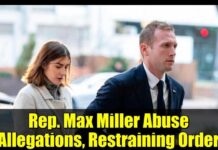
- California Assembly Bill 2624 advanced past an early legislative hurdle and quickly picked up the derisive nickname “Stop Nick Shirley Act” from critics.
- Independent journalist Nick Shirley drew massive attention with a 40-minute video alleging hospice and Medicare fraud tied to immigrant-community networks, including Armenian groups.
- Supporters frame AB 2624 as privacy protection for immigration support services providers; critics frame it as a pressure valve that releases scrutiny right when the heat rises.
- Republican Assemblymember Carl DeMaio and other commentators argue the bill chills citizen journalism and weakens accountability for taxpayer-funded programs.
AB 2624’s political spark: one video, millions of views, and a fast-moving backlash narrative
California’s AB 2624 became a story about power the moment critics attached a human name to it. The bill advanced in the legislature after Nick Shirley’s reporting exploded online, with claims that a single 40-minute video reached tens of millions of viewers on X. That sequence—exposé first, legislative movement second—created a simple plot the public understands: somebody touched a nerve, and the system flinched.
The bill’s defenders emphasize privacy for providers of immigration support services. Critics hear something else: a legal tripwire placed near the camera lens. The problem for lawmakers is perception. When government proposes new penalties around recording, identifying, or publicizing activity linked to politically sensitive services, everyday Americans don’t parse fine print first; they ask the older, sharper question—who benefits when sunlight becomes a liability?
Nick Shirley’s role: citizen journalism colliding with bureaucratic comfort
Shirley isn’t described as a traditional newsroom reporter in the coverage; he’s framed as a viral, independent investigator who goes where local institutions often hesitate. That matters because citizen journalism thrives on speed and proximity: cell phones, direct interviews, unpolished footage, and an instinct for what regular people suspect but can’t document. When those tools get fenced in, misconduct doesn’t disappear; it just gets harder to capture cleanly and convincingly.
Critics say Shirley’s work focused on alleged hospice and Medicare fraud, with particular attention on schemes operating in or around immigrant communities, including Armenian networks. That allegation sits at the volatile intersection of crime, culture, and public benefits. Conservatives tend to view that intersection through a taxpayer lens: fraud is fraud, and compassion without verification becomes a magnet for predators. The moral high ground belongs to whoever stops the grift, not whoever pretties up the paperwork.
What the bill is said to do versus what critics fear it enables
Public discussion around AB 2624 centers on privacy protections for immigration support services providers. Supporters can plausibly argue that people delivering services should not face harassment, doxxing, or intimidation. That’s a legitimate state interest. The trouble begins when privacy protections expand into legal deterrence against documenting wrongdoing. The reporting around this bill leans heavily on critics’ interpretations, and the official text is not widely analyzed in the cited material.
Critics claim the practical effect is criminalizing or deterring investigative recording—especially the kind that identifies actors inside networks tied to government funding or protected political constituencies. If a law punishes exposure more than it punishes theft, taxpayers learn the wrong lesson: the system polices embarrassment harder than it polices fraud. Common sense says accountability requires visibility. When visibility becomes risky, wrongdoing gets a head start.
The $6 billion question: why big fraud claims intensify the stakes overnight
One number keeps reappearing in the commentary: alleged losses of roughly $6 billion annually in a California program cited as an example of large-scale waste. Even without full documentation in the available research, the political impact of a number like that is immediate. It reframes AB 2624 from “privacy rules” into “damage control,” because the public understands scale. Billions suggest systems, not isolated bad apples.
Conservatives don’t need to speculate about motives to demand better guardrails. A government that spends aggressively must audit aggressively. A government that subsidizes services must verify outcomes. A government that claims to protect vulnerable communities must also protect those communities from internal predators who exploit ethnic ties, language barriers, and fear of authority. When officials focus on restricting exposure rather than tightening controls, voters infer the priorities are upside down.
Mia Bonta, Carl DeMaio, and the optics of enforcement power
AB 2624 is associated in this coverage with Assemblymember Mia Bonta, and critics highlight her marriage to California Attorney General Rob Bonta as a conflict-of-interest concern. The fair reading is narrower: the family tie sharpens public skepticism about how aggressively any new restrictions might be enforced, and against whom. Americans have lived through enough selective enforcement debates to recognize that “discretion” can become a political weapon.
Republican Assemblymember Carl DeMaio’s criticism lands because he speaks the language of watchdog politics: you don’t fix programs by punishing the people who point out the leak. DeMaio and other commentators frame AB 2624 as an attempt to silence citizen journalists. That claim still requires careful scrutiny of the bill’s mechanics, but as messaging, it works because it echoes a broader national pattern: institutions protecting themselves first.
The likely real-world impact: fewer cameras where taxpayer dollars flow
The immediate consequence of a perceived anti-recording, anti-identification, or anti-exposure law is behavioral. People self-censor. Independent investigators choose safer targets. Whistleblowers think twice. That chilling effect doesn’t require mass arrests to succeed; it only requires uncertainty and the risk of expensive legal trouble. For voters over 40, the déjà vu is familiar: bureaucracies rarely announce “we’re shutting down scrutiny,” they just make scrutiny costlier.
California now faces an avoidable trust problem. If AB 2624 is truly a narrow privacy measure, proponents should welcome clarity, bright lines, and explicit protections for public-interest journalism. If lawmakers refuse that clarity, critics will keep filling the vacuum with the simplest explanation: the bill protects the providers more than it protects the public. That’s the open loop—whether the legislature tightens the language or tightens the lid.
What are They Hiding? — Radical California Democrats Pass ‘Stop Nick Shirley Act’ to Criminalize Investigative Journalism and Shield Massive Immigrant Services Fraud from Scrutiny https://t.co/dRIN9YpJio
This is a clear violation of the First Amendment. Democrats sure are shady…— The Crip Crusader (@TheCripCrusader) April 14, 2026
Watch what happens next, not what gets said on cable. If AB 2624 advances again, the key question won’t be partisan theater; it will be whether the bill draws a hard boundary between harassment and investigation. Conservatives can support genuine privacy while rejecting any rule that turns documentation into a crime. The public doesn’t need perfect journalists. It needs the freedom to catch people stealing.
Sources:
The Stop Nick Shirley Act: How California Democrats Are Moving to Criminalize Citizen Journalism
Democrats Advance Stop Nick Shirley Act to Criminalize Investigative Journalism