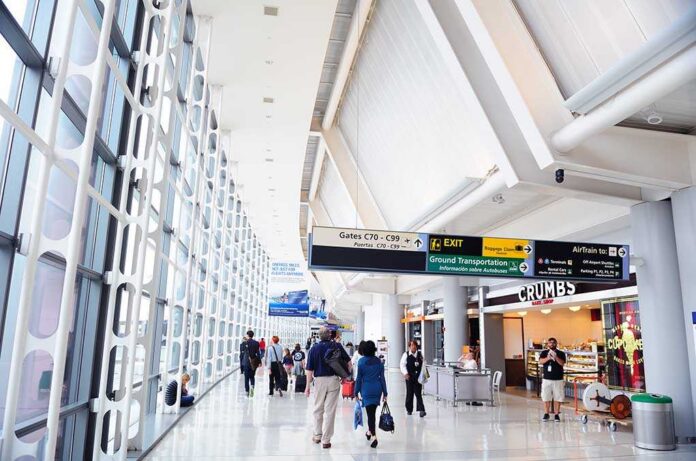
The four letters on your boarding pass are not a red flag; they are the flight world’s quiet order.
Story Snapshot
- Four-letter airport codes come from the International Civil Aviation Organization system, not a warning [3].
- Three-letter codes are for travelers; four-letter codes guide pilots and air traffic control [2].
- Some tickets and apps show four letters, which can look odd but means nothing is wrong [3].
- The four-letter format follows strict rules that cut errors and add clarity in flight operations [1][2].
What That Four-Letter Code Actually Means
That four-letter code is the International Civil Aviation Organization “location indicator.” Pilots, dispatchers, and air traffic control use it to plan and fly routes. It shows up in flight plans, onboard systems, and charts. The structure is global and strict. It reduces mix-ups when a wrong code could send a plane to the wrong place. Seeing one on a boarding pass only means a system pulled the operational identifier into a passenger view, not that your flight changed or is in trouble [3].
Three-letter codes live in your world. The International Air Transport Association created them for tickets, signs, and bags. They are short and easy to remember. The same airport holds both identities. For example, the three-letter tag is what you see on the carousel. The four-letter tag tells the cockpit where the runway sits on the globe. Training materials and industry guides call the three-letter codes more intuitive for passengers for exactly that reason [2][7].
Why Airlines Sometimes Show The “Wrong” Code
Boarding passes and itinerary emails are stitched together by many systems. A reservation tool may pass data to a mobile app that formats it on the fly. If a field expects an airport identifier but does not force the three-letter version, you might see the four-letter one. Aviation publications confirm that these codes appear on passenger documents at times. That is a display choice, not a safety clue or a secret reroute [3].
Travel media can spin this into a thrill. “You will not want to see this code” gets clicks. The truth is more boring and more useful. The four-letter code is part of a conservative idea most readers support: standard rules reduce risk. The system favors clarity over novelty. It cuts human error and keeps planes separated and sequenced. That sits squarely with common sense and with the view that order beats improv when lives and property are on the line [1][2].
How The Four Letters Encode Place And Region
The International Civil Aviation Organization built a map inside those letters. The first one or two mark a region or country cluster. The last two point to the specific airport. That structure lets pilots read both broad area and exact field at a glance. Aviation writers praise this design because it carries more meaning than the three-letter tags, which grew by habit and brand as much as by logic [1].
This design choice serves operations, not marketing. The International Civil Aviation Organization system helps route planning tools, radio calls, and weather reports line up. Pilot training sources stress that the four-letter format stays the same length and avoids overlaps. Fewer overlaps, fewer mistakes. That is why the cockpit uses it, even if the gate screen does not. Passenger tools can swap in the three-letter version without changing where the airplane goes [2].
How To Read Your Pass Without Panic
First, match the city name, not only the code. Your pass will still show the city and times. If a four-letter code appears, remember it maps to the same airport you expect. Second, check your bag tag. Baggage systems almost always print the three-letter version, which makes a quick cross-check easy. Third, if you book a complex route or codeshare, expect more code variety across apps and emails. None of that implies a risk by itself [3][2].
While passengers identify airports using three-letter IATA codes like SIN for Singapore Changi, pilots and air traffic controllers use four-letter ICAO codes like WSSS for flight planning and navigation.
What is the pilot code for your home airport? 👇 pic.twitter.com/Ca4Ed36DvA
— Airport Alchemy (@airportalchemy) June 10, 2026
When should you actually worry? Worry if the city name does not match your plan, or if your airline messages you about a change in airports. Short of that, code style is noise. If you want to verify, use the International Air Transport Association code search to confirm the three-letter code and compare it to your document. You can also look up the four-letter code in a pilot guide. Both should point to the same field on the ground [7][2].
Sources:
[1] Web – Airports’ four-letter code you won’t want to see on your boarding pass
[2] Web – The Quiet Genius of ICAO Airport Codes – Cranky Flier
[3] Web – Airport Codes Explained (FAA, ICAO, IATA) – Pilot Institute
[7] Web – What are airport codes and how do they work? – Facebook
© horizonpost.com 2026. All rights reserved.