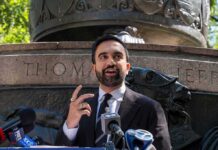


Zohran Mamdani’s office first said his wife would travel with police protection, then the NYPD said no, and the mayor blamed a miscommunication.
Quick Take
- City Hall said Rama Duwaji would be accompanied by an NYPD security detail on a family trip to Syria and Lebanon.
- The NYPD publicly denied that claim and said it does not send officers on discretionary trips to countries with level four travel advisories.
- Mamdani then said there had been a miscommunication and said she would travel without an NYPD detail.
- The fight turned a private family visit into a public row about safety, spending, and who had authority to speak for the mayor’s office.
How the Dispute Started
The dispute began when City Hall described Rama Duwaji’s upcoming trip as one that would include police protection. Mayor spokesperson Dora Pekec said the detail would join her “upon the strong recommendation of the NYPD,” and the trip was framed as a family visit to Syria and Lebanon rather than official city work.
The NYPD then pushed back hard. A department spokesperson said the agency does not send officers to countries with level four travel advisories for discretionary reasons not tied to investigative work. That response undercut the City Hall version and made the issue look less like a routine security call and more like a breakdown in basic coordination.
Why Mamdani Blamed Staff
Mamdani responded by saying the problem came from staff, not from a policy shift. He told PIX11 that there was “a miscommunication,” and said Duwaji had not yet taken the trip and would not have an NYPD detail when she did. That choice of words mattered. It moved the story away from a security decision and toward an internal communications failure.
The mayor’s explanation also drew a bright line between planning and action. A source familiar with the trip told The Post that it was “not official business” and “not doing anything for the city.” That detail matters because it frames the travel as personal, which makes any police protection easier to attack as a privilege question rather than a city necessity.
Why the Story Landed So Hard
This row hit a nerve because it mixed three things people notice fast: taxpayer money, political rank, and personal travel. Duwaji was described in reporting as a private person, and the trip was set for Syria and Lebanon, both on the State Department’s “Do Not Travel” list because of security concerns. That combination almost guarantees a public fight about whether elite families get rules that ordinary people do not.
The reporting also noted that Duwaji had traveled overseas the prior month without police protection. That detail will invite more questions about what changed, who asked for coverage, and whether the first City Hall account was based on a real decision or an assumption that traveled too far before anyone checked it.
What This Means Going Forward
The immediate political damage comes from the optics. City Hall appeared to promise protection, the police department rejected the premise, and the mayor then said staff had crossed wires. For voters, that sequence can look less like a technical error and more like a leadership problem, because the public expects a mayor’s office to know who is speaking with authority before a story breaks.
The larger lesson is simpler than the noise around it. Security arrangements for family travel can involve judgment, risk, and discretion, but they also demand clean paperwork and clear lines of command. When those lines blur, a personal trip can turn into a test of competence, and the first thing lost is trust.
#NewsAlert: NYPD DENIES Request For Overseas Security Detail of Mayor Mamdani's Wife
The New York Police Department (NYPD) has OFFICIALLY DENIED a security detail for Rama Duwaji, the wife of Socialist mayor Zohran Mamdani, for her upcoming PRIVATE TRIP to the MIDDLE EAST. The… pic.twitter.com/DhfwZgBp3n
— A New Wave Right (@ANewWaveRight) August 12, 2026
Sources:
© horizonpost.com 2026. All rights reserved.