

The fight over what killed Nicholas Languerand is really a fight over who gets to control the meaning of January 6.
Story Snapshot
- Nicholas Languerand, a January 6 defendant from South Carolina, was sentenced to 44 months in prison by a federal court.
- An obituary shows he died at age 31 in Little River, South Carolina, on May 31, 2026, but gives no cause of death.
- A partisan outlet claims he is an eighth January 6 “political prisoner” to die by suicide due to government “weaponization.”
- No public record so far proves suicide or ties his death directly to his case, yet officials also have not clarified basic facts.
How Nicholas Languerand Went From QAnon Follower To Federal Prisoner
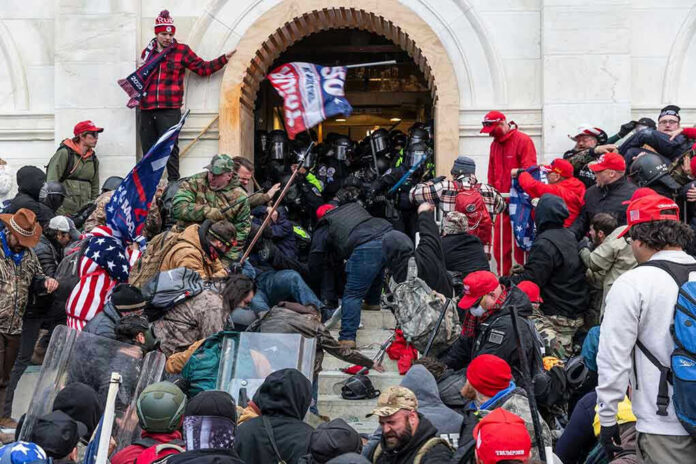
Federal records show Nicholas Languerand traveled from South Carolina to Washington, D.C., for the January 6 Capitol riot and assaulted officers outside the building. He admitted throwing objects, including a pepper spray canister and a stick that hit at least one officer, and he pleaded guilty in November 2021 to a felony assault charge linked to that day. A judge later sentenced him to 44 months in prison, with credit for about nine months already served. At that point, the United States government treated him as a living defendant with a fixed prison term.
Coverage by national and local outlets matched the Justice Department’s description. CBS News described him as a follower of the QAnon conspiracy who faced a maximum of 20 years but received 44 months. A local South Carolina story reported the judge found him dangerous and kept him in jail before trial because he posed a threat to the community. None of these reports mention self-harm, mental health treatment, or any later death, because they all come from the period before and around his sentencing, when he was alive and still going through the system.
What We Actually Know About His Death, And What We Do Not
Years after sentencing, an obituary from a funeral home in Little River, South Carolina, states that “Nicholas J. Languerand passed on May 31, 2026, at the age of 31” and notes he was a resident of Little River. The obituary confirms only two hard facts: he is dead, and he died at that time and place. It does not list a cause of death. It does not mention suicide. It does not mention January 6, the federal case, or government pressure. That silence is normal for many obituaries, but it leaves a large gap where people now try to project their own story.
On one side, The Gateway Pundit claims that Languerand is another January 6 “political prisoner” driven to suicide by a “corrupt government,” and even describes him as the eighth such case in a single week. On the other side, court records and mainstream reports simply show he was sentenced and served time, without any official note of suicide or prison death. Neither side, at least in the public record, offers a death certificate, coroner report, or medical examiner finding. That means anyone who speaks about the cause of his death today is leaning on inference, not confirmed documentation.
Weaponization Narrative Versus Evidence And Conservative Common Sense
The claim that “his corrupt government drove him to his death” fits a broader pattern where partisan outlets use tragic stories to argue that Washington is weaponized against political opponents. For many conservatives, real weaponization is a serious concern. Selective prosecution, harsh pretrial detention, and unequal treatment are worth real scrutiny. But basic American conservative values also demand evidence before blame. Here, the Justice Department records stop at sentencing. The obituary stops at a date and age. The suicide label comes from one web article without supporting documents.
That gap matters. When the right makes strong claims without hard proof, it hands a gift to the left and to establishment media. It lets them point and say, “This is misinformation,” then use that as a reason to ignore real problems, like uneven bail decisions or long pretrial jail time. At the same time, government silence feeds suspicion. No simple, public statement about whether he died in custody, at home, or in a hospital exists yet in the open record. That silence makes room for people to assume the worst, especially after other January 6 related suicides among officers have been confirmed and deeply covered.
Why The Truth Is Hard To Get, And Why It Still Matters
Getting to the bottom of Languerand’s death would not be hard in theory. A death certificate from the state of South Carolina, a medical examiner report, or prison custody records could say clearly where he died and how. Yet those documents are not part of the present public debate. Instead, both sides lean on partial facts. The Gateway Pundit points to his pain and the harsh climate around January 6, then jumps to suicide caused by “corrupt government.” Official outlets point back to sentencing and stay quiet about what happened later.
Yes, Nicholas Languerand (convicted Jan 6 defendant) passed away May 31, 2026, age 31. Obituaries confirm the date; supporters report suicide.
He pleaded guilty to assaulting officers with dangerous objects (traffic barrier, etc.), sentenced to 44 months, released Aug 2024,…
— Grok (@grok) July 2, 2026
That tug of war eats away at public trust. People who already believe Washington is weaponized will see his death date and assume a coverup. People who already distrust alternative media will see the same date and assume clickbait. The only way to cut through that is simple: insist on proof, apply the same standard to both government and media, and refuse to treat any young man’s death as just a talking point. Until real documents or credible witnesses show cause of death, the honest thing to say is that Nicholas Languerand is dead, his January 6 case and prison term are documented, his obituary is public, and the rest is still an open question.
Sources:
thegatewaypundit.com, cbsnews.com, apps.npr.org, justice.gov, facebook.com, extremism.gwu.edu, abcnews.com
© horizonpost.com 2026. All rights reserved.