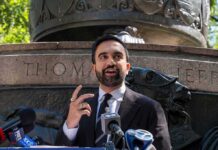


Democrats are again using the threat of a Homeland Security shutdown to force strict new rules on Immigration and Customs Enforcement, and this time they are doing it just as they prepare to control the House.
Story Snapshot
- Democrats tied Department of Homeland Security funding to a sweeping list of new limits on Immigration and Customs Enforcement behavior.
- The demands grew out of outrage over deadly shootings by immigration agents in Minneapolis and complaints of secretive, masked raids.
- Republicans say these restrictions would hamstring enforcement and accuse Democrats of risking security by pushing shutdown brinkmanship.
- Many of these failed demands are now being revived as Democrats get ready to run the House agenda.
Democrats turn a shutdown into leverage on immigration enforcement
Democratic leaders in Congress decided that the Department of Homeland Security budget would not move forward unless Immigration and Customs Enforcement accepted new guardrails on how agents operate. They blocked multiple funding bills and let a partial shutdown drag on for weeks, arguing that a simple “keep the lights on” measure would ignore deadly mistakes by federal officers in Minneapolis. This standoff was not about money alone. Democrats used the funding deadline as a pressure point to change day-to-day enforcement rules without passing a full immigration law overhaul.
The trigger was a series of fatal shootings in Minnesota, where immigration agents killed American citizens during enforcement operations. Those deaths turned long-standing complaints about raids and deportations into a sharp demand for accountability. Senate Democratic leaders Chuck Schumer and House Democratic leader Hakeem Jeffries told Republicans that “rein in ICE in very serious ways, and end the violence” was a non‑negotiable goal. They framed their plan as basic law enforcement standards that should already apply, not as a radical weakening of immigration control.
The revived wish list: warrants, masks, cameras, and limits on patrols
Out of this fight came a detailed reform package that Democrats now talk about as a starting point whenever Immigration and Customs Enforcement funding is on the table. Their letter to Republican leaders listed ten core demands: judicial warrants before entering homes, an end to roving street patrols, a ban on agents wearing face masks, mandatory body cameras, and clear use‑of‑force rules with outside investigations when agents are accused of going too far. They also want agents to identify themselves, stay away from schools, hospitals and churches, and stop targeting people based on language or ethnicity.
Outside reporting shows an even fuller list that reads like a complete rewrite of Immigration and Customs Enforcement culture. Democrats want better proof that someone is not a United States citizen before they are held in immigration custody, stronger standards for arrest warrants, and bans on invented “administrative warrants” that dodge judges. They call for proper detention rules, guaranteed access to lawyers, and the right for states to sue the Department of Homeland Security if facilities break those standards. They also demand body‑worn cameras on every interaction with the public and clear rules for storing and sharing that video. For conservatives who value clear rules, due process, and transparency, parts of this agenda land very differently than a simple “abolish Immigration and Customs Enforcement” slogan.
Democrats prepare to use the House majority to keep the pressure on
During the shutdown, many of these demands stalled because Republicans held firm and President Trump refused to accept broad limits on immigration officers. The final deal that ended the record 75‑day Department of Homeland Security shutdown funded most of the department but left Immigration and Customs Enforcement and Border Patrol outside the full package and did not grant the big reforms Democrats wanted. Senator John Fetterman later blasted the outcome as a “failure of Congress,” noting Democrats got almost nothing they held out for. That anger is a big reason party leaders are now talking about reviving the same list as they prepare to steer the House.
With a House majority, Democrats can move their own funding and oversight bills, hold hearings, and drag immigration officials into public question‑and‑answer sessions. Their strategy is clear: every time money for Immigration and Customs Enforcement and Border Patrol comes up, attach enforcement rules as a condition. For Republican voters, this looks like using budgets to chip away at enforcement strength. For Democrats, it is using the one tool they have that Presidents cannot easily ignore: control over the purse strings.
Law enforcement, civil rights, and conservative common sense
Supporters of tougher immigration enforcement often worry that new rules will tie officers’ hands and let dangerous people slip through. That concern is real. If agents must get a judge’s warrant for every home entry, response time can slow. If they cannot patrol streets looking for violations, some illegal activity will go unseen. Republicans point to these trade‑offs and suggest Democrats value symbolism and activist pressure over stopping violent criminals and traffickers. That fits a broader conservative fear that the left sees law enforcement as the problem, not the answer.
EXCLUSIVE: Maine ICE killing turns Susan Collins’s $70 billion vote into a liability
The fatal ICE shooting of Johan Sebastián Durán Guerrero, a 25-year-old Colombian man killed at a Biddeford traffic stop on July 13, has become a defining problem in Susan Collins’s reelection… pic.twitter.com/2JBrrR4Oet
— DannyKPolitics (@DannyKPolitics) July 21, 2026
Yet many of the Democratic demands line up with basic conservative ideas about government power. Requiring officers to unmask and identify themselves is about facing the public when you use force. Demanding clear use‑of‑force rules and outside investigations after shootings is about equal treatment when someone dies at the hands of the state. Judicial warrants, bans on racial profiling, and respect for churches and schools are core constitutional and community values. The real debate, viewed through a common‑sense lens, is not whether Immigration and Customs Enforcement should follow rules, but which rules strike the right balance between safety, sovereignty, and liberty.
Sources:
washingtontimes.com, abcnews.com, cnbc.com, politico.com, bostonglobe.com, pbs.org, nbcnews.com, youtube.com, apnews.com, dhs.gov
© horizonpost.com 2026. All rights reserved.