
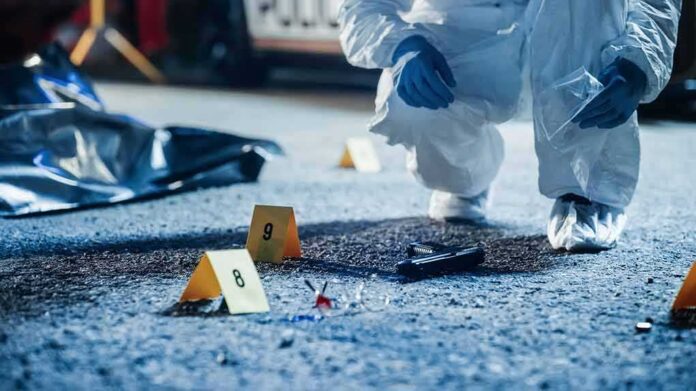
A rare, high-stakes hearing in Utah is quietly testing how much hard evidence it really takes to call a politically charged killing an assassination.
Story Snapshot
- Prosecutors say surveillance, DNA, and multiple confessions point straight at Tyler Robinson as Charlie Kirk’s killer.
- Defense lawyers attack the evidence as hearsay and push to limit what the public sees before trial.
- A controversial prosecutor, a disputed rifle, and a low “probable cause” bar make this hearing more about process than verdict.
- The case sits inside a larger rise in American political violence that is changing how safe public speech really is.
The evidence prosecutors say ties Robinson to the killing
Prosecutors walked into the Utah courtroom with a simple story: this was a planned political shooting carried out by one man, and they can prove it. Investigators say surveillance cameras caught Tyler Robinson on the Utah Valley University campus four separate times on the day Charlie Kirk was shot, helping them piece together his movements before and after the attack. A bolt-action.30-06 rifle with a scope was later found wrapped in a towel in woods near campus, matching what Robinson supposedly described in private messages about leaving his gun at a “drop point.”
Prosecutors say the rifle is more than circumstantial. A charging document notes that Robinson’s DNA was recovered on items linked to the suspected weapon, including a towel and tools on the rooftop area where the shot was fired. They plan to show ballistics images and data tied to that gun during the hearing, along with three separate videos of the shooting itself from different angles. A former officer has also testified about finding what he called a “sniper pad” on a nearby rooftop, reinforcing the picture of a deliberate, set-up attack rather than a chaotic, random shot.
A web of alleged confessions and digital trails
The most powerful part of the state’s case may not be the gun but the words they say came from Robinson himself. Media reports describe a series of alleged confessions to his romantic partner, to friends on the Discord chat platform, and to family members. In one exchange, his partner says he told them there was a note hidden under a keyboard; the note, photographed by police, reportedly talked about “having to take Charlie Kirk” and planning to do it. Texts and Discord messages cited in charging documents show someone claiming “it was me at UVU yesterday” and thanking friends for “good times and laughs” before saying he would turn himself in.
According to CNN and Reuters, Robinson’s partner, who lived with him and is cooperating with police, turned over private messages where he allegedly described planning the attack for “a bit over a week,” complained he had “had enough of [Kirk’s] hatred,” and discussed retrieving the rifle he left near campus. Utah’s governor has publicly referenced those same messages, including talk about engraved bullets inspired by online culture and watching the area where the rifle was left. Prosecutors also say Robinson surrendered to law enforcement the day after the shooting and allegedly confessed to having shot Kirk, adding yet another layer to the confession narrative.
The defense strategy: attack process, not just facts
Defense lawyers are not trying to win the whole case in this hearing. They are trying to narrow what the judge and the public consider “real” evidence. They have objected almost every step of the way, calling much of the state’s presentation hearsay because it comes through investigators, videos, and secondhand statements rather than live witnesses they can cross-examine. One of Robinson’s attorneys objected on the record to admitting alleged campus videos of Robinson on the day of the shooting, pushing the judge to demand full, unedited versions instead of clips.
The defense has also asked the court to seal many exhibits to avoid “infecting” the future jury pool, a clear sign they think the material is vivid enough to be prejudicial even if parts are weak or disputed. They have not yet offered their own forensic tests to directly refute the DNA findings or to prove the texts and notes are fake; instead, they focus on rules of evidence, chain of custody, and the unique nature of this rare, week-long preliminary hearing. Legal commentators say this fits a broader pattern where defense teams in political cases try to slow down a media cycle they believe leans toward the prosecution’s story.
Controversy around the rifle, the prosecutor, and the hearing itself
Some of the sharpest questions so far center on the rifle and the people handling the case. A television segment reviewing federal firearms analysis reported that experts could not conclusively link a bullet fragment from Kirk’s autopsy to the rifle found near the scene, meaning the match is not scientifically airtight even if it cannot be ruled out. That gap gives the defense an opening to argue that the weapon evidence feels more like a “kitchen sink” effort to overwhelm the court than a clean, direct link.
https://twitter.com/Mosheh/status/2074562665779707938
The lead prosecutor has also faced criticism and even a contempt finding for breaking a gag order while publicly disputing media coverage of the ballistics evidence, raising questions about judgment and discipline inside the state’s team. Robinson’s lawyers have twice tried to get the entire Utah County Attorney’s Office thrown off the case because one prosecutor’s teenage daughter attended the rally where Kirk was shot, arguing that personal involvement creates a conflict of interest. At the same time, prosecutors chose to lay out a huge amount of evidence at a preliminary hearing that legally requires only “probable cause,” not proof beyond a reasonable doubt. Some conservative analysts see that as smart transparency; others see it as overreach meant to shape public opinion.
Political stakes and the bigger pattern of violence
This is not just another local murder file. Charlie Kirk was a major voice on the right, a close ally of President Donald Trump, and a central figure in the Make America Great Again movement. His parents, widow, and Donald Trump Jr. have all been reported in the courtroom gallery, signaling how closely the political world is watching. Prosecutors say Robinson’s politics had shifted left and that he was angered by Kirk’s views, though they have not yet clearly tied that motive to specific statements Kirk made.
Experts on political violence warn that this case fits a larger trend, where self-radicalized individuals, steeped in online anger, target high-profile figures in moments of deep national division. Research shows political assassinations can chill voter turnout and public engagement for years, and Americans across party lines say they fear political violence even as a small share starts to see it as sometimes justified. For many conservatives, that is the core concern here: not just who pulled the trigger in Orem, but whether the system will respond clearly enough to remind would-be attackers that political speech is answered with more speech, not with a rifle from the shadows.
Sources:
youtube.com, cnn.com, deseret.com, foxnews.com, reuters.com, pbs.org, ksl.com, apnews.com, abc7ny.com, facebook.com, nbcnews.com, cato.org, ctc.westpoint.edu, journalofdemocracy.org, pnas.org
© horizonpost.com 2026. All rights reserved.