
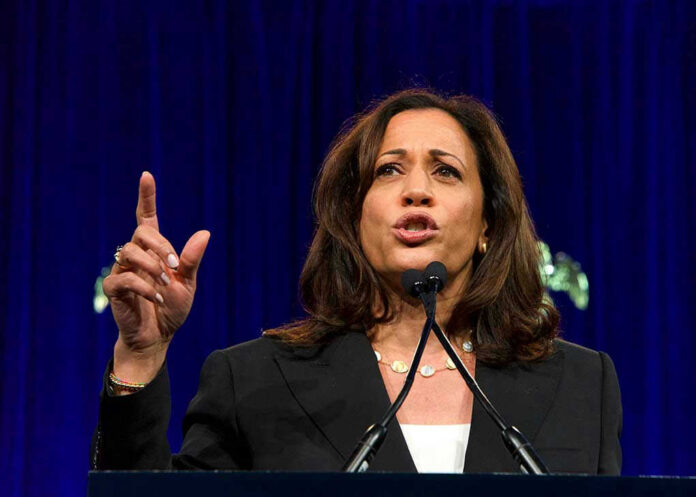
Kamala Harris now faces a 2028 choice that could either tame a fast-rising socialist wave inside her own party—or let it grow strong enough to swallow her campaign whole.
Story Snapshot
- Democratic socialists just toppled sitting members of Congress in New York City primaries.
- The Democratic Socialists of America wants a 2028 presidential run and is building the machine for it.
- Party leaders admit they are scrambling to respond, while voters chase ideological purity over electability.
- Harris can co-opt this movement or gamble that it burns out before it burns her.
Socialists turn New York into a test lab for Kamala’s party
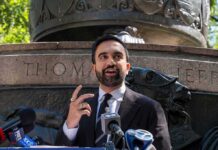
Democratic socialist-backed candidates did not just make noise in New York City; they fired sitting Democrats from Congress. Zohran Mamdani, the city’s democratic socialist mayor, backed three candidates in the June primaries, and they swept their races, sending two incumbents home and beating a well-connected congressman in another district. This was not a protest vote. It was a direct hit on the party establishment in one of Democrats’ safest urban strongholds.
Those victories were not one-offs. Local reporting and national outlets describe a “clean sweep” for Mamdani’s endorsees and nine of ten wins for New York City’s Democratic Socialists of America slate. That means this faction now has real governing power, not just activist buzz. In deep-blue districts where the primary is the whole ballgame, a socialist win in June often equals a guaranteed seat in Congress by November. That matters a lot for a future Harris White House trying to pass laws.
DSA is building a presidential machine, not just protest campaigns
Inside the Democratic Socialists of America, the goal is much bigger than a few local upsets. At the group’s convention in Chicago, about 1,200 members voted on a platform that includes a push for a 2028 presidential candidate, using the Mamdani blueprint of citywide organizing and targeted primaries. They tied that plan to foreign policy too, passing a resolution that demands solidarity with the Palestinian cause and sharp criticism of United States policy in the Middle East.
Democratic Socialists of America membership has exploded over the last decade, jumping from roughly 6,000 members in 2015 to well over 100,000 today. That surge makes the group the largest socialist organization in modern American history. It is not a campus club anymore; it is a national infrastructure. Socialist strategists openly describe their electoral strategy as acting as a faction inside the Democratic Party, winning primaries first and then using those offices to push the party left. For a nominee like Kamala Harris, that means the fight is inside the tent, not outside.
Base voters chasing purity push the party into a risky corner
New polling and commentary suggest a sharp mood change among Democratic primary voters. Analysts report that many primary voters now care more about ideological “fidelity” than about whether a candidate can win a swing state in November. That mindset is gasoline for socialist campaigns promising uncompromising positions on Israel, health care, and climate. It is also a nightmare for national strategists who know a far-left label plays poorly in the suburbs that decide the presidency.
At the Chicago convention, speakers claimed that most Democratic primary voters support Palestine and would be happy to see a democratic socialist win the 2028 presidential primary. If that reading holds, Harris cannot simply wave off the left as fringe. She will need those voters for turnout and enthusiasm. Yet every step she takes toward their agenda makes it easier for Republicans to brand her as a “socialist” or “communist,” a line of attack they are already testing in deep-blue congressional races.
Party leaders are flat-footed while the numbers undercut the ‘takeover’ talk
Veteran analysts describe Democratic leadership as “flat-footed” and “weak-handed” in responding to this wave, saying they are understating the internal threat. That charge fits the pattern of past cycles, when party elites brushed off Bernie Sanders-style energy until it suddenly knocked off a powerful incumbent. From a common-sense conservative lens, pretending this faction is small seems foolish when it is visibly firing sitting members of Congress in major cities.
EVEN IN A KAMALA +24 DISTRICT, UTAH DEMS REJECTED THE SOCIALIST — AND THE LEFT IS PANICKING
Here’s a number worth holding onto: Utah’s First Congressional District voted for Kamala Harris by +𝟐𝟒 𝐩𝐨𝐢𝐧𝐭𝐬 in 2024. That’s not a purple district — it’s a deep-blue seat in a… pic.twitter.com/Wp9KrSpc89
— M.A. Rothman (@MichaelARothman) June 26, 2026
But the takeover story has limits the left rarely admits. Democratic Socialists of America itself reports involvement in 133 races with only 14 wins so far. That is a tiny slice of more than 200 Democratic-held House seats. Moderates like Colorado Senator John Hickenlooper still win their primaries against progressive challengers, and leaders such as Hakeem Jeffries and Chuck Schumer publicly downplay the broader impact, stressing party unity instead. The socialist surge is real, but it is concentrated, not nationwide control.
Kamala’s 2028 gamble: co-opt, confront, or get squeezed
For Kamala Harris, the danger is not that Democratic Socialists of America runs the entire party by 2028. The more serious threat is a “purity spiral” in the primary that forces her into choices that damage her in the general election. If she tacks hard left to block a socialist challenger, she may lose older, suburban, or minority voters who distrust radical economic and foreign policy experiments. If she resists, activists could brand her a traitor and choke off grassroots energy.
Conservative observers see an opening. They argue Republicans should highlight every socialist-aligned win and tie Harris to the most radical voices on Israel, policing, and spending, betting that middle-America voters will recoil. Whether that works will depend on how Harris manages this moment. Treating the socialist surge as a warning shot and drawing a hard line on law, order, and economic realism could reassure swing voters. Ignoring it and hoping it fades would be a gamble that recent New York results suggest she cannot afford.
Sources:
youtube.com, washingtonstand.com, komonews.com, wcti12.com, commondreams.org, heartland.org, cookpolitical.com
© horizonpost.com 2026. All rights reserved.