

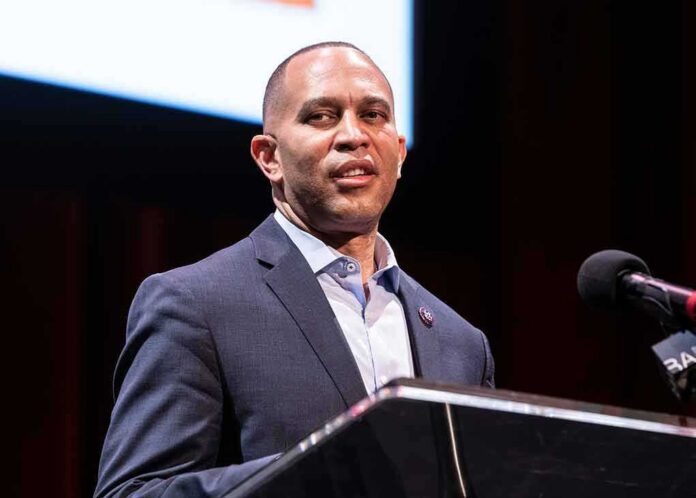
A brief nod from Hakeem Jeffries lit a fuse under the biggest immigration fight of the year.
Story Snapshot
- Jeffries appeared to nod “yes” when asked if Democrats would bring back people deported to third countries like those in Africa.
- Democrats have attacked the third-country removal program as extreme, costly, and poorly monitored.
- A federal appeals court ruled the process violated due process on notice and hearing grounds.
- Homeland Security officials defend third-country removals as an essential public-safety tool.
What Jeffries Signaled And Why It Blew Up
House Democratic Leader Hakeem Jeffries faced a pointed question in Florida: Would Democrats bring back people deported to third countries like those in Africa? A video shows Jeffries nodding several times and saying, “We do.” The outlet posting the clip framed this as a promise to fly deportees back. The evidence rests on a short exchange and an ambiguous gesture, not a formal policy paper or bill text.
Jeffries also hit the administration’s enforcement program as “extreme” and “inhumane,” while insisting enforcement must be “fair,” “just,” and “humane”. His caucus has opposed major new funding for Immigration and Customs Enforcement and Customs and Border Protection in the current budget fight, signaling a broader turn away from hard-line tactics. That posture set the stage for the nod to get treated as policy, even before staff could clarify its scope.
The Third-Country Removal Fight: Process On Trial
Third-country removals move people with final orders to nations that are not their own. The Department of Homeland Security says it relies on diplomatic assurances that the receiving country will keep people safe and gives notice before removal. Critics say that process often failed on the basics of due process. A federal appeals court agreed, ruling that the policy denied sufficient notice and a meaningful chance to explain fear of transfer.
Human Rights Watch documented cases where people said they lacked clear notice and ways to contest transfer, and flagged risks of onward movement and harm. The group also emphasized the need for effective notice and a chance to raise fear of persecution or torture before any transfer. That legal and factual backdrop explains why Democrats now press for oversight and remedies, even if the exact fix—new hearings versus physical return—remains undefined.
Security Claims And The Edge Cases
The Department of Homeland Security’s top lawyer calls third-country removals an “essential public-safety tool.” He argues the practice is sometimes the only way to carry out a final order when a home country will not take someone back, or when return there is unsafe or impossible. The administration frames the policy as targeted at the toughest cases, including people accused of serious violent crimes who cannot be sent home.
Supporters also point to diplomatic assurances from receiving countries as a safety valve. They argue the State Department vets those assurances and the process shares notice with the person being removed. That security case will resonate with voters who expect a working removal system and consequences for serious offenders. Common sense says due process and public safety are not mutually exclusive. A lawful, transparent process should protect both.
Money, Oversight, And The Politics Of Return
Cost drives public anger. Reporting cited a program price tag in the hundreds of millions of dollars and described oversight gaps that hide key details from Congress and the public. Senator Jeanne Shaheen called the program “costly, wasteful and poorly monitored,” and pushed for tough scrutiny. If courts force do-overs or new hearings, taxpayers will ask who pays and whether the fix avoids the same mistakes.
🇺🇸✈️🌍 Deported to a country he'd never seen, then sent where a judge said he'd be in danger
📰 What happened
Moussa Diawara, 57, is from Mali and lived in the US for 25 years. He has no criminal record. He came to the US at 32 on a tourist visa and overstayed it. He married,… https://t.co/vrrkeTb39Q— Miss Lara B. 🏳️⚧️ (@RealLaraBridge) October 26, 2026
Here is the hard truth: a head nod is not a plan. No Democratic bill on the table orders the United States to fly home every person already transferred to a third country. Courts have not required blanket returns; they focused on notice and the right to contest transfer. If Democrats try to repatriate some people, they will need case-by-case standards, cooperation from foreign governments, and a clear price tag. That is the only path that aligns due process with public trust.
Sources:
thegatewaypundit.com, fatelephant.com, theafricareport.com, npr.org, jeffries.house.gov, abcnews.com, usatoday.com, apnews.com, newsweek.com, washingtonpost.com
© horizonpost.com 2026. All rights reserved.