
A decorated Air Force technical sergeant fell during a pregame rappel at the Alamodome and later died, turning a salute to service into a scene no one will forget.
Story Snapshot
- Nellis Air Force Base confirmed the airman was injured during a pregame rappel and died at a hospital.
- The fall happened before the University of Texas at San Antonio game against Navy during a military tribute.
- The Air Force identified the airman as Tech. Sgt. Ian Patterson, a Tactical Air Control Party instructor.
- Witnesses described a rapid, uncontrolled descent from high inside the dome; officials are investigating.
A solemn tribute turned tragic in seconds
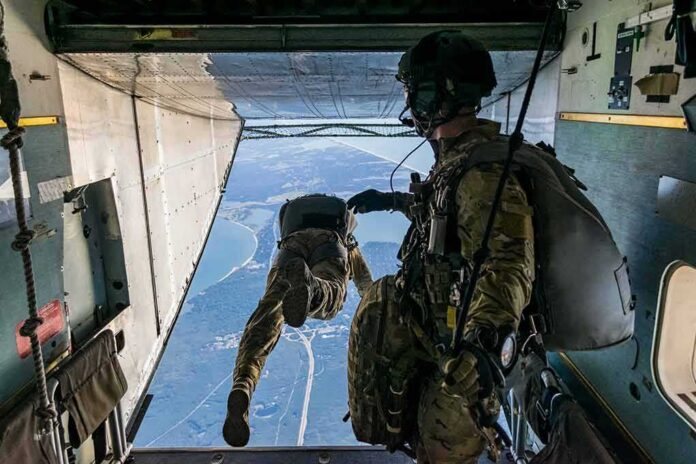
San Antonio fans gathered for a patriotic show before the University of Texas at San Antonio game against Navy watched horror unfold on the field. During a planned rappel from the Alamodome rafters, an Air Force airman fell, received emergency care on the turf, and was rushed to a local hospital as a priority patient. Nellis Air Force Base later confirmed he died from his injuries and asked for privacy for his family and teammates as the service began its review.
The event was part of the school’s Salute to Armed Forces and Veterans game. The demonstration was designed to showcase skill and teamwork. The crowd instead grew silent as first responders worked to stabilize the fallen airman on the field. San Antonio Fire Department and stadium medics moved fast, but the trauma from the fall proved fatal, according to the base’s statement and local reports. The American Athletic Conference continued the game under its bylaws after emergency crews cleared the field.
The Air Force names the fallen and outlines the mission
Nellis Air Force Base identified the airman as Tech. Sgt. Ian Patterson, a Tactical Air Control Party instructor with the 6th Combat Training Squadron, Detachment 2. Tactical Air Control Party instructors train and advise units that support air-to-ground operations. Patterson’s presence at the event linked the demonstration to real-world skills taught for combat support. The base said the incident remained under investigation and did not release technical findings. That is standard until officials complete safety and command reviews.
Witness accounts described Patterson losing control partway down the line, descending faster than others, and striking the field with significant force. That description tracks with common failure modes seen in rope work when braking fails or a descent device is not controlled. A military lessons-learned document has found that late, lost, or improper braking accounts for about half of examined rappelling accidents, with belay roles and rope behavior also critical. Those patterns help frame what investigators will test against video and equipment evidence.
What we know, what we do not, and why it matters
Officials confirmed the core facts: a fall during a pregame rappel, emergency care on the field, hospital transport, and death later that day. They have not published a specific cause. Reports have not identified whether equipment failure, a medical issue, rigging decisions, or human error led to the loss of control. One sentence of caution belongs here and no more: the Air Force said the circumstances remained under investigation, and that process will take time.
🚨 #UPDATE: The Air Force airman who died after falling during a military rappelling demonstration at the Alamodome in San Antonio has been identified as Tech. Sgt. Ian Patterson.
Patterson was a Tactical Air Control Party instructor assigned to the 6th Combat Training Squadron,… https://t.co/qea2vkVCQ3
— zach bitango (@ZachBitango) October 19, 2026
Common sense and conservative values point to a steady rule: honor service, protect life, and fix what went wrong. Public demonstrations that mix height, hardware, and crowds demand strict discipline. The right response blends respect for the fallen with a clear-eyed safety review. That means confirming anchors, ropes, harnesses, descent devices, backups, and training records met the standard, and raising the bar if they did not. Spectacle must never outrun safety, no matter the stage or the size of the flag.
The path forward: accountability without spectacle
Leaders now face two duties. First, they must support Patterson’s family and his unit. Second, they must deliver a thorough, transparent account that stands on facts. Investigators will study video from fans and the venue, examine and test the gear, and map the sequence from the platform to the field. They will check qualifications, rehearsals, safety briefs, and the emergency plan. That methodical work is how risk turns into lessons—and how lessons prevent the next loss.
Sources:
militarytimes.com, ksat.com, abc7.com, nytimes.com
© horizonpost.com 2026. All rights reserved.