
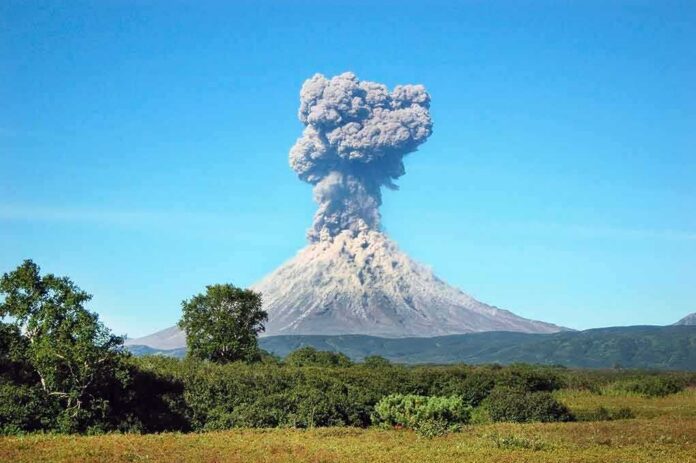
Jakarta’s busiest runway went silent before sunrise because a volcano 90 miles away sprayed ash into its airspace.
Story Snapshot
- Soekarno-Hatta International Airport halted flights as ash from Anak Krakatau reached Jakarta’s skies.
- Indonesia’s transport ministry said ash was detected at the airport early Sunday, prompting health and safety advisories.
- Authorities extended a pre-dawn stop on operations into the morning as conditions evolved.
- Aviation agencies treat ash as a severe risk to engines, runways, and visibility, so closures tend to be conservative.
Jakarta’s Main Airport Stops Flights As Ash Moves In
Soekarno-Hatta International Airport paused departures and arrivals after ash from the Anak Krakatau eruption drifted toward the capital. The airport said on social media it would extend a pre-planned halt to 9:30 a.m. local time as the plume spread and monitoring continued. The transportation ministry reported ash present at the airport early Sunday. Officials also warned about breathing risks for workers and travelers. The step mirrored a common global playbook for ash: stop first, reassess fast, and restart only when safe.
The mass pause rippled through morning banks of flights, with cancellations, diversions, and re-time decisions stacking up across airlines. Nearby airports saw knock-on effects. Some schools and coastal activities were also paused as authorities watched where the plume would travel next. This kind of ash event is not rare in Indonesia, which sits atop the Pacific “Ring of Fire.” The difference this time is the direct hit on the nation’s primary gateway, which handles most international and domestic connections.
Why Volcanic Ash Grounds Modern Jets
Volcanic ash is not soft dust. It is tiny glass and rock shards that can melt inside jet engines, then re-harden on turbine blades. That can cause power loss and even engine failure. Ash also sands cockpit windows, clogs sensors, and reduces visibility. These hazards show up even far from the crater. Because there is no single safe threshold for ash concentration, global guidance leans to one rule: avoid all ash-contaminated airspace. That is why closures can look strict when skies seem clear.
Safety managers judge ash the way a rancher reads the wind. They track plume height, wind direction, and dispersion models. They check pilot reports and satellite feeds. They decide in blocks of time, not minute by minute. The cost of being early is delay. The cost of being late can be far worse. For a hub like Jakarta, the rational choice is to shut, sweep, and test, then reopen in steps. That is conservative, but it reflects a hard-learned aviation truth about ash clouds.
What Authorities Did And What Travelers Should Expect
Airport crews inspected runways and aprons for ash fall. Air-traffic managers adjusted routes to keep planes away from contaminated air. Health agencies flagged risks for people with asthma or heart conditions and advised masks outdoors until air cleared near affected zones. The airport messaged airlines and ground handlers to hold or reroute aircraft while teams waited for updated model runs and on-site checks. That cadence, though frustrating, is the fastest way to a clean restart without compounding risk.
Travelers can expect staggered recovery. Early flights often turn into midday departures. Some aircraft and crews end up out of place, so cancellations linger after the sky is safe. Smart steps are simple: rebook through airline apps, confirm the gate only after security, and keep prescriptions, chargers, and a day’s essentials in a carry-on. People with respiratory issues should watch local air quality alerts and avoid long outdoor waits near busy roads where ash and dust can pool.
The Pattern: Volcanoes Set The Clock, Aviation Sets The Guardrails
Indonesia has rerouted or suspended flights during past Anak Krakatau cycles when alerts rose and ash columns spread into common corridors. Air navigation agencies worldwide apply the same baseline: protect engines, preserve visibility, and keep ash off runways. The point is not zero disruption; it is zero catastrophe. That logic aligns with common-sense risk management and with the aviation sector’s proven safety culture. When the choice is delay versus danger, delay wins every time.
Anak Krakatau just grounded Jakarta’s main airport.
Ash shut ~209 flights. 22,000+ people stranded. Routes to Singapore, Doha, Sydney hit. No tsunami this time.
Last time this volcano went big: Dec 22, 2018. A chunk of it collapsed into the sea and a tsunami killed 400+ along… pic.twitter.com/EnFZHl9KZe
— PSB (@PSBVireon) September 6, 2026
Critics sometimes call these shutdowns too cautious. That misses the engineering reality. Jet engines are marvels, but they do not digest glass. The economic pain from a morning halt is real for families and businesses. Yet the alternative—pressing on through ash—risks a chain of failures that end on the evening news. Officials made the right call here based on what they saw and what global guidance has long taught. Reopen fast, yes—but only when physics says it is safe.
Sources:
mirror.co.uk, bbc.com, arabnews.com, aviation-professionals.co.za
© horizonpost.com 2026. All rights reserved.