

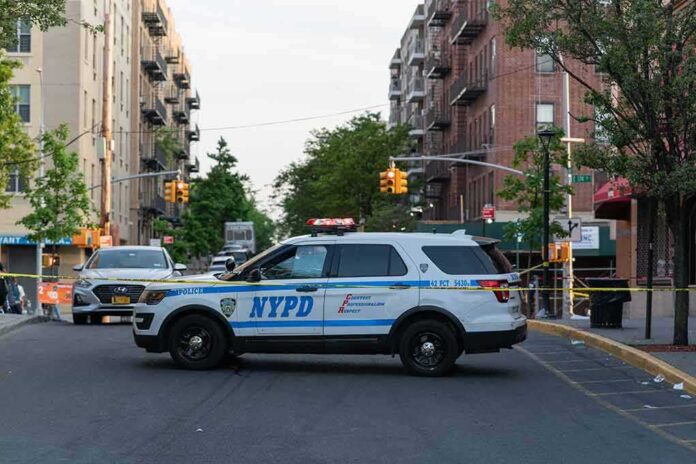
Two daylight stabbings on the Upper West Side turned into a hate-crime probe because police say the suspect allegedly shouted a religious phrase and the victims were identified as Asian and Jewish.
Quick Take
- Police arrested Raul Morales, 51, after two separate stabbings in Manhattan’s Upper West Side neighborhood.
- Investigators say witnesses reported that Morales yelled “Allahu Akbar” during both attacks.
- One victim was described in reports as Asian, and the other as Jewish after leaving a synagogue.
- Officials also said the investigation was still active, with mental health listed as a possible factor.
What Happened on the Upper West Side
Law enforcement reports say the attacks happened Thursday afternoon, just blocks apart, near Central Park and the Upper West Side. One man was stabbed in the back, and another was stabbed near a synagogue. Both were taken to the hospital and were expected to survive. Police arrested Morales and said the case was still being worked out as investigators sorted motive from raw facts and witness accounts.
The details matter because the public case for a hate-crime theory rests on more than one clue. Police said witness and victim statements pointed to the alleged shout, while other reports identified the victims by race and religion. That combination gave reporters and officials a strong basis to discuss possible bias. But it did not, by itself, settle the legal question of motive.
Why Police Saw a Possible Bias Motive
The strongest evidence in the public record is the alleged phrase shouted during both attacks. Multiple reports say police and witnesses heard Morales yell “Allahu Akbar.” NBC News also reported that the NYPD was evaluating the stabbings as a possible hate crime and that one victim was Asian while the other was Jewish. ABC News likewise reported that police were treating the case as a possible hate-crime investigation.
The victim identities gave the theory even more force. One man was described as Asian in several reports, and the other as Jewish, with one outlet saying he had just left a synagogue when attacked. That is why many readers immediately saw the case through a hate-crime lens. The pattern looked targeted, and the timing was close enough to raise suspicion that the victims were chosen for who they were, not just where they happened to be.
Why the Motive Was Still Not Settled
The caution in the reporting is just as important. ABC News said it was unclear whether the attacks were random, and NBC News said detectives were still working to determine motive. CBS News and PIX11 also described the matter as under investigation rather than finished. That matters because criminal bias is a legal finding, not a headline. A shouted phrase may be powerful evidence, but police still need more to prove intent with confidence.
I wrote for the @JewishCurrents news desk about the Jewish establishment's efforts to blame Mamdani's anti-genocide politics for the frightening stabbing yesterday on the Upper West Side. https://t.co/P3JwpII5l2
— Josh Nathan-Kazis (@joshnathankazis) July 25, 2026
Officials also pointed to a second possibility: mental health. NBC News reported that the NYPD’s initial investigation suggested mental health may have been a factor, and ABC News carried the same point in its coverage. That does not erase the hate-crime theory. It does show why investigators were being careful. In hard cases, two things can be true at once: a case can look biased, and the final motive can still need proof.
What This Case Says About Early Hate-Crime Reporting
This kind of case explains why early crime coverage can race ahead of the evidence. A broad-daylight attack, two different victims, a religious phrase, and no known connection between suspect and victims create a vivid story fast. But public perception often moves faster than formal proof. That leaves a gap between what reporters can reasonably describe and what prosecutors can later charge in court.
For readers trying to separate signal from noise, the practical rule is simple. Look first at what police actually said, then at what they said they still did not know. In this case, the public record supports a possible hate-crime investigation, not a final verdict on motive. The fact pattern is suspicious enough to justify scrutiny. It is not yet complete enough to replace evidence with certainty.
Sources:
facebook.com, abcnews.com, abc7ny.com, nytimes.com, youtube.com
© horizonpost.com 2026. All rights reserved.