

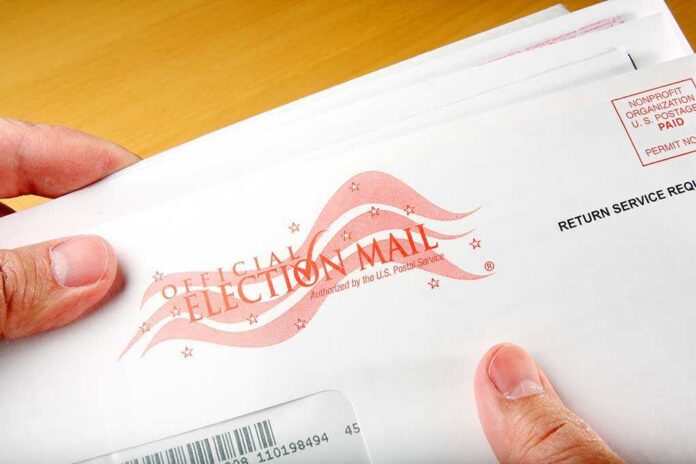
White-powder letters hit election offices days before ballots go out, triggering evacuations and a federal probe.
Story Snapshot
- Election offices in Louisiana and Oklahoma evacuated after white-powder mail arrived.
- Postal investigators intercepted a similar letter aimed at Ohio’s election office.
- The Federal Bureau of Investigation (FBI) confirmed a coordinated investigation across multiple addresses.
- Preliminary testing in Louisiana found no harmful substance; no injuries were reported.
What Happened, Where, and When
State election leaders in three states reported suspicious letters with a white or powdery substance. In Louisiana, a staffer opened a package at the Baton Rouge office around midday on October 13, prompting an evacuation and a closure for the rest of the day, with initial tests showing no harmful material. In Oklahoma, officials found an envelope with white powder Tuesday morning and evacuated the office as state troopers and other agencies responded. In Ohio, postal investigators stopped a similar letter before it reached the Secretary of State’s office.
The Federal Bureau of Investigation said a series of suspicious mailings went to various addresses nationwide, including Secretary of State offices and related election offices. Agents said they are working with partners to find who sent the letters. The United States Postal Inspection Service is also investigating, including the Ohio interception. Officials have not named a sender or motive. They have not publicly said if the letters share the same origin or substance.
Emergency Response And Election Timing
Hazard teams and law enforcement treated each scene as a credible threat. Louisiana and Oklahoma evacuated buildings and paused work as responders secured mailrooms, isolated staff, and began tests. The Ohio interception shows a second layer of defense: postal screening that can stop threats before delivery. These actions came in the shadow of midterm voting, when even brief shutdowns can complicate deadlines, training, and ballot handling. The swift moves aimed to protect people and keep operations on track.
Officials emphasized continuity. Election teams plan for disruptions, but white-powder scares test those plans in real time. Buildings must clear, mail must be quarantined, and staff must wait for results. That process burns hours. It also absorbs police and lab resources. The costs are real even when the substance is harmless. In Louisiana, early testing showed no harmful substances, and no injuries were reported. That outcome lowers health concern but does not erase the operational hit.
The Pattern: Scares Often Prove Harmless, But They Still Hurt
White-powder scares are not new. After the 2001 anthrax attacks, the FBI tracked thousands of powder threats. Many turned out to be baby powder or detergent. One local review described 2,500 such cases the FBI investigated in 2002, with totals dropping by 2011 but still notable. The arc is clear: high false-alarm rates, but high response demands. Evacuations, hazmat work, and lab testing drain time and budgets even when the powder is not toxic.
Law enforcement has also charged serial hoaxers. In one federal case, agents arrested a man linked to hundreds of white-powder letters sent over years. That case underscored two truths: hoaxes can be organized and persistent, and they force serious responses each time, because the one you ignore could be real. Election offices cannot gamble on safety. They must lock down, test, and only then reopen the doors.
Election Security, Common Sense, And What To Watch Next
Threats against election workers have grown in recent years, and many administrators now report fear of being targeted on the job. That backdrop raises the stakes for any suspicious mail. When letters with powder show up near voting, the system must respond fast and by the book to protect staff and the public and to keep confidence intact. That approach matches conservative common sense: secure the site, support law enforcement, and let the facts drive the next step.
Suspicious white powder sent to election offices in 3 states.
No injuries or adverse health effects have been reported, and officials said they are working with state and federal law enforcement. https://t.co/afqTHyY7yk
— Jeffrey Guterman (@JeffreyGuterman) October 15, 2026
Next steps center on lab results and forensics. Testing can confirm the substance. Postal data, fingerprints, and handwriting can link letters across states. If investigators identify a sender, charging documents may show how many offices were targeted and why. Until then, the facts stand: Louisiana and Oklahoma evacuated after white-powder letters; Ohio’s was stopped in the mail stream; and federal agents are on the case. No injuries have been reported, and initial tests in Louisiana found nothing harmful.
Sources:
localnews8.com, edition.cnn.com, nbcnews.com, thehill.com, iheart.com, cnn.com, ktvz.com
© horizonpost.com 2026. All rights reserved.