
Russia’s top diplomat in Washington, Alexander Darchiev, died suddenly at 66, and the Kremlin says only that it happened—nothing more.
Story Snapshot
- Russia’s Foreign Ministry announced Ambassador Alexander Darchiev’s sudden death at age 66.
- He led Russia’s Embassy in Washington since early 2025, replacing Anatoly Antonov.
- The announcement gave no cause of death and no location or medical details.
- The timing lands amid tense United States–Russia relations and high-stakes diplomacy.
A sudden death, confirmed and concise
Russia’s Foreign Ministry reported on November 11 that Alexander Nikitich Darchiev, ambassador extraordinary and plenipotentiary to the United States, died suddenly at age 66. The ministry’s tribute named his office and age but did not share a cause. Major outlets repeated the official notice and the lack of further detail. The confirmation stood on the government’s statement, and no second set of facts altered it. That is the floor of what we know, and for now, it holds.
Darchiev took over the Washington post in early 2025, a pivotal handoff as sanctions, espionage cases, and war policy drove friction. Reporters in Washington and Moscow traced his tenure back to that period and placed him at the helm during some of the frostiest exchanges in years. He followed Anatoly Antonov, another veteran envoy who steered through expulsions and tit-for-tat measures. The role demands stamina, message discipline, and constant crisis management.
Why this post mattered right now
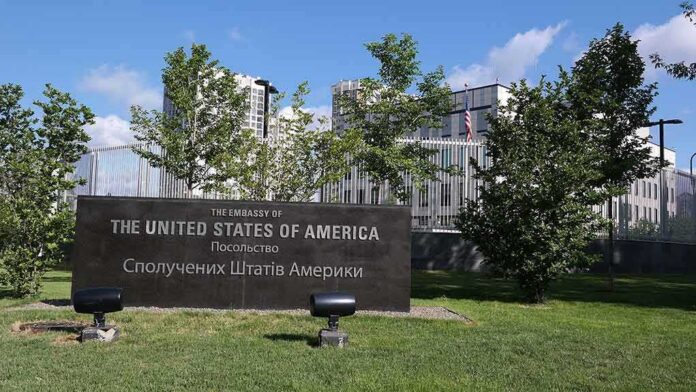
The ambassador in Washington sits at the front line of nuclear talks, sanctions relief debates, prisoner swaps, and emergency deconfliction after dangerous incidents. When leaders trade barbs, embassies keep phones open. Darchiev’s office would have handled hard notes on export controls and technology flows, visas for diplomats, and complaints about spying. This is not glamorous work. It is the plumbing of statecraft. When a figure at that junction is gone, cables, calls, and meetings all shift.
Allies and competitors watch these moments for signals. Who signs the next diplomatic note? Who answers when the United States Department of State calls at 2 a.m.? Moscow’s choice of a successor will tell us how it wants to manage Washington: calm technician, firebrand messenger, or quiet fixer. In strained times, personnel is policy. Seasoned conservatives will look for clarity, accountability, deterrence, and a steady hand across the table.
What we know—and what we do not need to guess
The official announcement states that Darchiev died suddenly and gives his age and office. It does not give a cause, a hospital, or a location. The reports do not cite a death certificate, coroner, or family statement. That is common with serving ambassadors, where privacy and protocol can limit disclosures. The core of the story remains firm: the diplomat’s death and his standing role in Washington. One sentence covers the caveat: no cause has been disclosed.
Media accounts from Russia and the West match on essentials and timing. Interfax, TASS, ABC News, Politico, and others cited the Russian Foreign Ministry and did not add new medical facts. The record is thin but aligned. In news, aligned basics beat noisy speculation every time. That is how professionals keep focus: lock the knowns, flag the unknowns once, and follow the appointments that come next.
The broader pattern people remember
Observers will recall past sudden deaths of Russian diplomats over the last decade. Several cases drew attention because they came in clusters, spanned continents, and arrived amid global crises. Some were later tied to natural causes; others stayed unclear. That history explains why this news turns heads. It does not, by itself, change the facts in this case or prove anything beyond the ministry’s statement.
BREAKING: Russia's ambassador to the U.S., Alexander Darchiev, has died at age 66, the Russian Foreign Ministry announced. No cause of death has been given. pic.twitter.com/QTdEF9MyPT
— Monitoring the Situation (@monitoringmeme) November 11, 2026
Practical minds should keep their eye on the road ahead. The United States will continue to route messages through Moscow’s chargé d’affaires until a new ambassador is named. Routine work—visa disputes, consular help, diplomatic protection—must go on. The next Russian nominee will need United States agreement under longstanding practice. That step, and how fast it comes, will show whether both capitals want fewer shocks and more channels, which serves stability and common sense.
Sources:
insiderpaper.com, interfax.com, abcnews.com, tass.com, themoscowtimes.com, straitstimes.com, usnews.com
© horizonpost.com 2026. All rights reserved.