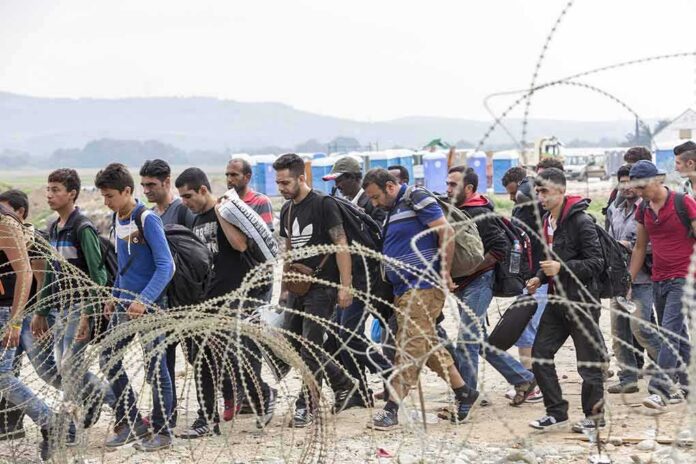
Almost 50,000 people surged into tiny Ceuta from Morocco in a single day, turning a quiet Spanish enclave into the front line of Europe’s border crisis.
Story Snapshot
- About 49,000 migrants entered Ceuta from Morocco in roughly 24 hours, overwhelming local authorities.
- Many swam around sea barriers or climbed fences; at least 18 people died during the crossing.
- Spain deployed military units and reinforced the border as officials warned of “absolute chaos” and collapse.
- The surge exposed deep weaknesses in European border policy and raised hard questions about Morocco’s role.
Ceuta’s Worst Day: What Happened At The Border
Spain’s Interior Ministry estimated that 49,000 migrants entered Ceuta from Morocco over about 24 hours, an inflow equal to more than half the enclave’s normal population. The crowd was mostly young men from Morocco and other African countries, many wearing only swimsuits as they headed for the water. Some swam around the Tarajal breakwater with flotation rings or improvised rafts. Others broke through gates in the border fence or ran along the shoreline when guards pulled back.
Migrant deaths rise to 41 in massive crossing into Spain's Ceuta from Morocco; over 37,500 migrants returned to Morocco voluntarily, say officials #España #CeutaEsEspaña https://t.co/7uAx1fDmzo pic.twitter.com/B2DvJf9D2W
— Gulf Today (@gulftoday) July 31, 2026
Video from the scene showed beaches packed shoulder to shoulder, with new arrivals stumbling out of the surf and collapsing from cold and exhaustion on the sand. Local authorities described “absolute chaos” as thousands tried to claim asylum at once, with no documents and no plan beyond reaching European soil. Emergency crews pulled bodies from the water as the day went on. Officials first confirmed at least 18 deaths, and later tallies from Spanish media raised that number even higher.
How Spain Responded When Ceuta Was Overrun
Ceuta’s regional government quickly warned Madrid that the city was at risk of collapse and urged the central government to declare a national emergency. Police unions said reception centers were beyond capacity and that officers were sleeping on station floors between shifts. Spain sent additional national police, civil guard units, and then military forces to the enclave. Armored vehicles moved to the beaches and main crossings to try to block new entries and restore basic order.
Soldiers and divers were deployed to patrol the water and help search for more victims of the crossing. By the next day, Spain reported that about half of those who entered — roughly 25,000 people — had already gone back to Morocco, often because they found no food, shelter, or work in the overwhelmed enclave. Officials then began the slower work of processing the remaining migrants, separating minors, and deciding who would be transferred to mainland Spain and who would face rapid return.
Morocco’s Border, Europe’s Crisis, And A Familiar Pattern
Spanish and European Union commentators quickly pointed out that the surge happened when Moroccan security forces at the fence were absent or had pulled back, allowing crowds to move almost unchecked. Some in Spain argued that Morocco “opened the tap” to pressure Madrid and Brussels, echoing a similar incident in 2021 when thousands crossed after a diplomatic dispute. That earlier crisis also featured claims that Moroccan police suddenly relaxed enforcement at the line.
Supporters of strong borders see a clear lesson: when one side stops enforcing the rules, more people will come, no matter what policies Europe debates in Brussels. For years, Morocco has stopped tens of thousands of crossing attempts near Ceuta, but it also knows that sudden surges can give it leverage in talks over aid, visas, and Western Sahara. From a common-sense conservative view, tying Europe’s border security to the choices of another government looks less like compassion and more like a strategic weakness.
What Ceuta Reveals About Europe’s Borders And Local Fears
This was not Ceuta’s first shock. In 2021, about 8,000 migrants entered in two days, and in 2024, Morocco said it blocked nearly 80,000 attempts near the enclave. Ceuta’s president has warned for years that reception systems are “overwhelmed,” and that the city cannot absorb mass arrivals without risking public safety and social peace. The latest surge was bigger than anything before, turning those warnings from political talking points into real-life scenes of residents barricading doors.
Migrant deaths rise to 41 in massive crossing into Spain's Ceuta from Morocco; over 37,500 migrants returned to Morocco voluntarily, say officials #España #CeutaEsEspaña https://t.co/7uAx1fDmzo pic.twitter.com/B2DvJf9D2W
— Gulf Today (@gulftoday) July 31, 2026
Local people told reporters they felt like their city had been invaded and that the state had lost control, even if only for a day. Many Europeans watching the footage asked a blunt question: if tens of thousands can cross into one small enclave so fast, what does that say about the rest of Europe’s borders? For readers who value sovereignty, rule of law, and safe communities, Ceuta looks less like a distant problem and more like a warning flare over the entire Western approach to migration.
Sources:
pjmedia.com, en.wikipedia.org, euronews.com, nypost.com, nytimes.com, theguardian.com, washingtonpost.com, facebook.com, english.elpais.com, bbc.com, youtube.com
© horizonpost.com 2026. All rights reserved.