
The real story of Venezuela’s twin killer quakes is not just the shaking, but the chaos of truth that followed.
Story Snapshot
- Two massive earthquakes struck near Morón and Montalbán within seconds of each other, among the strongest in Venezuela in a century.[1][3][14]
- Buildings collapsed in Caracas, especially around Altamira, while early official reports still claimed “no major damage.”[1][2][6][12]
- Tsunami alerts flashed across Puerto Rico and the Virgin Islands, then were quickly canceled after new data came in.[2][3][7]
- Death toll estimates swung from zero to fears of tens of thousands, exposing how models and media can outrun facts.[3][6][15]
When the ground moved and the numbers started to wobble
On the evening of June 24, 2026, the United States Geological Survey (USGS) recorded a major earthquake west of Morón, a coastal community roughly 168 kilometers from Caracas.[1][2][14] The first shock came in at about magnitude 7.1–7.2, shallow in the crust, strong enough to rock high-rises and snap older concrete. Less than a minute later, a second, larger quake hit, pegged at magnitude 7.5 and centered just southwest of Morón.[1][2][3][14] Seismologists labeled this pair a “doublet,” two near-twin monsters striking before people could even process the first.
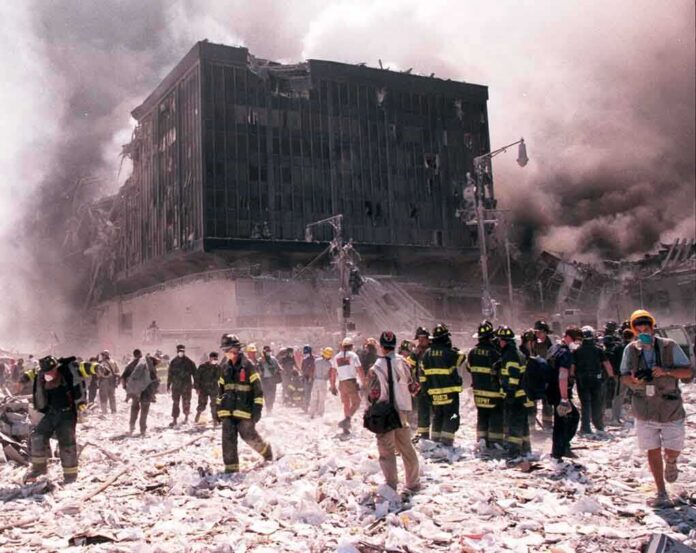
In Caracas, the reality of that doublet was not a chart. It was walls shearing off, apartments suddenly open to the street, and people running out as glass rained down.[1][2][9] Interior Minister Diosdado Cabello reported “alarming situations” in the Altamira neighborhood, with homes and buildings collapsed and injuries expected.[1][2] Video from news outlets showed rescue crews crawling over debris piles, headlights cutting through dust as teams searched for survivors late into the night.[4][9] While some officials still said damage was unconfirmed, the images told a harsher story.
How a tsunami advisory became part of the confusion
Those quakes did not just shake Venezuela. They sent a burst of energy through the Caribbean basin that triggered tsunami advisories for Puerto Rico and the United States Virgin Islands.[2][3][7] The United States Tsunami Warning System acted fast, based on early USGS readings and standard models that err on the side of caution.[3][14] Within hours, wave-height data and refined calculations showed no major tsunami developing, and the advisories were canceled.[2][3] For coastal residents, though, sirens and alerts added another layer of fear to a night already ruled by uncertainty.
That uncertainty deepened as death and injury estimates rolled out. Acting President Delcy Rodríguez later announced at least 164 dead and 971 injured, while USGS impact models suggested a chance the toll could reach 10,000.[3][6][14] Those models do not predict specific bodies; they use past disasters to estimate likely ranges based on population and building types. In a country where many structures are older, poorly reinforced, or stressed by years of economic crisis, the high-end numbers are not far-fetched. But they are also not proof. This gap between modeled worst case and confirmed counts gave media outlets room to chase dramatic headlines, sometimes ahead of solid evidence.
Why reports clash when politics and weak data share the fault line
Magnitude reports varied as the night went on. Some outlets repeated a separate 6.3 quake in western Venezuela, near Mene Grande, which appears tied to an earlier 2025 sequence rather than the June 24 event.[3][15][17][18] Colombian and European monitors used slightly different scales and station networks, creating modest differences in measured size. That kind of spread is normal when seismometers are sparse near the epicenter, as they are in much of Venezuela.[15][16][20] It only turns into public confusion when media and activists spin those differences into claims of “fake quakes” or cover-ups without offering competing hard data.
In a politically fragile country, hard data can move slower than rumor. Venezuela’s ongoing economic and institutional crisis makes it harder to get fast, credible engineering reports on collapsed buildings or detailed hospital statistics.[16][19] That vacuum invites two temptations. On one side, sensationalist coverage that jumps from early damage images to talk of “ten thousand dead” as if it were confirmed fact. On the other, reflexive skepticism that calls every alarming report an exaggeration or plot. A conservative, common-sense view resists both. It respects established technical bodies like USGS, which release clear, transparent methods, while demanding that media distinguish between modeled possibilities and verified numbers.
Lessons from earlier Venezuelan quakes that most people missed
The June 2026 doublet did not come out of nowhere. In September 2025, northwestern Venezuela saw its own series of strong quakes, with magnitudes bouncing between 6.2 and 6.3 as data improved.[15][16][17][18] Early headlines warned of “severe damage” and collapsing buildings, but later assessment found limited injuries and more moderate structural harm.[15][16] Seismologists studying that sequence noted how few instruments sat near the epicenters and how much they relied on stations hundreds of kilometers away, like in Aruba.[15][20] That sparse coverage guarantees that the first numbers after any major event are rough sketches, not finished paintings.
Following the twin earthquakes that struck northwestern and central Venezuela on June 24, 2026, the tremors were felt extensively across the region, triggering building evacuations and safety concerns in several neighboring countries and Caribbean islands:
Colombia: Shaking was…— Chaya Eitan (@ChayaEitan) June 25, 2026
Social media amplified the noise this time. Some posts echoed USGS data and urged people to stay out of damaged buildings and prepare for aftershocks.[7][8][21] Others claimed death tolls in the tens of thousands, or insisted the tsunami had “struck” Venezuela, even as official advisories were already canceled.[11][16] Algorithms reward drama, not nuance. When platforms then crack down on posts they label “misinformation,” technical voices that question extremes can get buried along with genuine cranks.[5][21] That is why grounded, transparent sources matter. They give regular people a way to cut through panic and politics, and to judge risk based on evidence instead of emotion.
Sources:
[1] Web – BACK TO BACK MAJOR QUAKES ROCK VENEZUELA… MORE
[2] Web – Back-to-back powerful earthquakes hit Venezuela, …
[3] Web – Powerful 7.1 and 7.5-magnitude earthquakes hit Venezuela
[4] Web – Venezuela hit by 6.3-magnitude earthquake
[5] Web – 2026 Venezuela earthquake
[6] Web – Very Large 7.1 earthquake in Venezuela on the Bocono …
[7] Web – Back-to-back powerful earthquakes hit Venezuela, …
[8] Web – 7.1 magnitude earthquake strikes Venezuela, triggers …
[9] Web – Magnitude 7.1 earthquake strikes Venezuela
[11] Web – BREAKING NEWS: A powerful 7.1-magnitude earthquake …
[12] Web – A second powerful earthquake strikes Venezuela, USGS …
[14] Web – A powerful 7.1-magnitude earthquake shook Venezuela …
[15] Web – USGS.gov | Science for a changing world
[16] Web – Several large earthquakes strike northwestern Venezuela
[17] Web – Series of strong earthquakes rattle Venezuela, Colombia
[18] Web – Maps: Multiple Earthquakes Strike Venezuela
[19] Web – List of earthquakes in Venezuela
[20] Web – Series of strong earthquakes rattle Venezuela, Colombia
[21] Web – Macroseismic Interpretation of the 1812 Earthquakes in …
© horizonpost.com 2026. All rights reserved.