
Six allied nations have stepped up to answer President Trump’s call to secure the world’s most critical oil shipping lane after Iran’s reckless blockade threatens global energy supplies and American interests.
Story Snapshot
- Netherlands, UK, France, Germany, Italy, and Japan commit to “appropriate measures” to reopen the Strait of Hormuz
- Iran effectively closed the waterway carrying 20% of global oil after U.S.-Israeli strikes killed Supreme Leader Ali Khamenei
- Coalition forms as Trump administration seeks international support to counter Iranian aggression without full NATO deployment
- IRGC attacks damaged eight vessels and halted 70% of shipping traffic through the strategic chokepoint
Six Nations Answer Trump’s Coalition Call
The Netherlands announced on March 19, 2026, that it stands ready alongside five key allies to secure safe passage through the Strait of Hormuz. The United Kingdom, France, Germany, Italy, and Japan joined the Dutch commitment to support necessary measures restoring freedom of navigation through the vital waterway. This coalition directly responds to President Trump’s request for international military assistance to counter Iran’s illegal blockade. The announcement marks a pragmatic, multilateral approach prioritizing global energy security while avoiding full NATO entanglement in potential Middle East escalation.
Iran’s Aggression Triggers Global Crisis
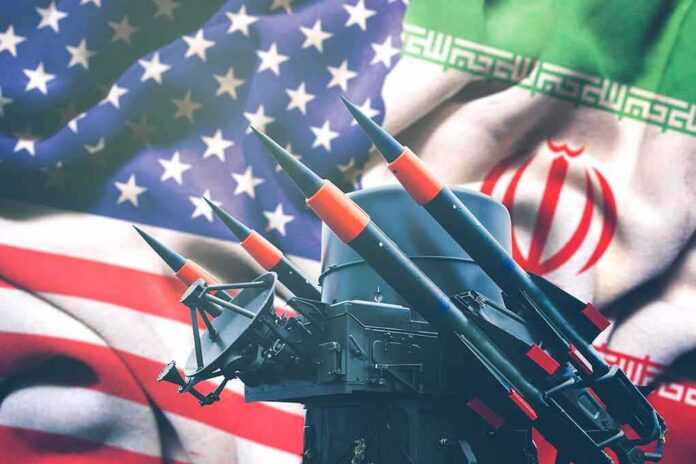
The crisis erupted after U.S.-Israeli Operation Epic Fury airstrikes on February 28, 2026, eliminated Supreme Leader Ali Khamenei and targeted Iranian nuclear facilities. Iran’s Islamic Revolutionary Guard Corps retaliated by effectively closing the Strait of Hormuz, a 21-mile-wide chokepoint handling roughly 20 percent of global oil trade. IRGC forces attacked at least eight commercial vessels, including the U.S.-flagged Stena Imperative and Malta-flagged Safeen Prestige, using drones and mines. Iran’s actions violate international law, specifically UNCLOS transit rights, transforming a strategic waterway into a hostage to Tehran’s radical regime.
Energy Security Demands Decisive Action
The blockade crippled global shipping, with traffic plummeting 70 percent as vessels refuse to risk Iranian attack. Japan faces particularly acute vulnerability, importing over 80 percent of its oil through the Strait. U.S. Energy Secretary Chris Wright announced plans for naval escorts by late March, though experts warn short-term escorts can handle only three to four ships daily against Iranian submarines and drone swarms. The disruption threatens worldwide energy prices and supply chains, demonstrating how rogue regimes exploit critical infrastructure to blackmail free nations. Alternative bypass routes through Oman and UAE ports proved unsustainable after Iranian drone strikes targeted those facilities.
Coalition Strategy Balances Strength and Caution
President Trump sought warship commitments from approximately seven countries to share the burden of reopening the strait. The six-nation coalition represents willing partners ready for immediate action, unlike China and South Korea, which prioritized ceasefire calls over defending international navigation rights. UK Prime Minister Keir Starmer pushed for a credible plan involving Gulf states, European forces, and U.S. assets outside formal NATO structures, reducing risks of broader alliance commitments. The approach reflects conservative principles of burden-sharing among allies while maintaining American leadership. U.S. destroyers resumed active patrols by March 15, signaling determination to restore lawful commerce despite Iranian threats.
The coalition’s formation demonstrates that allies recognize the global stakes when tyrants threaten freedom of the seas. Iran’s blockade represents not just regional aggression but an assault on the international order that ensures energy flows to industrialized democracies. President Trump’s strategy leverages multilateral support without surrendering American sovereignty to bureaucratic institutions like NATO. This crisis tests whether free nations will defend vital interests against authoritarian regimes willing to weaponize natural resources and shipping lanes for geopolitical leverage.