
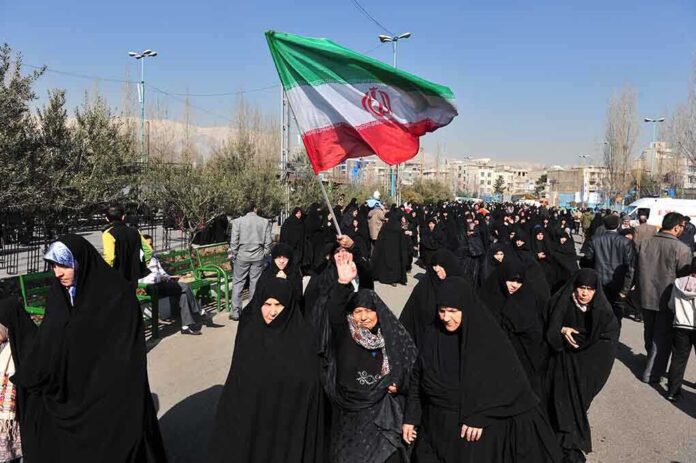
Iranian protesters chant “Neither Gaza nor Lebanon, my life for Iran,” turning guns on their own regime while rejecting foreign wars that drain the nation’s soul.
Story Snapshot
- Protests exploded December 28, 2025, in Tehran’s Grand Bazaar over economic collapse, evolving into nationwide calls for Khamenei’s overthrow.
- Security forces killed 16-32, arrested nearly 1,000, using live fire, tear gas, and hospital raids against unarmed crowds.
- Chants reject regime’s proxy wars in Gaza and Lebanon, prioritizing Iran first in a surge of raw nationalism.
- By January 6, 2026, unrest hit 110 cities across 24 provinces, with women leading sit-ins and merchants paralyzing markets.
- Regime vulnerability grows as bazaar strikes signal elite dissent, echoing 50 years of failed suppression.
Protests Ignite in Tehran’s Grand Bazaar
Merchants shut down Tehran’s Grand Bazaar on December 28, 2025, protesting rampant inflation and shortages. Strikes spread to Isfahan, Shiraz, and Mashhad within days. Security forces deployed tear gas and live ammunition in Hamadan and Tehran. Protesters responded with chants of “Death to the dictator.” Economic pain from sanctions and mismanagement fueled the spark, transforming bazaar stalls into battlegrounds.
Winter energy crises provided regime cover for shutdowns in 21 provinces, but rallies persisted in Kermanshah and Isfahan. Funerals for early victims turned into mass anti-regime demonstrations by January 2. Nationwide, 179 protests erupted across 24 provinces, marking the fastest spread in decades.
Regime Unleashes Brutal Crackdown
Security forces fired live rounds into crowds, confirming 32 deaths by January 6, including children. Nearly 1,000 arrests targeted protesters, minors, and the wounded, with raids on Ilam hospitals. Molotov cocktails and rare protester rifle fire met regime rifle barrages in Tehran streets. Khamenei’s January 4 speech shifted tactics from restraint to full coercion.
Grand Bazaar sit-ins on January 6 drew women to the front lines, chanting “This year is the year of sacrifice, Seyed Ali will be overthrown.” Tear gas dispersed them, but the site resembled a war zone. Protests engulfed 110 cities, paralyzing fruit and vegetable distribution nationwide.
Nationalist Slogans Expose Regime’s Foreign Obsession
“Neither Gaza nor Lebanon, my life for Iran” echoed through Tehran, Isfahan, and beyond, rejecting billions funneled to proxies like Hezbollah and Hamas. Protesters demand focus on domestic survival over distant wars. This slogan aligns with American conservative values of sovereignty and self-reliance—put your house in order before meddling abroad. Facts confirm regime’s foreign spending exacerbates Iran’s 40% inflation.
Regime blames U.S. interference, but protesters explicitly disavow external hands. Social media pierces information blackouts, accelerating spread despite controls. Bazaar merchants, traditional regime allies, withhold support through strikes in gold and currency markets.
Historical Echoes Signal Potential Collapse
Iran’s 50-year protest cycle, from 1979 Revolution fallout to 2022 Mahsa Amini uprising, mirrors current fury. Past crackdowns killed 1,500 in 2019 fuel riots and 500 in 2022. Bazaar actions historically precede elite fractures. Analysts at Critical Threats note suppression failure after 179 events since January 2.
NCRI reports a “new phase” of uprising, with women’s roles and overthrow chants intensifying. Stimson Center observes information outpaces organization, challenging regime control. Khamenei’s forces strain under domestic fights and foreign commitments, risking IRGC overstretch.
Sources:
Iran has been shaken by a series of protests over the past 50 years. Here’s a look at them