

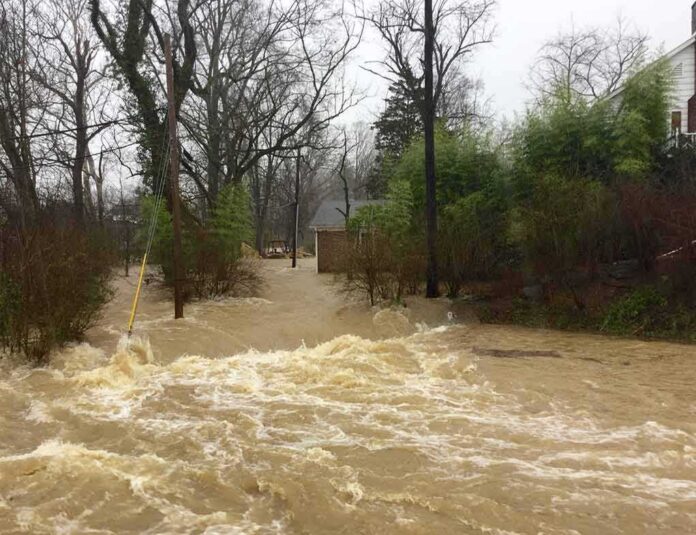
South-central Texas hit the rarest flood alert on the books, and the water did not wait for daylight.
Story Snapshot
- National Weather Service issued a Flash Flood Emergency for Kerr and Uvalde counties.
- State officials confirmed deaths and dozens of rescues as rivers rose fast.
- Rainfall totals reached double digits, submerging roads and trapping drivers.
- Texas deployed over 1,300 personnel as evacuations spread across the Hill Country.
Life-Threatening Flooding Triggers Rare Emergency
The National Weather Service labeled parts of Kerr and Uvalde counties a Flash Flood Emergency, its highest tier for danger to life and property. Forecasters and emergency managers warned of catastrophic, fast-rising water across communities before sunrise on July 16. Local reports showed blocked roads, stranded drivers, and water rescues as creeks burst out of their banks. Officials described a multi-county operation to reach people in vehicles, homes, and low-lying areas as storms kept training over the same ground.
🚨⚠️ FLASH FLOOD EMERGENCY #TEXAS https://t.co/a7650QkeqV
— Mary Flynn (@Mary_Flynn17) July 17, 2026
Ground reports backed up the emergency tag. The National Weather Service warned that 10 to 20 inches of rain had fallen in parts of Uvalde County. Streets went under. Crossings vanished. Visibility fell to near zero at times in blinding sheets of rain. Local alerts said the water was still rising and would move downstream with force. People in flood-prone zones were told to leave now, not later, because the roads they used could disappear without warning.
Rescues, Fatalities, And A Rapid State Response
First responders pulled people from cars, rooftops, and swift water as the night wore on. State leaders said the mission grew by the hour. The Governor said more than 1,300 personnel were on the ground for rescues, traffic control, and medical support. Helicopters, high-water vehicles, and swift-water teams surged into the Hill Country. Officials confirmed deaths tied to the floodwaters even as rescues continued. The picture was clear: the threat was real, the response was large, and time mattered.
Reports across the Hill Country matched what forecasters feared. A stalled pattern kept dumping rain, and the soil could not take it. The runoff rushed downhill into narrow channels that feed rivers like the Guadalupe and Pedernales. That topography acts like a funnel. Water that falls miles away arrives in a sudden push. People often underestimate that speed. Data from past Hill Country disasters show many victims get caught in vehicles, trying to cross flooded roads that look shallow but hide a strong current.
Why The Hill Country Floods So Fast, Again
The Hill Country floods like few places in America. Steep slopes, thin soil, and rock limit how much rain can soak in. When storms park overhead, the land sheds water like a metal roof. A “worst case” stack of weather features can push rainfall rates to two to four inches an hour. Rivers answer with rapid surges that outpace sirens and texts. This dynamic has produced past mass-casualty floods along the Guadalupe, and forecasters warned the same physics were back in play this week.
Common sense in this terrain says do not drive through water, even a few inches deep. The Texas Department of Insurance teaches the same lesson: turn around, do not drown. Build a go-bag before the storm. Know your evacuation routes. Watch river levels, not just rain totals. Personal readiness is not panic; it is respect for a landscape that rewards caution and punishes delay. Local first responders carry the load in the first hour, but neighbors who act early make their job possible.
What Worked, What Needs Hard Questions
The Flash Flood Emergency label fit the facts on the ground. Heavy rain, confirmed flooding, rescues underway, and a clear threat to life met the bar. The state moved resources fast and in force, which aligns with a basic conservative value: protect life first, then count the costs. Still, every flood leaves hard questions. Were alerts early enough for overnight travelers? Did roadblocks go up where recurrent low crossings fail? Those are fair audits once people are safe.
DEADLY FLOODING BATTERS TEXAS AS EMERGENCY RESPONSE EXPANDS
Severe flooding has inundated parts of Texas, leaving at least two people dead, prompting emergency declarations across dozens of counties, and triggering more than 230 water rescues as communities recover from… pic.twitter.com/hzS6qDSjoC
— Washington Eye (@washington_EY) July 17, 2026
Policy debates will return after the mud dries. Some will push for bigger projects. Others will say fix the basics: maps, drainage, signage, and rapid alerting that wakes light sleepers. Prudence suggests both. Spend where it saves lives. Train where time is tight. The Hill Country will flood again. Texans know that. The choice is whether more people meet the next surge in a truck on a dark crossing, or already at higher ground with a plan that worked.
Sources:
ialert.com, english.elpais.com, youtube.com, abcnews.com
© horizonpost.com 2026. All rights reserved.