

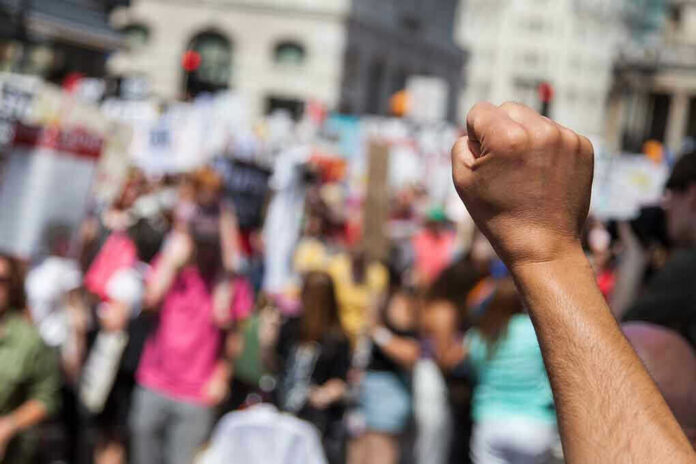
Progressive movements against ICE have evolved into a multifaceted campaign that could reshape the American political landscape.
Story Overview
- Protests against ICE are gaining momentum, reflecting a resurgence of the “abolish ICE” movement.
- Recent events include fatal shootings by ICE agents, leading to nationwide protests.
- The “abolish ICE” debate plays a pivotal role in the 2026 midterm campaigns.
- Public opinion remains divided, affecting the political strategies of both parties.
Resurgence of the “Abolish ICE” Movement
The phrase “The Left Unveils New Tactic to Stop ICE” encapsulates a broad narrative of escalating resistance against Immigration and Customs Enforcement (ICE) during Donald Trump’s second presidential term. The resurgence of the “abolish ICE” movement stems from nationwide protests in response to high-profile ICE raids and fatal shootings involving ICE agents. These events have reignited calls for the abolition of ICE, a sentiment that first gained traction during Trump’s initial term in office.
January 2025 marked the beginning of Trump’s second term, and with it came a renewed focus on mass deportations. Following a series of ICE raids in multiple cities, tensions escalated when an ICE agent fatally shot a woman in Minneapolis. This tragedy, coupled with another shooting incident later that month, fueled public outrage and sparked protests across the nation. The political left has been portrayed as orchestrating these protests, which often involve direct physical blockades of federal buildings and viral videos of confrontations with law enforcement.
Political Implications and Public Opinion
The “abolish ICE” movement has become a central issue in the 2026 midterm campaigns, highlighting a growing ideological divide within the Democratic Party. Progressive candidates, such as Evanston Mayor Daniel Biss and Michigan Senate hopeful Abdul El-Sayed, have embraced the call to abolish or significantly defund ICE. Meanwhile, more centrist Democrats caution against the potential electoral consequences of such radical positions. With public opinion on the issue nearly evenly split, the debate over ICE’s future remains a contentious topic that could significantly influence the upcoming elections.
The left unveils new tactic to stop ICE | Wake Up America https://t.co/zhMQ5ujTsk via @YouTube
— Dr. Marcey Anderson (@ComMarcey) January 20, 2026
While progressives argue that ICE has become an abusive and corrupt institution, centrists advocate for reform rather than abolition. This intra-party conflict echoes previous debates, such as the “defund the police” movement linked to the Black Lives Matter protests. As Republicans seize on the opportunity to paint Democrats as extreme and out of touch with mainstream America, the “abolish ICE” movement serves as a litmus test for Democratic candidates seeking to appeal to their base while avoiding alienation of moderate voters.
Impact on Communities and Law Enforcement
The protests and political rhetoric surrounding ICE have far-reaching implications for immigrant communities, law enforcement, and the broader political landscape. Immigrant communities face heightened anxiety as ICE operations continue to target individuals deemed “illegal immigrant criminals,” including gang members and sex offenders. In cities like Los Angeles and Minneapolis, protests have led to significant disruptions, prompting military deployments and resulting in numerous arrests and injuries.
The economic impact of these demonstrations is also notable, with businesses in affected areas experiencing disruptions. Viral videos of confrontations between protesters and law enforcement have further polarized public opinion, contributing to social tensions and political divisions. As the “abolish ICE” debate continues to unfold, its outcome could shape not only the future of immigration enforcement in the United States but also the balance of power in Congress come November 2026.
Sources:
Wikipedia: Protests against mass deportation during the second Trump administration
Politico: Minnesota ICE midterm campaigns