
One low-profile New York congressman just walked straight into the center of the Trump-era immigration war by siding with Haitian immigrants against his own party’s base.
Story Snapshot
- Mike Lawler co-led and passed a House bill to extend Temporary Protected Status for Haitians, defying Trump-aligned Republicans.[2][3]
- The Supreme Court cleared the way for mass deportations by ruling that the Department of Homeland Security’s decision to end TPS cannot be reviewed by federal courts.[8]
- Conservative influencers and outlets blasted Lawler as a “RINO” and “traitor” for demanding protection and pressing the Senate to act.[7]
- The fight exposes a deeper split on the right between strict enforcement and local, community-first conservatism.[2]
A Republican who chose the Haitian community over the MAGA comment section
New York Congressman Mike Lawler did something most Republicans try hard to avoid: he went on camera and demanded that Haitians under Temporary Protected Status not be deported after the Supreme Court’s ruling.[2] Lawler co-led H.R. 1689, a bipartisan bill that extends Haiti’s Temporary Protected Status designation past the current end date, and helped drive it through the House with a 223–204 vote.[2][3] That vote came from a coalition of Democrats and a small band of Republicans willing to buck party leaders and Trump-aligned media voices.[3]
Temporary Protected Status is a legal status Congress created in 1990 for people from countries hit by war, disaster, or chaos, giving them the right to stay and work for short stretches of six to eighteen months at a time.[18][21] Over three decades, those short stretches turned into cycle after cycle of renewal, so that “temporary” protection for some groups has lasted decades.[19] That pattern feeds the argument from hardliners that TPS became a backdoor to permanent residency, even though the status itself never promised a green card.[21]
The Supreme Court gave Trump maximum leverage, and Haitians the least
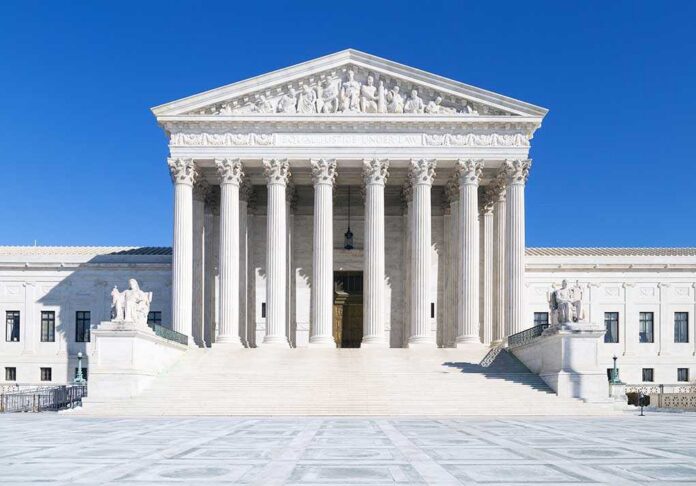
The Supreme Court’s latest immigration ruling changed the battlefield overnight. The Court held that decisions by the Department of Homeland Security to end Temporary Protected Status cannot be reviewed by federal judges, except on narrow constitutional grounds.[8] That ruling came in a case challenging the Trump administration’s effort to cancel TPS for Haitians and others, and the majority sided firmly with executive power.[8] Trump allies quickly celebrated, saying TPS had “never been temporary” and praising the freedom to move ahead with deportations.[9]
Lawler’s bill tries to push back against that new power, but only from one branch of government. H.R. 1689 would extend Haiti’s TPS designation for three years, keeping work permits in place and blocking deportations for Haitians already lawfully in the United States.[3] Migration analysts note that revoking TPS for Haiti could affect hundreds of thousands of people and cost the American economy billions in lost output and disrupted industries.[6] That cost would show up in everyday places: nursing homes, hospitals, construction sites, and local small businesses that rely on Haitian workers.[6]
Rockland County realities versus national conservative talking points
Lawler’s stance did not appear out of nowhere. He has pressed the issue for years from the vantage point of Rockland County, New York, where there is a sizable Haitian community woven into local schools, churches, and workplaces.[2] He joined town supervisors and local officials in a letter urging the White House to keep protections in place, pointing to gang violence, political collapse, and a growing humanitarian crisis in Haiti.[3] The State Department backs part of that concern with an official “do not travel” warning for Haiti due to extreme violence and unrest.[8]
Lawler also got involved in the personal case of Alan Pierre, a young Haitian student from his district who was detained by immigration agents despite having TPS and a pending green card application.[7] That episode gave Lawler a concrete story to point to when he argued that the system was catching lawful workers in its dragnet. From a commonsense conservative view, helping a law-abiding student with legal status matches the idea that the law should be firm but fair. That nuance often vanishes in national social media fights where every compromise is painted as betrayal.
Why some conservatives call Lawler a “RINO,” and others call him responsible
As soon as Lawler started calling on the Senate to pass his TPS extension after the Supreme Court decision, conservative influencers and some right-leaning media accounts went on the attack. Posts on social platforms blasted him as a “RINO” and “traitor,” accusing him of helping Democrats turn TPS into a “long-standing excuse” for permanent residency.[7][19] That framing leans on the real history of repeated TPS renewals but ignores the plain text of the law, which does not grant a direct path to citizenship.[21]
From a traditional American conservative standpoint, the debate breaks into two camps. One camp focuses on strict border enforcement and worries that every extension is one more step toward amnesty. The other camp accepts tough borders but argues that people who came here legally under a program Congress created, who have followed the rules and built lives in American towns, should not be sent back into known chaos overnight. Lawler’s votes, letters, and public statements place him squarely in that second camp.[2][3]
What happens next if the Senate stalls and deportations start
The House has done its part by passing H.R. 1689, but the bill now sits in the Senate with no visible support from leadership.[2][3] Meanwhile, the Supreme Court has removed one of the biggest legal brakes on the Trump administration’s plan to end TPS and begin deportations of Haitians and other groups.[8] If the Senate refuses to take up the bill, Haitian families in places like Rockland County will face a wave of uncertainty: work permits expiring, deportation orders issued, and households split between status and no status.[6]
For older Americans watching this unfold, the deeper question is not abstract. It is whether conservatism means only strong borders at any cost, or whether it also means standing by neighbors who followed the law when Washington invited them here. Lawler’s fight over Haitian TPS forces that question into the open. The answer will not come from angry posts about “RINOs.” It will come from whether Congress matches its enforcement zeal with the same level of care for American communities that already exist.[2][3][6]
Sources:
[2] Web – Lawler Votes to Extend Temporary Protected Status For Haiti …
[3] YouTube – Rep. Mike Lawler wants temporary protected status extended for …
[6] X – Congressman Mike Lawler (@RepMikeLawler) on X
[7] Web – House of Representatives Votes to Extend TPS for Haiti | FAIRUS.org
[8] Web – Rep. Mike Lawler (R-N.Y.) called for temporary legal protections for …
[9] Web – Supreme Court allows cancellation of TPS for Haitians, Syrians, as …
[18] Web – Temporary Protected Status (TPS): Fact Sheet
[19] Web – How Employers Can Adapt to Immigration Policy Shifts
[21] Web – TPS is rapidly changing as the Administration attempts to terminate …
© horizonpost.com 2026. All rights reserved.