

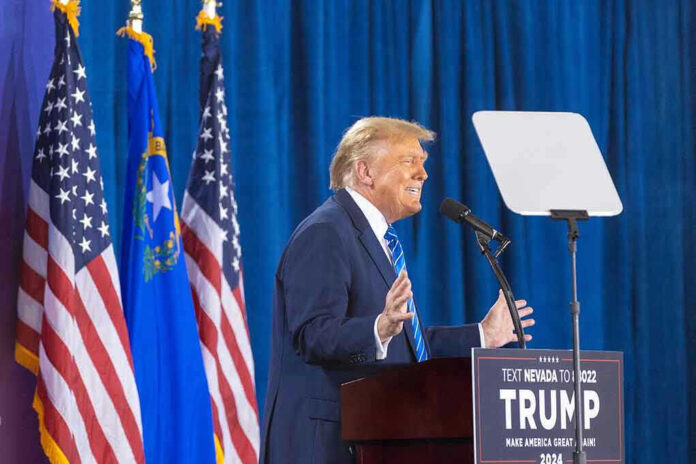
Trump’s public takedown of Jerry Nadler exposes how the end of Democrat control is reshaping Washington’s power dynamics and signaling the end of an era marked by partisan impeachment and leftist overreach.
Story Snapshot
- Trump celebrated Rep. Jerry Nadler’s retirement with scathing public attacks, reigniting their decades-long feud.
- Nadler’s exit closes a chapter in Democrat-led impeachment efforts and signals a leadership shakeup for House Democrats.
- The bitter rivalry between Trump and Nadler, rooted in New York politics, shaped much of the partisan conflict of the era.
- Nadler’s departure comes as Democrats struggle to regroup after Biden’s defeat and conservatives reclaim national leadership.
Trump’s Public Rebuke Marks a Turning Point in Washington Power Struggles
In early September 2025, Rep. Jerry Nadler, the longtime New York Democrat and former House Judiciary Committee chair, announced he would not seek reelection, ending a 34-year congressional career. Within days, President Trump took to social media, labeling Nadler a “bum” and “psychopathic nut job.” Trump’s remarks referenced not only their personal animosity—dating back to his days as a New York real estate developer—but also Nadler’s leadership in both impeachment proceedings against him. The tone of Trump’s statements reflects the intensity of partisan conflict during Nadler’s tenure.
'Psychopathic Nut Job': Trump Savages Jerry Nadler as He Cheers Congressman's Retirement https://t.co/JleQb0oNHp
— Mediaite (@Mediaite) September 5, 2025
Nadler’s retirement represents more than the end of a political career. It marks the closing of a chapter defined by aggressive attempts to undermine the Trump presidency through impeachment and constant political attacks on conservative values. Nadler was a central figure in both the 2019 and 2021 impeachment efforts, using his committee leadership to drive Democrat priorities that frustrated many constitutionalists and defenders of due process. Trump’s victory in 2024 and the subsequent shift in power left Nadler and fellow Democrats with diminished leverage, fueling speculation that the changing political winds hastened Nadler’s decision to step aside.
Longstanding Rivalry Shaped Political Discourse and Partisan Strategies
The adversarial relationship between Trump and Nadler spans decades, originating in Manhattan where Nadler frequently opposed Trump’s real estate projects. Their conflict escalated on the national stage as Nadler chaired the House Judiciary Committee, orchestrating high-profile impeachment proceedings that many conservatives viewed as partisan overreach. Trump’s public celebration of Nadler’s departure is more than personal vindication; it signals a broader rejection of tactics that prioritized political vendettas over constitutional governance and common sense solutions for the American people.
For years, Nadler’s leadership symbolized a Democrat agenda that prioritized endless investigations and divisive rhetoric over real solutions for issues like border security, economic growth, and family stability. His retirement now forces House Democrats to confront a generational leadership vacuum, while the Republican base is energized by Trump’s willingness to call out opponents who, in their view, weaponized government institutions for political gain.
Political Implications: Democrat Leadership in Crisis, Conservative Momentum Builds
Nadler’s exit comes as Democrats face a crisis of leadership and identity following President Biden’s defeat. The party must fill substantial gaps in experience and oversight, with the New York Democratic Party preparing for a contentious fight to select Nadler’s successor. Meanwhile, Trump’s influence over the Republican base remains strong, shaping the narrative and priorities of a resurgent conservative movement. The broader implications include a House with less institutional knowledge on the left, potential shifts in future oversight strategies, and continued media focus on personal animosity and hyper-partisanship.
Short-term, the retirement has heightened partisan rhetoric and reignited debate over the legacy of Democrat-led impeachment efforts. Longer term, it signals a realignment in New York’s congressional delegation and may alter the balance of experience in the House, impacting how both parties approach future conflicts. For many conservative readers, Nadler’s departure represents a needed reset—a chance to restore constitutional principles, fiscal sanity, and respect for the rule of law after years of what they see as Democrat-driven chaos.
Expert Analysis: Changing of the Guard and What It Means for America
Political analysts agree that Nadler’s retirement is a significant loss for House Democrats, who relied on his experience in oversight and judiciary matters. Experts also note that Trump’s use of personal attacks continues to mobilize his base and dominate media cycles, illustrating the enduring impact of the Trump-Nadler feud on American political polarization. Some commentators see the transition as an opportunity for generational change in Democrat leadership, while others caution that ongoing personal vendettas risk degrading political discourse further.
For conservatives, the end of Nadler’s career is a victory for those who value accountability and constitutional order over partisan theatrics. As America moves forward under renewed conservative leadership, the departure of figures like Nadler is seen as a crucial step toward reclaiming government for the people, rebuilding trust in institutions, and putting an end to the leftist policies that fueled division and weakened the nation’s foundations.
Sources:
Nadler announces retirement, citing Biden’s loss