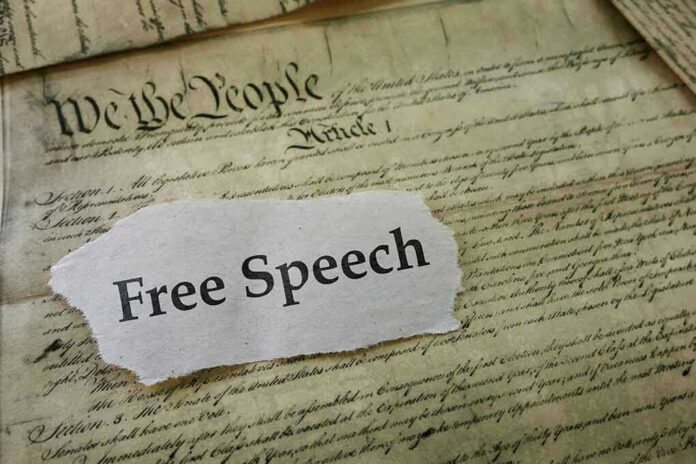
Rep. Jasmine Crockett’s bold defense of incendiary rhetoric raises questions about the fine line between free speech and incitement, igniting a firestorm of controversy.
Story Overview
- Rep. Jasmine Crockett denies inciting violence despite using inflammatory language.
- Her comments following Charlie Kirk’s assassination spark intense debate.
- Political rhetoric and its impact on violence remain at the forefront of public discourse.
- White House and Republicans call for clarification of Crockett’s statements.
Crockett’s Rhetoric and the Kirk Assassination
In the aftermath of conservative activist Charlie Kirk’s assassination, Rep. Jasmine Crockett (D-Texas) has fiercely defended her use of strong language in political discourse. Despite her denial of inciting violence, her remarks, including calling former President Donald Trump a “wannabe Hitler,” have faced scrutiny. The controversy revolves around whether such rhetoric can radicalize individuals to commit violent acts, especially when anti-fascist messages were found at the crime scene.
The debate over Crockett’s comments underscores a larger question about the responsibility of political figures in maintaining civil discourse. White House spokeswoman Abigail Jackson has demanded clarification from Crockett, reflecting concerns that her rhetoric could be interpreted as justifying violence. As the investigation into Kirk’s assassination continues, the link between political language and violent actions remains a contentious issue.
Historical Context of Political Violence
Over the past decade, the United States has witnessed a surge in political violence and divisive rhetoric. Both Democrats and Republicans have faced accusations of fostering extremism. The January 6 Capitol riot and other high-profile incidents have highlighted how heated language can lead to tragic outcomes. The assassination of Charlie Kirk with apparent ideological motives adds another layer to this already volatile situation.
This environment of heightened tension and polarization has led to calls for greater accountability and moderation in political speech. The Democratic caucus is divided on the issue, with some supporting Crockett’s right to free speech, while others are concerned about the potential consequences of inflammatory language.
Implications for Free Speech and Political Discourse
The fallout from Crockett’s statements and the Kirk assassination has significant implications for the future of political discourse in America. In the short term, there is heightened scrutiny on the impact of rhetoric on violence, with calls for more responsible communication from public figures. Long-term, there may be legislative responses aimed at regulating political speech, though these could risk infringing on First Amendment rights.
The broader American public faces the challenge of navigating a landscape rife with divisive language and potential violence. As political figures and communities grapple with these issues, the balance between free expression and public safety will continue to be a critical point of discussion.
Sources:
Jasmine Crockett blames Trump for violence
Jasmine Crockett scolds White Democrats