

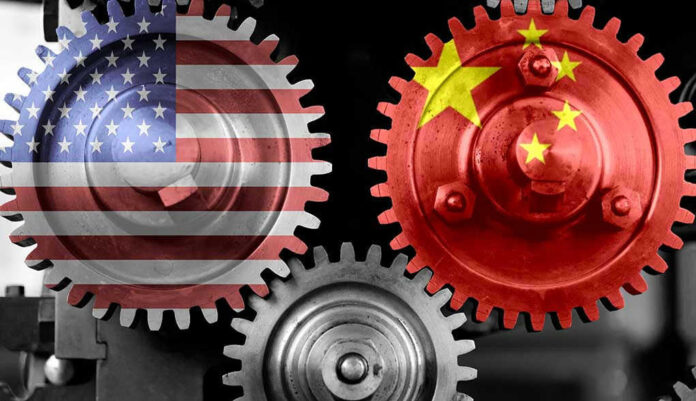
China uses rare earths as an economic weapon, but a U.S. breakthrough could shift the balance of power.
Story Highlights
- China’s export restrictions on rare earths escalate economic warfare against the U.S.
- U.S. innovation in iron nitride magnets offers a path to reduce dependency on Chinese materials.
- Supply chain disruptions lead to price surges and strategic re-evaluations globally.
- The breakthrough could alter the geopolitical landscape of critical technology sectors.
China’s Strategic Use of Rare Earths
In April 2025, China imposed new restrictions on the export of seven rare earth elements and related magnets. These actions by China’s Ministry of Commerce are seen as a direct response to U.S. tariffs, aiming to leverage China’s dominant position in the rare earth market as a tool of economic statecraft. Rare earths are critical for the defense, energy, and automotive sectors, making these restrictions a significant geopolitical maneuver.
China’s monopoly over rare earths, handling 90% of global processing, has long been a strategic advantage. The U.S. and its allies, heavily reliant on these minerals, face vulnerabilities due to limited domestic extraction and processing capabilities. This dependency has been highlighted in various economic and political contexts, underscoring the urgency for diversification and innovation in sourcing rare earths.
The U.S. Technological Counteroffensive
In June 2025, U.S. researchers announced a breakthrough in the scalable production of iron nitride magnets, offering a non-rare-earth alternative. This development is crucial as it promises to reduce the U.S.’s reliance on Chinese rare earths, paving the way for strategic independence. The innovation is a potential game-changer, not only for the U.S. but also for global supply chains, which are currently reeling from recent disruptions.
The U.S. government’s support for research into alternative materials is part of a larger strategy to secure critical mineral supply chains. If successfully scaled, iron nitride magnets could weaken China’s leverage, challenging its economic stronghold in this sector. The move aligns with broader conservative values of fostering technological independence and securing national interests.
Implications and Future Prospects
The immediate effects of China’s export controls have been severe, with rare earth prices tripling in some markets, causing significant disruptions in manufacturing sectors across the globe. However, the U.S. breakthrough in magnet technology could mitigate long-term impacts by offering a viable alternative to rare earth-dependent products. This technological advancement could lead to a strategic realignment of global supply chains.
By potentially undermining China’s monopoly, the U.S. innovation in iron nitride magnets holds the promise of reshaping the balance of power in critical technology sectors. This development signals a shift towards greater autonomy and resilience in U.S. manufacturing and defense capabilities, aligning with the conservative emphasis on national security and economic independence.
Sources:
China’s Critical Mineral Export Controls
Consequences of China’s New Rare Earths Export Restrictions
How China’s Rare Earth Metals Export Ban Will Impact Supply Chains