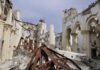

A 7.1 quake off Kyushu shook Japan, triggered a tsunami advisory, and proved why sober systems beat panic every time.
At a Glance
- Japan’s weather agency reported a magnitude 7.1 offshore quake near Miyazaki at about 4:43 p.m. local time.
- Tsunami advisories followed, with expected waves around one meter for parts of Kyushu and Shikoku.
- Detected waves reached about 50 centimeters before advisories were lifted in stages.
- Officials reported no major infrastructure damage or nuclear issues shortly after the quake.
What Happened And When Authorities Moved
The Japan Meteorological Agency said a magnitude 7.1 earthquake struck off Miyazaki Prefecture on Kyushu around 4:42–4:43 p.m. Japan time. Reuters and network reports matched the time window and the location offshore of Miyazaki, aligning on the basic facts of the event. Within minutes, authorities issued tsunami advisories for parts of Kyushu and Shikoku, with predicted waves of up to about one meter along exposed coasts. That scale signals “stay off the shorelines,” not “run for the hills”.
Wave gauges then did what they are built to do. They recorded smaller surges. CBS News reported that tsunami waves of about 50 centimeters arrived roughly a half hour after the quake. That matched the advisory logic: warn early based on seismic triggers, then check real water levels and downgrade as data firms up. Reuters noted the staged rollback started within hours, with advisories canceled area by area as conditions settled.
Damage, Injuries, And What Did Not Break
Officials told reporters they saw no major damage to critical systems in the first checks. Reuters cited Chief Cabinet Secretary Yoshimasa Hayashi saying no irregularities were found at nuclear facilities. Power, water, and core infrastructure showed no broad failures at that early stage. In a quake that size, “no major damage yet” is not luck alone. It reflects strict building codes, constant drills, and a culture that treats preparedness as normal life, not a once-a-decade chore.
Reports still noted injuries and localized damage, which is common at this magnitude. Shaking near the coast can topple shelves, crack walls, and send debris into streets. Shopping centers and older buildings can face ceiling or facade failures. That is why advisories matter even when the first scans look good. They create room for responders to work and for families to pause, check gas lines, and keep clear of seawalls while aftershocks roll through.
Why Alerts Shift From Red To Green So Fast
The alert dance can look confusing on television. Labels like “advisory,” “warning,” and “alert” get tossed around as if they are the same. They are not. Japan’s playbook starts with a conservative call, then refines it with observed tide data. CBS put the observed wave near 50 centimeters, which lines up with an advisory, not a full-scale warning. Reuters and ABC News both tracked how the government pulled advisories back in phases once water levels calmed.
Some online chatter blended this 2024 Kyushu quake with later Kyushu events in 2026, including coverage that pointed to Kumamoto. That mix-up blurs dates, epicenters, and alert terms. The 2024 record, pinned to Miyazaki and Hyuga-nada waters, holds on core facts: a 7.1 shock, measured tsunami risk near one meter, observed smaller waves, and a staged all-clear. Treating separate quakes as one story makes people tune out the next real alert. Facts keep trust alive.
What The Numbers Tell Us About Risk, Not Fear
This quake shows the gap between scary and catastrophic. Magnitude alone does not decide outcomes. Depth, distance off the coast, and the way a fault moves all shape damage and wave size. The Asian Disaster Reduction Center’s summary aligns with the operational arc: a 7.1 shock off Miyazaki, an initial tsunami advisory, and a process that restored normal life by nightfall for most coasts. That is a safety system doing exactly what taxpayers expect it to do.
American common sense says you judge leaders by results and clarity. On that score, Japan’s response earned a passing grade. Clear initial alerts. Straight updates. No drama once the data said “stand down.” Could coverage be sharper about terms and maps? Yes. Media rushes blur lines, but that is a solvable problem with better on-screen labels and simple coastal zone graphics. Keep the public calm, keep them moving, and keep the terms precise. That wins the next close call.
Sources:
youtube.com, reuters.com, en.wikipedia.org, usnews.com, abcnews.com
© horizonpost.com 2026. All rights reserved.