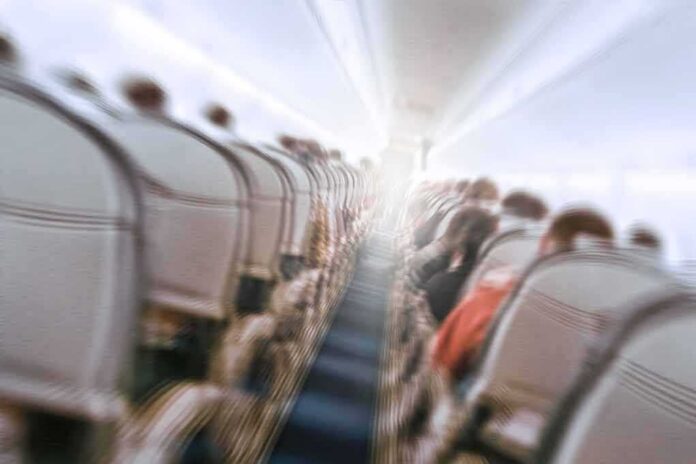
The cabin shook so hard ceiling panels fell, yet every passenger walked off alive.
Story Snapshot
- A Sepehran Airlines Boeing 737 returned to Mashhad after takeoff due to a tire failure and engine trouble.
- The flight was bound for Kermanshah; the crew turned back minutes after departure.
- Violent vibrations shook loose interior panels; no injuries were reported.
- Tire debris can damage engines; past cases show this chain of events is plausible.
Violent Shaking, Falling Panels, Safe Landing
Sepehran Airlines launched a domestic Boeing 737 flight from Mashhad to Kermanshah and quickly faced a crisis. Reports say a tire failed on departure and the aircraft suffered engine damage soon after, forcing an emergency return to Mashhad. Onboard video shows a cabin rattling with force as panels and trim shake free while passengers scream and pray. The pilots landed the jet safely. No injuries were reported, despite the chaos inside the cabin.
Times of India describes the route, the rapid turnback, and the severe vibrations that tore at the ceiling panels. Other outlets align on the same spine of facts: takeoff, tire failure, engine abnormality, and a safe return. Some accounts differ on the exact date by a day, which often happens in fast-breaking events, but they agree on the sequence and the outcome. The central takeaway holds: the jet shook badly, systems held enough, and skilled pilots got everyone down.
How A Tire Problem Can Hammer An Engine
Tires on jetliners carry huge loads at liftoff speed. When a tire sheds tread or bursts, pieces can fly aft. That debris can get sucked into a nearby engine. Investigators have documented this chain more than once, including a Boeing 777 case in Abu Dhabi where tire tread broke off and damaged the left engine, forcing a return to land. This physics explains how a tire failure at rotation can become an engine emergency within seconds.
Technical bulletins and safety reports warn about tread separation, underinflation, and foreign object damage as triggers for these events. Guidance says that any sign of tread issues calls for removing the tire from service. Real-world cases show why: once debris hits the fan blades, the engine can vibrate and shed parts, which only adds to the shaking passengers feel in the cabin. The Sepehran crew’s quick decision to return fits the playbook for suspected debris ingestion.
Why The Cabin Looked So Bad While The Jet Stayed Flyable
Interior panels are cosmetic covers, not load-bearing structure. Severe engine imbalance or airframe vibration can shake them loose even while the core systems keep working. That mismatch explains the shocking video: plastic liners and trims dropping while the aircraft still flies its profile and lands under control. Reports that all passengers walked away match that split between scary optics and solid fundamentals. It looked like the plane was falling apart; it was not.
WATCH: Terrifying video captures passengers screaming and praying as violent shaking sends ceiling panels and debris crashing down inside a Boeing 737 over Iran.
Travelers grip seatbacks and reach overhead as parts of the cabin appear to come apart around them. The Sepehran…
— Amerivox Report (@AmerivoxReport) September 17, 2026
Air safety’s lesson here is simple. Pilots train for cascades that start with small parts and grow fast. A tire failure at takeoff speed is one of those. The best move is to climb to a safe altitude, run the checklist, and bring the jet back promptly. That is what happened in Mashhad. The facts line up with known incident patterns, the video shows the human side of it, and the landing proved the crew and aircraft still had margin.
Sources:
facebook.com, aljazeera.com, english.mathrubhumi.com, viewfromthewing.com, migflug.com, skybrary.aero, data.ntsb.gov, aeroenginesafety.tugraz.at
© horizonpost.com 2026. All rights reserved.