
President Trump says he just signed off on new fuel economy rules that scrap the Biden-era mandate pushing automakers toward electric vehicles.
Quick Take
- President Trump approved new fuel economy standards, ending what he calls the Biden administration’s electric vehicle mandate.
- The old rule required a fleet-wide average of 50.4 miles per gallon by model year 2031; the new target drops to 34.5 mpg.
- Transportation Secretary Sean Duffy called the Biden rule illegal, saying it wrongly counted electric vehicle adoption when setting mileage rules for gas-powered cars.
- Environmental groups warn the rollback will raise gas costs and worsen pollution for families already squeezed by high prices.
What Trump Announced And Why It Matters To Drivers
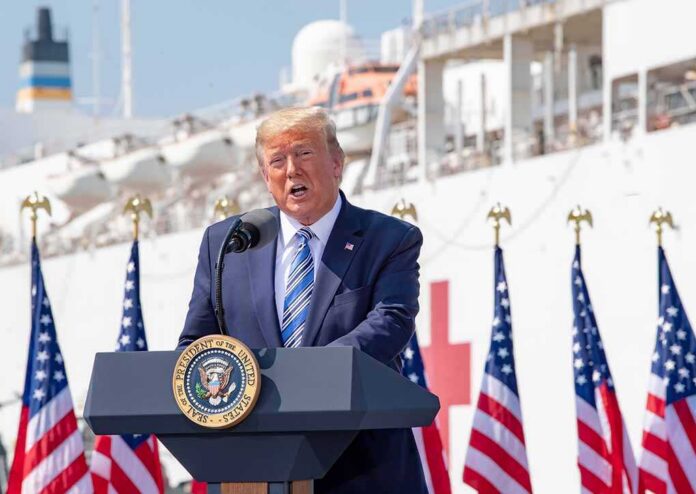
Trump told reporters the new standards would end the electric vehicle mandate left behind by the Biden administration. He claimed the change would lower new car prices and give a boost to American auto manufacturing. The White House frames this as cutting government red tape that made cars more expensive without giving drivers much real choice in what they buy.
The numbers show just how big a swing this is. Biden’s 2024 rule demanded a 2 percent yearly efficiency gain for regular cars and a steep 10 percent yearly jump for larger trucks between 2027 and 2031. Trump’s team says that pace was never realistic without pushing buyers into electric vehicles they didn’t ask for, and Duffy has already moved to unwind it since taking office.
The Legal Fight Over Whether Biden’s Rule Even Counted Electric Vehicles Fairly
Duffy’s core argument is straightforward. He says the past administration built its fuel economy math around assumptions of widespread electric vehicle adoption, then applied that math to gasoline-powered cars and trucks that were never going electric anytime soon. Calling the rule illegal, he ordered the National Highway Traffic Safety Administration to rewrite it entirely, arguing the agency overstepped its legal authority under the original fuel economy statute.
That rewrite doesn’t flip a switch overnight. The rule Duffy issued in June doesn’t change existing standards by itself. It hands the National Highway Traffic Safety Administration the power to adjust numbers in the months ahead. Automakers have been watching closely, since the final targets will decide what engines, transmissions, and vehicle sizes make financial sense to build in the coming years.
Critics Say Families Will Pay More At The Pump Under The New Rules
Not everyone is cheering. Earthjustice Legislative Director Corey Solow said reversing the standards forces people into less efficient vehicles, meaning bigger gas bills and dirtier air for kids riding to school. Climate Mayors made a similar case, saying fuel economy rules have long helped cut costs and clean up air for ordinary Americans. Nineteen state attorneys general have also pushed back publicly against the change.
🚨🚨 BREAKING 🚨🚨:
TRUMP APPROVES NEW FUEL ECONOMY STANDARDS: “BIG DAY FOR AMERICAN AUTO WORKERS AND CAR BUYERS!”
President Trump says the new standards will roll back Biden-era fuel economy requirements and give automakers more flexibility over the vehicles they build.
— R J (@rahuljaitley) September 27, 2026
Those objections deserve a hearing, but they rest mostly on projected costs years down the road, not a dispute over what the rule actually says. Gas prices depend on drilling, refining, and global markets far more than on mileage targets alone. A rule requiring smaller cars burn less gas doesn’t automatically hand every driver a better deal, especially if it limits truck and SUV choices families actually want.
A Rule That Keeps Swinging Back And Forth With Every New President
This isn’t the first time fuel economy math has flipped with a new administration. Obama-era targets got frozen under the first Trump term, then tightened again under Biden, now loosened again. Researchers at Resources for the Future call it a policy loop where each side rewrites cost-benefit assumptions to fit its goals. That cycle raises a real question: should mileage rules swing this hard every four years, or does constant reversal just confuse automakers trying to plan a decade out?
Trump’s team is betting that fewer mandates mean more consumer choice and lower prices at the dealership, a bet that lines up with a long conservative preference for letting markets, not Washington, decide what Americans drive. Whether the promised savings materialize will depend on how the National Highway Traffic Safety Administration finalizes the numbers in the coming months, and on whether automakers pass any savings on to buyers instead of pocketing them.
Sources:
ww2.arb.ca.gov, abcnews.com, foxbusiness.com, cbsnews.com, environment.yale.edu, climatechangeresources.org, congress.gov, clf.org, unchartedblue.com, nonprofitquarterly.org
© horizonpost.com 2026. All rights reserved.