

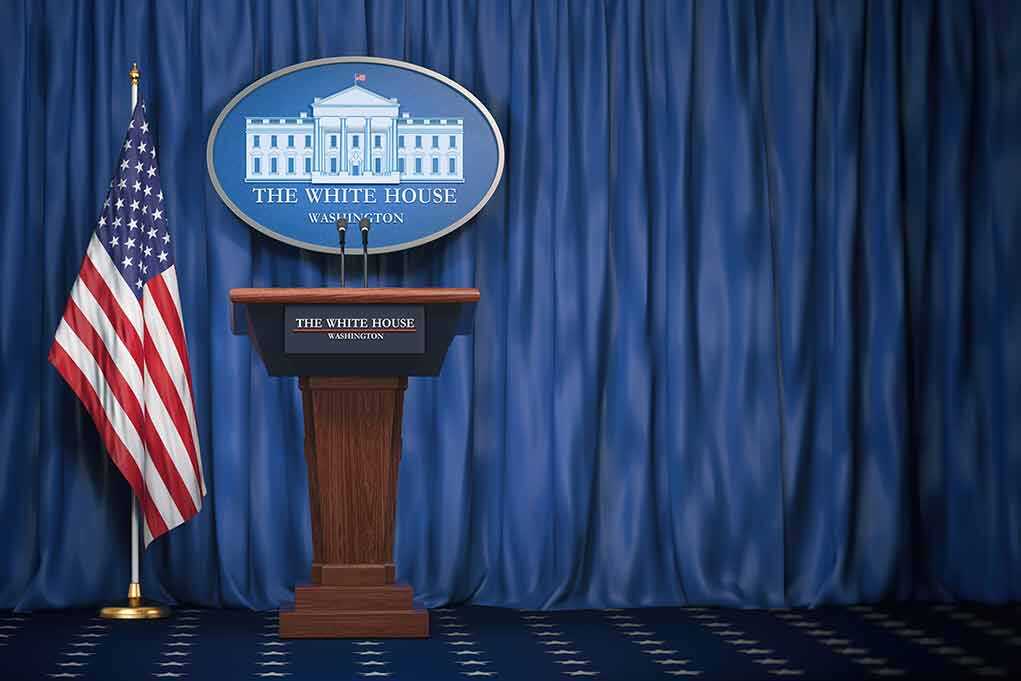
The moment the White House turned reporters away at the gate, a media fight became government policy.
Story Snapshot
- Trump announced bans on CNN, MS NOW, and Politico for what he called “fake news.”
- Secret Service then denied those outlets access to White House grounds and facilities.
- Major networks refused to fill the pool slot, widening the clash over press access.
- The outlets sued, citing First Amendment and due process protections.
What Actually Happened And How Fast It Moved
President Trump posted that he was banning CNN, MS NOW, and Politico from the White House for “FAKE NEWS” and “FICTION and LIES.” He framed the step as a response to years of negative or false coverage. He called fake news a national security threat and said he did not have to let those outlets into “the people’s house.” The next day, reporters from those outlets were denied entry and press access on site, confirming a policy shift beyond rhetoric.
Trump did not point to one specific story as the spark. The claim rested on a pattern of alleged falsehoods. Reporters lost access to the press facilities, including the briefing room and lower press area. That created a real-time change in coverage. The bans also came with a warning that other outlets could be added. That signaled a broader enforcement idea, not a one-off fight over a single dispute or personality clash.
The Pushback And Why It Matters In Court
CNN, MS NOW, and Politico said the administration revoked access because it disliked the reporting. They moved to sue, saying the government cannot decide what the press covers. Legal experts pointed to long-standing rules. Once the White House opens press facilities, it cannot deny access arbitrarily or based on viewpoint. Courts also expect notice and a chance to respond before yanking credentials. These claims put the fight on constitutional turf, not just politics.
Past clashes shape expectations now. Judges ordered the White House to restore CNN reporter Jim Acosta’s access in 2018 on due process grounds. Courts later blocked a suspension of another journalist’s pass. These cases do not give a blank check to anyone with a camera. They do say the White House must use clear, fair rules and cannot punish content. That history makes this ban look uphill for the administration unless it shows real, specific reasons.
The Media’s Counter-Move And The Optics Problem
Major television networks, including Fox News, refused to replace CNN in the shared pool rotation after the ban. That unified move turned a targeted exclusion into a larger press-freedom standoff. Solidarity raised the stakes for the White House. Without pool feeds, the risk grows that official video dominates coverage. That invites “state TV” charges from critics and sours trust with viewers who want independent eyes in the room, not only government cameras.
New York Assembly Member Zohran Mamdani added contrast when he said all media would be welcome at an event he hosted with Trump. He said he believes in engaging “everyone, no matter the opinion or the critique.” The line underscored the core dispute: Is access a right tied to neutral rules, or a privilege tied to behavior and truthfulness? The courts will press that point hard, because motive matters when the government controls a press forum.
The Conservative Case For Standards That Stick
Trump’s claim that some outlets push false stories echoes a real frustration on the right. Many Americans believe national media mock their values or bury facts. Holding reporters to standards is legitimate. But government must do that with rules that apply to all, on conduct, not viewpoint. If the White House names specific false reports with proof and sets a neutral process, it strengthens its case. If not, opponents will paint this as retaliation and likely win.
Principled conservatism backs both accountability and restraint. Demand corrections. Expose bias with receipts. Build direct channels to the public. But keep the press doors open under clear, even rules. That forces the media to confront facts instead of playing the martyr. It also protects future Republican presidents from the same tactic used against right-leaning outlets. Process is not weakness; it is the shield that makes hard calls stand in court and in history.
What To Watch Next
Courts will ask for the paper trail. Judges will want the credential memo, the rule cited, and the evidence behind claims of false reporting or security risk. Networks will keep pressure on by limiting pool coverage until access normalizes. The White House can firm up policy by issuing a transparent standard and a notice-and-appeal path. Clear rules and facts would narrow the fight to provable claims and make the outcome more stable for everyone.
Sources:
thegatewaypundit.com, bbc.com, politico.com, abcnews4.com, abcnews.com, cnn.com, reuters.com, nbcnews.com, theguardian.com
© horizonpost.com 2026. All rights reserved.