

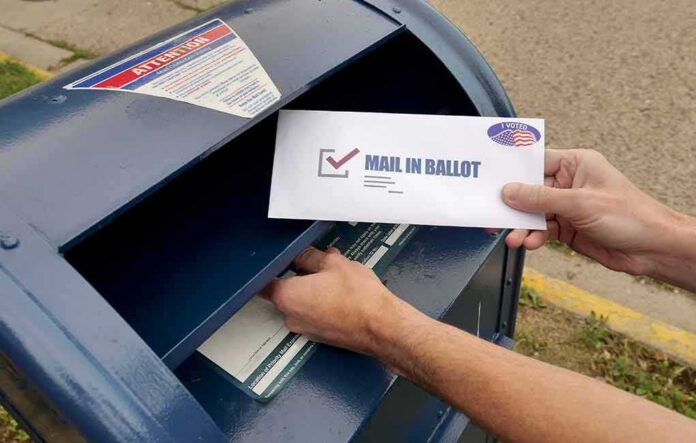
Federal prosecutors say a Utah letter carrier dumped about 300 primary ballots in a church dumpster, and the charge is now in court.
At a Glance
- A federal grand jury indicted a former Utah letter carrier for discarding mail, including around 300 ballots.
- Prosecutors say the ballots were for Eagle Mountain voters ahead of the June 2026 primary.
- The defendant pleaded not guilty and said there was no political motive, according to officials.
- Election-mail safeguards and fast detection limited the impact, but the breach still matters.
What prosecutors allege happened in Eagle Mountain
Federal prosecutors unsealed an indictment charging Damon Matai Seei, 34, a former United States Postal Service letter carrier from Payson, Utah, with unlawful secretion, destruction, and delay of mail. They say he threw away mail he was supposed to deliver, including about 300 mail-in ballots bound for registered voters in Eagle Mountain before the June primary election. Officials said the discarded mail was found in a church parking lot dumpster soon after his shift began.
Acting Deputy Attorney General Trent McCotter told reporters the ballots and other mail were tossed not long after the route started. Federal prosecutors say the pieces were clearly marked election materials. The charge carries possible prison time and fines if a jury convicts. An indictment is a formal accusation, not proof of guilt, and a trial would decide the facts. Authorities emphasized the case targets mail destruction, not a wider scheme to change votes.
What the defendant and officials say about motive
The defendant pleaded not guilty. Officials said he told investigators he did not intend to discard ballots and indicated there was no political agenda. Reports from the announcement describe claims that he tried to toss advertisements to lighten his workload, a statement that, if true, suggests carelessness rather than a plan to sway an election. That defense does not excuse the act, but it matters for intent, which a jury must weigh if the case goes to trial.
Melissa Holyoak, the United States Attorney for Utah, said authorities were told there was no political motive. That detail will not remove legal risk. Federal law protects every class of mail, and election mail gets special focus during voting periods. Voters expect their ballots to reach them on time. The case shows how one person on a route can still break trust, even without a plot or payoff behind it.
Why this one route breach drew national attention
Mail voting runs on a simple promise: ballots travel a secure chain from printer to voter to election office. A story about a dumpster breaks that promise in the public mind, even if the system flags and fixes the problem. Research across years shows mail ballot fraud is rare compared to the scale of voting. Still, the vivid image of ballots in the trash fuels doubts and gives critics a talking point that lands fast on cable news and social feeds.
Mail voting depends on a simple promise: the ballot sent to a voter will actually reach the voter.
Federal prosecutors say former Utah postal worker Damon Matai Seei threw away mail assigned for delivery on June 3, including about 300 ballots for Eagle Mountain residents before… pic.twitter.com/fMPD58nZJF
— Dan Holbrook (@DanHolbrook) September 23, 2026
The United States Postal Service and the United States Postal Inspection Service publish election-mail plans and performance reviews after federal cycles. Those reports explain barcode tracking, sweeps, and “extraordinary measures” to speed ballots. That framework cannot stop every bad act, but it helps spot gaps and tighten routes when they appear. In this case, fast discovery and federal charges show the backstops did not look away when a carrier crossed the line.
What common sense says policy should do next
Three steps fit the facts and conservative common sense. First, enforce the law hard when anyone tampers with election mail; a swift charge deters the next shortcut. Second, tighten route-level checks for election periods, like spot audits when trays contain large blocks of ballots. Third, keep the public metrics coming so voters see delivery times, sweeps, and recovery actions in plain numbers, not spin. Accountability, not drama, keeps confidence steady in tight races.
Sources:
spectrumlocalnews.com, justice.gov, nbcnews.com, local10.com, about.usps.com
© horizonpost.com 2026. All rights reserved.