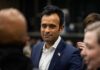

Mike Rogers stood on a debate stage in Michigan and asked his Senate opponent point blank whether he was “for America, or for these terrorist groups overseas.”
Quick Take
- Republican Senate candidate Mike Rogers called Democrat Abdul El-Sayed a national security risk during an October 21 debate in Michigan.
- Rogers pointed to a 2012 letter El-Sayed signed about Egypt’s political transition and donor claims tying him to groups including Hamas and the Muslim Brotherhood.
- Rogers offered no evidence for the donor allegations when pressed by a reporter after the debate.
- El-Sayed has repeatedly and flatly denied ever belonging to the Muslim Brotherhood.
- President Trump has weighed in publicly, amplifying concerns about El-Sayed ahead of a Michigan rally.
A Debate Stage Confrontation Over Loyalty
The exchange happened during a televised Senate debate on October 21, 2026. Rogers pressed El-Sayed on Iran and the Islamic Revolutionary Guard Corps, then declared the matter “a risk to our national security.” It was not a passing jab. Rogers built an entire campaign advertisement around the claim that El-Sayed poses a threat, arguing his refusal to issue a blanket condemnation of Iran’s government revealed where his loyalties truly sit.
El-Sayed’s actual words tell a more complicated story. He said he wanted “freedom and democracy for the people of Iran — no question,” a statement that sits awkwardly next to accusations of regime sympathy. He also said Iran “has posed a threat” to the United States, but argued that threat was contained through diplomacy under the Obama administration rather than military force. That is a policy position, not a confession.
The 2012 Letter And The Donor Allegations
Rogers and allied groups have leaned heavily on a 2012 open letter El-Sayed signed addressed to Mohamed Morsi, Egypt’s first competitively elected president and a Muslim Brotherhood member. The letter called for purging officials tied to the old regime. The New York Times confirmed the letter exists and that El-Sayed signed it. What it does not confirm is that signing a letter about Egyptian police reform makes someone a Brotherhood operative, a distinction Rogers’s campaign has not addressed directly.
The bigger accusation, that El-Sayed’s donors include supporters of Hamas, Hezbollah and al-Qaida, landed without backup. A local Michigan outlet reported that Rogers “offered no evidence for those claims during the debate or when a reporter asked him after the debate.” Republican-aligned groups still spent heavily pushing the message, with Rogers’s campaign and the National Republican Senatorial Committee reportedly coordinating a seven-figure ad buy built around it.
El-Sayed’s Direct Denial
El-Sayed has not dodged the question. In a widely viewed Fox News interview, he said plainly, “I have never been a member of the Muslim Brotherhood. I never will be.” He called using his faith as a political weapon beneath the office Rogers is seeking. On stage, he pushed back even harder, noting his mother is a nurse in Missouri and asking why that background should fuel suspicion. A review by Bridge Michigan, a nonpartisan outlet, found no evidence backing the personal-tie claims from either this cycle or 2018.
Trump Enters The Fight
President Trump has publicly joined the attack on El-Sayed, raising the Muslim Brotherhood allegations and Iran remarks ahead of a Michigan rally and praising Rogers’s campaign. When a sitting president personally elevates a Senate candidate’s national security concerns, it changes the weight of the accusation in voters’ minds, whether or not new evidence ever surfaces.
Abdul El-Sayed should not be in the U.S. Senate.
His own half-sister, Eman Abdelhadi, posted in 2012–2013 that their family “has long been MB” (Muslim Brotherhood), that she had family members jailed for it, and that their mother was active in the Brotherhood as a college… pic.twitter.com/D3xmzTqLzF
— ❥❥❥ᗰoᒪᒪie❥❥❥ (@mollie_don) October 26, 2026
None of this resolves into a legal finding. No membership record, financial trail, or intelligence assessment has been produced publicly connecting El-Sayed to a designated terrorist organization. What exists are a documented 2012 letter, unproven donor claims, a flat denial, and a fierce argument over whether opposing military escalation with Iran counts as disloyalty. Conservative voters are right to demand real answers on foreign influence in American elections, but allegations need receipts, not just repetition in campaign ads.
Why This Fight Matters Beyond Michigan
Research on campaign advertising shows fear-based appeals tied to group identity can shape voter judgment independent of the actual facts. That dynamic is playing out here in real time, with millions in ad spending riding on an accusation nobody has yet proven in full. Michigan voters deserve documentation, not insinuation, before deciding who sits in the Senate representing them.
Sources:
youtube.com, jewishinsider.com, wired.com, cnn.com, nytimes.com, ground.news, mlive.com
© horizonpost.com 2026. All rights reserved.