
Could the NYPD be the latest player in a high-stakes game of corruption, deceit, and political power? The allegations against Mayor Eric Adams are as shocking as they are unprecedented.
At a Glance
- Former interim NYPD Commissioner Thomas Donlon has filed a lawsuit against Mayor Eric Adams and senior NYPD officials.
- The lawsuit alleges a coordinated pattern of racketeering activity, invoking the RICO Act.
- Donlon claims he was sidelined and his authority undermined during his tenure.
- The case could lead to significant reforms in the NYPD if the allegations are proven true.
Allegations of Corruption
Thomas Donlon, who briefly served as the interim NYPD Commissioner, has dropped a bombshell by filing a 251-page lawsuit accusing Mayor Eric Adams and several senior officials of orchestrating a criminal enterprise within the NYPD. This lawsuit, filed in the U.S. District Court for the Southern District of New York, marks a significant moment in the ongoing debates about police accountability and political influence.
Donlon alleges that during his tenure, he uncovered a coordinated scheme involving racketeering activities led by Mayor Adams himself. He claims that his authority was systematically stripped away and that key decisions were made by a select inner circle loyal to Adams. According to Donlon, promotions and critical decisions were made without his consent, often using his official Commissioner stamp to legitimize these actions.
The Players Involved
The lawsuit names several high-ranking officials, including Kaz Daughtry, John Chell, Tarik Sheppard, Tania Kinsella, Jeffrey Maddrey, and Michael Gerber, all of whom are accused of being complicit in this alleged scheme. Donlon argues that these individuals participated in or facilitated the racketeering activities, benefiting financially from the promotions and decisions made under this conspiracy.
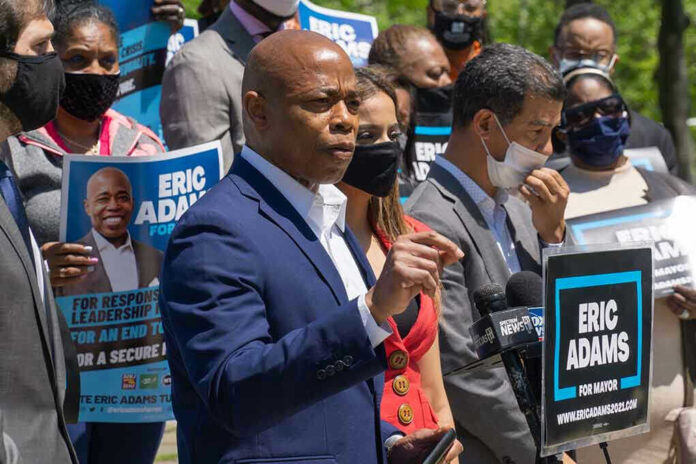
Mayor Adams, who has dismissed these allegations as “baseless,” is portrayed by Donlon as the mastermind behind this criminal enterprise. Adams, a former NYPD captain, along with his administration, accuses Donlon of being a disgruntled former employee seeking personal gain after being removed from his interim commissioner role.
Legal and Political Implications
The lawsuit seeks compensatory, emotional, and punitive damages, along with a call for federal oversight of the NYPD. Donlon is pushing for the appointment of an independent special monitor to ensure transparency and accountability within the department. If the court finds merit in Donlon’s claims, the case could lead to sweeping reforms, unprecedented federal oversight, or even criminal charges against the accused officials.
Beyond the legal ramifications, this lawsuit has sparked a media frenzy and public debate over the integrity of the NYPD and the governance of New York City. The allegations have the potential to shake public confidence and could heavily influence upcoming elections and policy decisions concerning police oversight.
Broader Implications
While the case unfolds, the reverberations are felt beyond New York City. Allegations of systemic corruption in such a significant police department could set a precedent for how similar cases are handled nationwide. The implications for police reform, governance, and accountability could be profound, potentially influencing policies in other major cities grappling with similar challenges.
As the legal proceedings continue, the nation watches closely. The outcome of this case will not only determine the future of several powerful careers but also shape the narrative around police integrity and political accountability in America. Until the courts reach a verdict, the allegations remain unproven, but the mere existence of such a lawsuit underscores the urgent need for transparency and reform in law enforcement.