

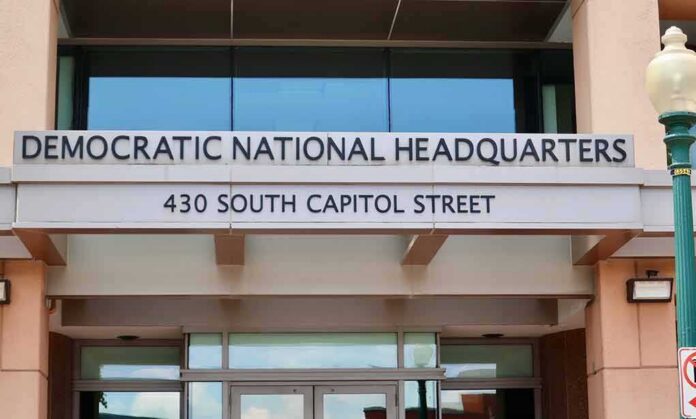
Montana’s top law officer opened an election-law investigation after a Democratic Senate nominee said the national party offered her a job if she quit.
Story Snapshot
- Alani Bankhead says the Democratic National Committee offered her a role if she exited the race.
- Montana’s attorney general launched an investigation citing a possible state law violation if true.
- The Democratic National Committee denies offering any job to Bankhead.
- Reports say pressure also aimed to nudge support to independent candidate Seth Bodnar.
The allegation that triggered a state investigation
Alani Bankhead, the Democratic nominee for United States Senate in Montana, said party operatives urged her to withdraw after her primary win and offered a national party role if she did. She described it as a position related to recruiting or supporting female veteran candidates and emphasized that this was the only concrete inducement placed on the table. She also said the outreach came in a wave of contacts from Democratic figures and groups urging her to step aside.
Montana Attorney General Austin Knudsen responded by opening an investigation. He cited Montana Code Annotated 13-35-221, which bars giving or promising something of value to influence a candidacy. He said his office would reach out to Bankhead, to independent candidate Seth Bodnar, and to the Democratic National Committee for information. He framed the allegation as potentially illegal if proven under the statute and said the facts needed to be gathered.
What Bankhead says happened after the primary
Bankhead placed the alleged job discussion inside a broader timeline of pressure that began after she secured the nomination. She said hundreds of emails arrived urging her to step down, and a letter from 22 Democratic state legislators asked her to exit. She said a sitting senator floated a job, a Democratic governor asked her to leave the race, and former Governor Steve Bullock invited her to meet. She saw it as a coordinated push to clear the field.
The Helena Independent Record reported that Bankhead said the goal was not only withdrawal, but also an endorsement of independent candidate Seth Bodnar. The outlet also noted a shift from a prior comment where Bankhead downplayed direct requests, which now sits in tension with her new account. Bodnar’s campaign has said it had no knowledge of any offer to Bankhead and that Bodnar never asked her to leave the race.
How party pressure differs from a quid pro quo
Political parties often try to shape fields by steering money, staff, and support to preferred candidates. That is normal hardball. The allegation here goes beyond that. Bankhead describes a conditional exchange: a job in return for quitting and backing another candidate. Montana’s cited statute aims squarely at that line. It treats a promise of value to affect a candidacy as unlawful. That is why the attorney general moved quickly to gather records and statements.
The Democratic National Committee rejects the claim outright. A Democratic National Committee official told The Hill that Bankhead was never offered a job by the committee. That direct denial sets a clear dispute that investigators can test against emails, messages, and witness accounts from both sides.
Collateral pressure and why it matters
Separate friction surfaced with Planned Parenthood Action Fund. Bankhead’s team said one of its board members made urgent calls before the withdrawal deadline and that the calls sounded like a request to drop out. That episode does not prove a Democratic National Committee job offer, but it does show real-time pressure to exit before the cutoff date, which helps define the climate Bankhead describes.
American conservative values favor open competition and honest elections. Voters, not backroom deals, should decide who stays on the ballot. If someone tied a job to a demand that a nominee back out, that would cross a bright legal and ethical line. If the contacts were only routine pressure, that stays in the rough-and-tumble zone of politics. The next step is simple: get the records, name the messengers, and put sworn statements on the clock.
What to watch next
Investigators will look for messages, call logs, and meeting notes from the days after the primary up to the withdrawal deadline. They will also try to identify the person who could have offered a Democratic National Committee role and whether that role even existed. Bankhead’s public statements set a clear, testable claim. The Democratic National Committee’s denial does the same. Montana’s statute provides a yardstick for weighing both accounts once the documents land.
Sources:
thegatewaypundit.com, thehill.com, nbcmontana.com, helenair.com, montanarightnow.com
© horizonpost.com 2026. All rights reserved.