
The sheriff’s report says Tony Romo’s night went from golf course to jail cell in under five hours.
Story Snapshot
- Former Dallas Cowboys star and CBS NFL analyst Tony Romo was arrested in Milwaukee on suspicion of impaired driving.
- Deputies say he performed poorly on field sobriety tests after a traffic stop on Interstate 43.
- He was booked into jail, released that night, and given a September 21 court date.
- The case highlights how fast one police report can shape a nationwide story before any verdict.
From Wisconsin Fairway To Interstate Patrol Car
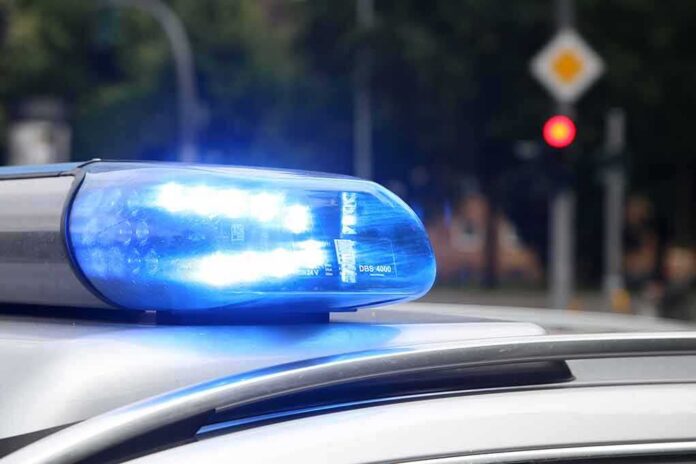
Tony Romo returned to his home state of Wisconsin for golf, not for headlines. He spent the day playing in the Wisconsin Amateur Championship, a quiet competitive event where he finished far from the top of the leaderboard. That evening, he drove southbound on Interstate 43 in Milwaukee County, a busy stretch of highway that locals know as a main route through the city. By a little after 6 p.m. Central time, deputies from the Milwaukee County Sheriff’s Office had pulled him over.
The arrest-detention report obtained by multiple outlets says the stop happened on the high-rise bridge section of I-43, where traffic can be tight and enforcement is common. Deputies reported that Romo showed signs that led them to investigate for impaired driving and moved into what officers call standardized field sobriety tests. For a man known for reading NFL defenses in seconds, the challenge was now roadside balance, eye movement, and following simple instructions under stress.
Field Sobriety Tests And A Fast Trip To Jail
The report states Romo “performed poorly” on those tests, a phrase that now appears in article after article across sports and news media. Standardized field sobriety tests usually include walking heel-to-toe in a straight line, standing on one leg, and tracking a moving object with the eyes. Officers look for clear mistakes, wobbling, or failure to follow directions. When a deputy writes “performed poorly,” it usually means several clues of possible impairment showed up, not just a single stumble.
Based on that performance, deputies took Romo into custody on suspicion of operating while intoxicated, known in Wisconsin law as OWI. He was transported to the Milwaukee County Jail, where records show he was booked after the stop and then released later that evening. That booking detail matters. A simple citation could have ended at the roadside. A trip to jail, mug shot and all, turned it into a full-blown arrest story that national outlets picked up almost instantly.
What An OWI First Offense Means In Wisconsin
Wisconsin treats most first-offense OWI cases differently than repeat or injury cases. For a driver with no prior OWI history and no reported injuries, state law usually classifies the first offense as a civil violation, not a criminal charge. Typical penalties for a first OWI include a fine of about $150 to $300, plus a surcharge that can be over $400, and a driver’s license suspension. Jail time usually does not apply if there was no crash, no minor in the car, and no very high alcohol level.
Reports so far do not mention any crash, injuries, or passengers in Romo’s vehicle. They also do not say whether he took a breath test or refused one, which is a key detail that often decides how strong a case is in court. That missing information shows one gap in early coverage. The public hears “performed poorly” and “arrested for OWI,” but does not yet know the exact alcohol level or whether medical or other factors played any role.
A Court Date And A Country Watching The Calendar
Romo’s arrest report lists a court appearance set for Monday, September 21, at 8:30 a.m. Central time. That date sits right in the early part of the NFL regular season. As the lead analyst for the National Football League on CBS, Romo is scheduled to be in the broadcast booth most Sundays. His court date raises obvious practical questions for his employer and for fans: will he need to miss a week, move the hearing, or handle it through an attorney without appearing in person?
CBS NFL Analyst and Former Dallas Cowboys Quarterback Tony Romo Arrested on Suspicion of OUI https://t.co/igkPL8DlB1
— World I Used To Know 🇺🇸 (@pccote6623) July 24, 2026
CBS Sports has not yet made a detailed public statement about the arrest in the cited coverage, and Romo himself has not spoken on record. That silence keeps speculation at bay for now, which fits basic conservative values of due process and personal responsibility. The sheriff’s report describes suspicion and test results, not a conviction. The fair approach is to let the case move through the local court system before declaring guilt, while still taking impaired driving risks seriously for everyone.
How One Police Report Became A National Story Overnight
The speed of this story shows how celebrity arrest coverage works in the modern media world. A local station in Milwaukee obtains the arrest-detention report. It publishes the key facts: stop on I-43, poor field sobriety tests, booking, release, and court date. National sports and news outlets then repeat those same points, often citing local reporters or the Associated Press, and adding reminders that an OWI first offense in Wisconsin is usually a civil matter.
Within 24 hours, readers across the country see nearly identical summaries, built on one sheriff’s document. Some sites lean into tone, focusing on Romo’s “cheeky” grin in the mug shot. Others stress his clean prior record and his role as a top National Football League broadcaster. Social media piles on with jokes and one-liners, sometimes treating “arrested for OWI” as if it already means “convicted of drunk driving.” That blurring of suspicion and guilt is common and worth resisting.
Balancing Accountability, Fairness, And Common Sense
Impaired driving is a serious issue. Many families know the pain it can cause, and strong enforcement protects innocent people on the road. From a common-sense, conservative view, the law must apply equally to a famous quarterback and to any regular driver on I-43. At the same time, American values also stress presumption of innocence and the idea that a single arrest report should not define a person’s life or career forever.
Romo now faces real legal and reputational consequences from this night in Milwaukee. The court will decide how solid the evidence is and what penalty, if any, fits the facts. The better test for fans and viewers is how he responds: whether he accepts responsibility if the evidence confirms impairment, learns from it, and returns to the booth focused, prepared, and humbled by the experience. Until that verdict, the honest story is simple and direct. A stop, a failed test, an arrest, and a date on the calendar.
Sources:
thegatewaypundit.com, nytimes.com, espn.com, abcnews.com, yardbarker.com, sportsmediawatch.com, youtube.com, dailywire.com, nbcnews.com
© horizonpost.com 2026. All rights reserved.