

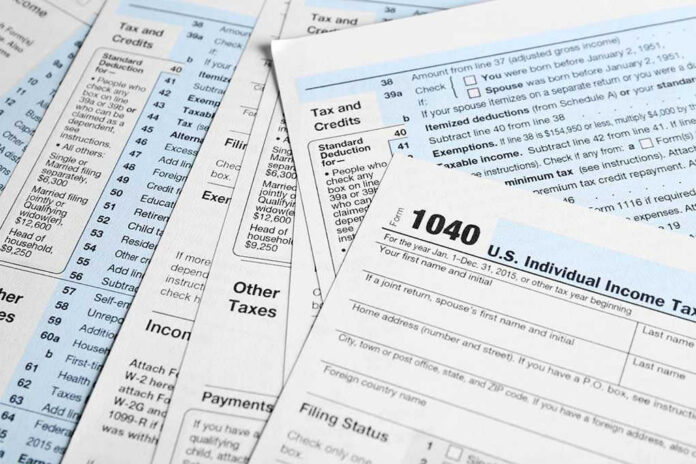
For the first time, your tax return may ask if you are a citizen or a legally authorized immigrant, and your refund could hinge on that answer.
At a Glance
- Draft federal tax forms add a yes-or-no status question tied to refunds.
- Treasury cites a 1996 welfare law to limit certain refundable credits.
- Privacy critics warn the change could chill filing and spark fear.
- Refundable parts of four credits are the focus, not all tax benefits.
What changed on the tax form and why it matters
The Internal Revenue Service added a new question to the draft 2026 Form 1040. It asks if you, and your spouse if filing jointly, are a United States citizen, United States national, or an immigrant lawfully allowed to work in the country. This is a simple yes-or-no box, but it has teeth. The answer helps decide if you can receive the refundable part of several tax credits that can turn a return into a cash payment.
The Department of the Treasury paired the form change with proposed rules. Those rules say the refundable part of four credits counts as a federal public benefit under a 1996 law. That law blocks people who are not citizens, nationals, or “qualified aliens” from most federal public benefits. Treasury says you must meet that status on the day you file to get a refund from those credits.
Which credits and who could be affected
The target is narrow but important. The refundable parts of the earned income tax credit, the child tax credit, the adoption tax credit, and the American Opportunity Tax Credit sit in scope, according to agency statements. These credits push billions of dollars to low and middle income households each year. If finalized, people who do not meet the listed status would not receive the cash-refund portion, even if they file a return and owe no tax.
Congress did not write a blanket ban on undocumented filers claiming tax credits in the tax code. That gap led to disputes over how immigration law and tax rules fit together. Treasury now leans on the 1996 welfare reform law to say these refunds are public benefits. The change would align refund payments with long-standing benefit rules, at least for these four credits.
The case for status attestation on the return
Supporters frame this as common sense. Eligibility rules do not work if an agency never asks who qualifies. A clear yes-or-no box puts the question on the front end. It sets a bright line, and it deters improper claims without sweeping in nonrefundable tax breaks. This is not about new deportation powers. It is about who can get cash from the United States Treasury under laws Congress already passed.
FORMAL REQUEST FOR INVESTIGATION
Subject: Request for Investigation into Suspected Immigration Sponsorship Abuse, Non-Genuine Employment, Financial Exploitation, Threats and Company-Related Irregularities
To the Relevant Authority,
I am writing to bring to your attention…
— JUDIE (@JUDIE4sk) October 3, 2026
From a conservative values view, the approach rewards work while protecting taxpayer funds. It targets refundable cash, not general deductions or rates. It respects the rule of law by tying refunds to legal status, as the welfare law intended. The policy also treats citizens, nationals, and qualified legal immigrants the same at the refund gate. That is equal rules, clear lines, and less room for gamesmanship.
Privacy, fear, and the limits of tax data sharing
Advocates for immigrants and some taxpayer groups warn of harm. They argue the new checkbox could scare undocumented workers out of filing altogether. They worry that admitting status on a return could expose families to immigration arrests, or push people toward lying, which is a felony. Those concerns are real lives and real stakes, not abstractions.
Tax return data is confidential by law. Federal law bars Internal Revenue Service employees from sharing return information unless Congress has granted a specific exception. That firewall is strong on paper and has guarded tax data for decades. Critics concede that point, but they fear misuse or illegal leaks. Good policy weighs those risks without ignoring the law as it is written.
How this likely plays out for filers
Most taxpayers will check yes and move on. Citizens and many legal immigrants already provide Social Security numbers or taxpayer identification. The new box adds a short attestation linked to specific refunds. Households that rely on refundable credits should read the instructions closely and keep status documents current. Married couples who file jointly will need both spouses to meet the standard to receive the refundable part that year.
Community groups should focus on clear education. Do not tell people to skip filing; that can lead to bigger trouble and lost refunds they are allowed to claim. Explain who counts as a “qualified alien” under the law. Explain that nonrefundable parts of credits and standard tax rules still apply. Urge honest answers. Remind clients that lying on a tax return is a crime with steep penalties.
The bottom line: bright lines beat gray areas
The government wrote work-and-status rules into law long ago. Treasury is now moving those rules into the tax refund lane, where money actually leaves the door. That shift draws fire because it forces clarity. But benefits need gatekeeping. Asking status at the point of refund honors both the text of the law and basic fairness to taxpayers who follow it. Policymakers should pair the rule with strong outreach so filers know the facts and the guardrails.
Sources:
facebook.com, apnews.com, accountants.intuit.com, lawcommentary.com, brookings.edu, latintimes.com, abovethelaw.com
© horizonpost.com 2026. All rights reserved.