
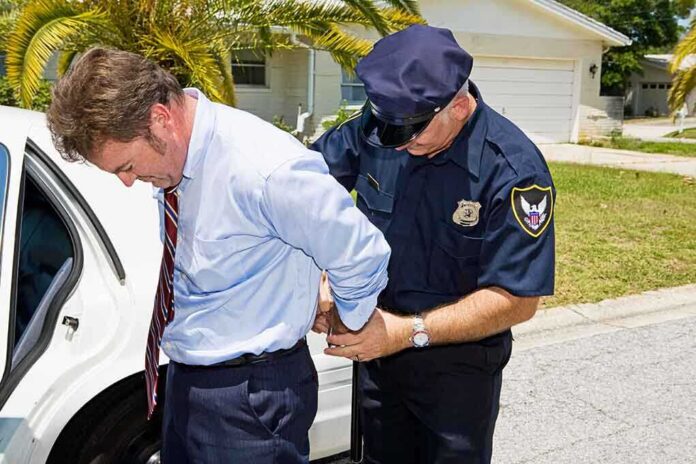
A $5,000 bond now hangs over a Greenville man accused of flashing an “FBI Special Agent” badge during a stolen-valor spat.
Story Snapshot
- Police arrested a 51-year-old Greenville man on October 24 for impersonating law enforcement
- Court papers say he claimed to be a sworn officer and wore an “FBI Special Agent” lanyard
- A magistrate’s order describes wording about investigating violations of United States laws
- He faces a court date in December and posted a $5,000 secured bond, reports say
What Police Say Happened In Greenville
Greenville Police Department officers arrested Elijah Spencer, age 51, after a dispute tied to stolen valor on October 24, according to local reports. A magistrate’s order says Spencer told an officer he was a sworn law-enforcement officer. Court papers described an identification lanyard that read “FBI Special Agent” and listed Spencer’s name. The documents also said the lanyard claimed duties to investigate violations of United States laws. Police charged Spencer with one count of impersonating law enforcement.
Reports say Spencer received a $5,000 secured bond and a December 14 court date. Military.com attributed its timeline to that local court filing and local television reporting. Greenville Police Department is the listed arresting agency in the coverage, and reporters sought comment from both the police and the Federal Bureau of Investigation (FBI). An arrest is an allegation, not a conviction, and no plea or verdict has been reported yet.
Why A Badge Claim Crosses A Legal Line
North Carolina law makes it a crime to falsely represent to another person that you are a sworn law-enforcement officer, including by words or by showing items that would make a reasonable person believe you are one. A separate part of the law increases penalties if someone also acts like an officer, such as trying to search or arrest someone. The distinction matters: saying you are an officer is one offense; using that claim to exercise police power can be another.
Federal law also criminalizes impersonating a federal officer when a person acts as such, or demands something in that false role. Federal cases show courts look hard at two questions: did the person claim the badge, and did they use it to do something only officers do? North Carolina’s statute follows a similar logic in its separate provisions, which is why prosecutors often focus first on what the person said or displayed, then on any actions taken under that claim.
Stolen Valor Flashpoint And Public Trust
Police say this encounter started during an argument about stolen valor, a subject that ignites tempers and pride, especially among veterans and their families. Tensions over military claims can push people to make rash statements. But common sense and basic order demand a bright line around police identity. Communities rely on real badges and real oaths to keep people safe. When someone blurs that line, even for a moment, it chips away at trust that takes years to build and seconds to lose.
American conservative values stress personal responsibility, clear authority, and respect for the uniform. If the court papers are right, claiming federal badge power in a heated dispute violates all three. Impersonation pressures citizens to comply under fear of government force. That is not free speech; that is counterfeit authority. The law must hold that line firm, whether the symbol is a patrol shield or three letters that carry the weight of the United States.
What To Watch Next In The Case
The upcoming court date will clarify the exact subsection charged under state law and whether prosecutors say Spencer only represented himself as an officer or also acted on that claim. The defense may contest how the lanyard looked, what it said, or what was actually said in the moment. The charge reported so far is a single count of impersonating law enforcement, and the court will decide how the facts fit the statute. Until then, the public record stands on the arrest and the court filing.
Sources:
military.com, witn.com, newsbreak.com
© horizonpost.com 2026. All rights reserved.